
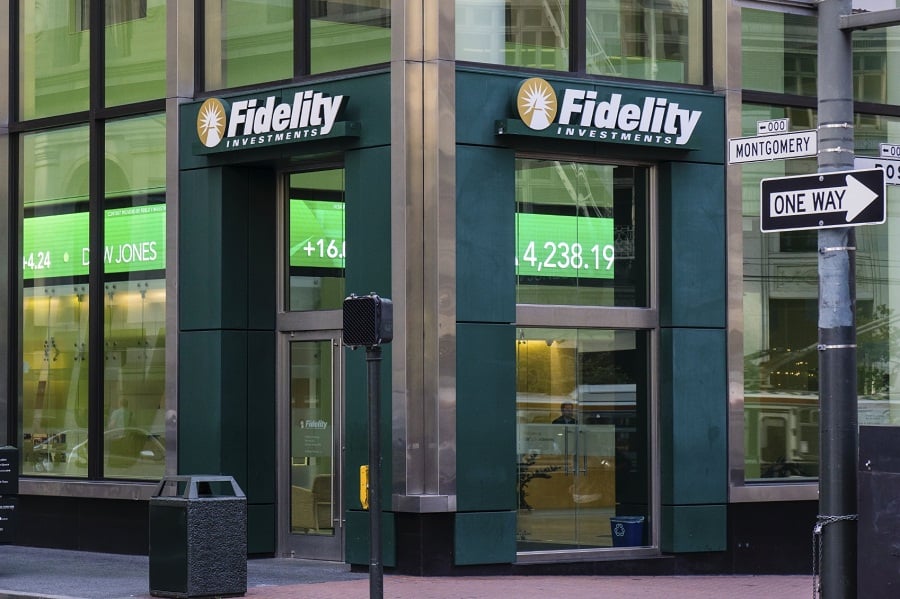
Massachusetts Secretary of the Commonwealth William F. Galvin Monday fined Fidelity Brokerage Services $750,000 over the company’s alleged past practice of "rubber-stamping" clients' applications to trade options, according to a statement from Galvin's office.
Galvin, long an unpopular figure in the retail securities industry because of his wide powers over Wall Street, referred to Fidelity's “half-hearted and lackadaisical attitude” toward the effort to assess clients' ability to trade risky securities, according to the statement.
Because of the risks associated with options and futures, clients who want to buy and sell options in a retail brokerage account have to undergo specific vetting, in accordance with industry rules and standards.
Also on Monday, the Financial Industry Regulatory Authority Inc. fined Fidelity Brokerage Services $900,000, claiming that, from May 2017 through April 2022, Fidelity "did not exercise reasonable due diligence before approving customers to trade options," according to Finra.
Fidelity used a "flawed" electronic system to screen customers’ online applications to trade options, after which a principal at the firm reviewed and then decided whether the customer was approved for options trading, according to Finra.
In January 2022, the Massachusetts Securities Division filed a complaint alleging that Fidelity Brokerage Services failed "to properly vet customers who applied to be approved for options and margin trading," according to the statement.
The consent order the division filed Monday notes that Fidelity has taken steps to improve its application review systems and online applications since the complaint was filed in 2022.
"Fidelity fully cooperated with the Massachusetts Securities Division," a spokesperson wrote in an email. "As acknowledged by the [division], Fidelity has already addressed the issue and has made enhancements to its system for approving customers for options trading."
The firm consented to Finra's findings in the matter without admitting or denying them.
In its complaint, the Massachusetts Securities Division alleged that Fidelity’s application review system allowed customers to submit multiple applications, altering the information submitted each time until they met the requirements to be approved. Customers filed repeated applications "with inflated financials, investment experience, and employment information that Fidelity reviewers failed to notice, despite already having contrary information in the Fidelity system," according to the statement by the Secretary of the Commonwealth.
Options trading is considered high risk because of options’ complexity and lack of liquidity. Brokers assessing a customer's suitability for trading options look at several factors, including income, net worth, trading experience and knowledge of investing.

Iowa's Greenwood Wealth Partners exits D.M. Kelly as UBS and Ameriprise win Merrill Lynch recruits in California and Florida

Less than 1% of pool funds went to actual trading, CFTC says

Plus, SEIA builds a governed data foundation for its in-house AI and Snappy Kraken debuts a read-only marketing coworker for advisors.

He owes $364 million but pays $100 a month

Broadridge, Wedbush and Alaris Acquisitions have also filled senior wealth management roles with hires from J.P. Morgan, Osaic and SageView.
As AI makes financial information more accessible than ever, Lana Hock explains why human judgment, trust, and empathy remain the qualities clients value most in a financial advisor
Northern Trust’s Ken Lassner shows advisors how to convert volatility into after-tax portfolio gains

