
As private markets continue to move closer to the mainstream for financial advisors and individual investors, long-held assumptions around risk, access, and portfolio construction are being challenged.
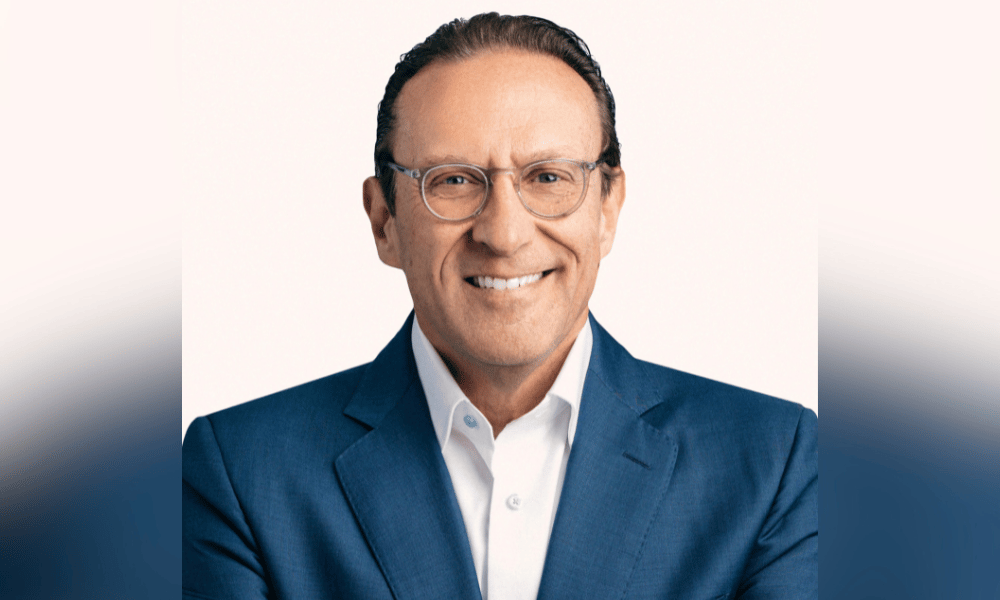
Peter Aliprantis, partner and head of Private Wealth Americas at EQT, argues that many of these assumptions no longer reflect the reality of today’s private markets as he looks ahead to 2026 for InvestmentNews.
He says that one of the biggest misconceptions advisors still hold is the idea that private markets represent a single, volatile asset class.
“There’s a common perception that private markets represent a single, high-volatility asset class that’s inherently riskier than public markets,” he says. “But that’s not the case.” He emphasizes that private markets are “broad and diverse – ranging from infrastructure and real estate to venture capital and buyouts – each with different risk-return profiles.”
Aliprantis challenges the idea that private ownership itself implies greater risk.
“If you think about it, there’s no reason why owning a stake in a privately held, well-managed company should be considered riskier than owning a share in a public one,” he says. In fact, he points to the absence of daily price movements as a structural advantage: “Not having to deal with daily market volatility means that private companies can stay focused on long-term value creation.”
Another persistent misconception, he notes, is around who private markets are for.
“Many still believe that private markets are only for institutions or ultra-high-net-worth individuals – that they’re complex, completely illiquid, or simply out of reach,” Aliprantis says. He believes that view “is quickly becoming outdated,” pointing to “the rise of evergreen structures and platforms designed specifically to meet the needs of individual investors,” which are making private markets “more accessible, more transparent, and more aligned with the needs of modern portfolio construction.”
That evolution is also reshaping how private markets could fit into defined contribution plans. Aliprantis says private strategies can play “a constructive and complementary role in helping build more diversified and resilient retirement portfolios.”
Asset classes like private equity, infrastructure, and real estate, he explains, are “long-term in nature, which makes them a natural fit for defined contribution plans that seek to build value steadily over decades.” These exposures, he adds, can complement public markets “by offering diversification, enhanced return potential, and protection against market volatility.”
Geography is another defining theme in Aliprantis’ perspective, particularly when comparing the US with Europe and Asia.
“Investing in Europe and Asia is fundamentally different from investing in the U.S.,” he says. “Europe and Asia are a patchwork of nations with different cultures, languages, and regulatory systems.”
That complexity makes it difficult to manage investments remotely, which is why EQT has prioritized local presence. “To navigate these nuances effectively, EQT has built a network of offices in 25 countries across Europe and Asia,” Aliprantis explains. “Without the local footprint, you’re only getting the tip of the iceberg.”
He sees Europe entering what could be a renewed growth phase after years of underinvestment.
“The region currently draws around 60% less private capital than the US, with entry valuations roughly 1.5x lower,” Aliprantis says. Combined with “structural policy tailwinds and historic underinvestment,” he believes this makes Europe particularly attractive, noting that “EQT plans to invest €250 billion (~$287 billion) in the region over the next five years.”
Asia, meanwhile, presents a different but equally compelling opportunity.
Aliprantis points out that the region represents “around 60% of the world’s population and drives 60% of global GDP growth, yet it accounts for less than 10% of global buyout capital.” He describes this as “a high-growth, underpenetrated opportunity set,” adding that EQT aims “to triple our investments in Asia to as much as $110 billion” over the next five years.
Despite that global emphasis, Aliprantis is clear that North America remains central to EQT’s strategy. “The US is a key growth market for EQT,” he says, noting that while “two-thirds of EQT’s AUM is in Europe and Asia,” the firm expects to invest “around $250 billion in North America in the coming five years.”
This global lens, Aliprantis argues, is something US advisors can increasingly learn from their peers overseas.
In Europe and Asia, he says, private wealth investors “inherently adopt a more global mindset when constructing their portfolios,” with advisors accustomed to building “globally diversified portfolios from day one.” In contrast, many US investors have historically focused on domestic markets, but Aliprantis believes that is changing as “there’s growing recognition that future growth, innovation, and resilience will increasingly come from a more global set of markets.”
As a result, expectations for US advisors are shifting.
“It’s no longer enough to rely on domestic markets to provide sufficient diversification,” Aliprantis says. Advisors, he adds, will need “knowledge and access to source, evaluate, and allocate to opportunities across borders,” learning from international counterparts who already approach portfolio construction with “built-in global access, structural flexibility, and a deep appreciation for local context.”
When it comes to long-term investment themes, Aliprantis highlights AI infrastructure as one of the most compelling opportunities today.
“The AI boom is driving an unprecedented surge in data processing and connectivity demand,” he says. Data centers, which he calls “the physical backbone of that growth,” require enormous amounts of energy, making “digital and energy infrastructure increasingly inseparable.” Rather than viewing this as a constraint, Aliprantis frames it as “a transformational investment opportunity as digital and energy infrastructure must scale togther.”
Sustainability, in Aliprantis’ view, is inseparable from returns.
“Sustainability isn’t separate from performance, it’s a core driver of it,” he says. EQT integrates sustainability “into every investment decision,” not only for ethical reasons but because it “is the smartest way to build long-term value.”
Since portfolio companies are typically held for five to seven years, Aliprantis notes that they must be “fit for the future – meaning efficient, well-governed, low-emission, and aligned with the structural transitions shaping the global economy.”
That same long-term thinking shapes how Aliprantis believes advisors should approach allocations to private markets. Addressing concerns about deal quality for private wealth investors, he says EQT ensures that “all investors – whether they’re large pension funds or individual investors – access the same underlying deals.” The firm applies “the same rigorous underwriting standards across the board,” and does not segment opportunities by investor type.
He also stresses the importance of global diversification.
“US-based managers tend to have a strong home bias,” Aliprantis says, but he increasingly hears from US clients who are “looking abroad for more opportunities, especially to Europe and Asia.” Ultimately, he adds, “it all comes down to not having all your eggs in one basket.”
Accessibility remains a major focus for EQT’s private wealth strategy. Aliprantis notes that the firm launched its first evergreen strategy in 2023 and has since built “a platform of five solutions across private capital, infrastructure, and real estate.”
Entering the space later than some peers, he says, has allowed EQT to learn from others’ experiences and design solutions “aligned with long-term investor demand” while also being “built with convenience for intermediaries.”
Looking ahead, Aliprantis sees innovation accelerating across both public and private markets, with model portfolios playing a central role.
“Advisors want institutional-grade frameworks that integrate public markets, private markets, and alternatives in a simple, scalable way,” he says. Ultimately, he believes the biggest shift will be “the convergence of public and private markets into a unified client experience,” supported by technology that delivers diversification “without added complexity.”

Senate Democrats seek data on data center deductions under the 2025 tax law as proposals to tax artificial intelligence multiply.

Geopolitical shocks and market volatility pushed advisor deal decisions off course, denting third-quarter transaction volume by 19 percent.

Hendershott Wealth Management's Hilary Hendershott on turning a niche for women into an operating strategy, not a marketing pitch.

Iowa's Greenwood Wealth Partners exits D.M. Kelly as UBS and Ameriprise win Merrill Lynch recruits in California and Florida

Less than 1% of pool funds went to actual trading, CFTC says
As AI makes financial information more accessible than ever, Lana Hock explains why human judgment, trust, and empathy remain the qualities clients value most in a financial advisor
Northern Trust’s Ken Lassner shows advisors how to convert volatility into after-tax portfolio gains

