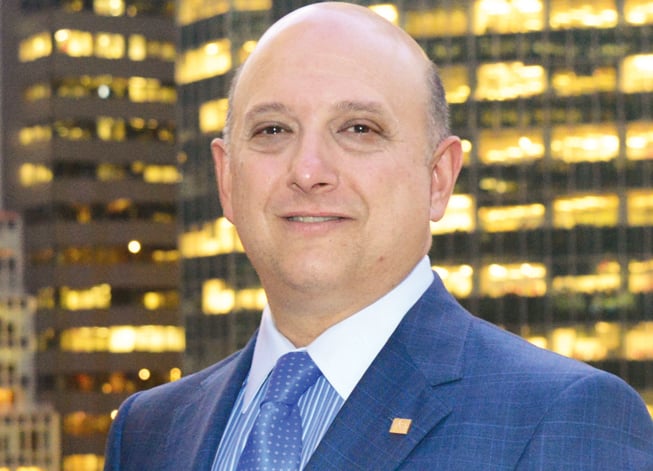
Changes proposed at seven real estate investment trusts controlled by Nicholas Schorsch's AR Global present a “clear and present danger” to their investors by eliminating investor protections, according to a report issued Tuesday by Robert A. Stanger & Co. Inc., an investment bank that focuses on nontraded REITs.
Serious changes are afoot at AR Global. In April,
InvestmentNews reported that AR Global was
attempting to consolidate more than a half-dozen real estate investment trusts with almost $10.5 billion in assets. Weeks later, a former independent director of two nontraded real estate investment trusts controlled by AR Global
claimed “a manifest conflict of interest” in the potential merger of one of those REITs into a related company.
The flurry of mergers, if successful, would put more assets under control of two REITs, American Finance Trust and Global Net Lease, which have unusual, difficult-to-break 20-year advisory contracts with AR Global. AR Global does not have the 20-year advisory agreements with the other REITs it manages.
That means AR Global, as the manager of the two larger REITS, would create a favorable source of fee revenue over a long period of time, benefiting Mr. Schorsch and his partners.
On the other hand, a long-term source of revenue also could ultimately benefit investors by making American Finance Trust and Global Net Lease more attractive takeover targets and potentially gaining the attention of other
REIT managers looking to buy such a revenue stream.
The three-page Stanger report focuses on concerns raised by a series of recent proxy statements from AR Global-sponsored REITs.
The report is critical of AR Global for proposing in the proxies several changes in the charters of the REITs at a time when the mergers are on the table. Why is AR Global seeking changes in the charters of the REITs without disclosing fully what the future holds for those companies?
“Through these proxies, certain of the ARC-sponsored REITs would remove many important protections built into their respective charters at the very time when each of these REITs is reportedly reviewing strategic alternatives but has not yet informed investors of the strategic path which will be taken,” according to the report.
The charter changes proposed in certain proxies of the AR Global REITs that would remove, limit or alter investor protections include: reduction of shareholder information rights; potential to enable entrenchment of board members; and expansion of the types of investments, and therefore risks, the
REIT can expose investors to, according to the report.
“Reducing investor protection at any time is a cause for careful scrutiny and potential concern,” the report notes. “But asking investors to abridge their own protections and rights at a time when there is an on-going review of strategic alternatives is virtually unprecedented based on our experience as investment bankers in the nontraded
REIT industry.”
(More:
How Nick Schorsch lost his mojo)
A spokesman for AR Global, Matthew Furbish, declined to comment. But a source said it is common for nontraded REITs to make charter amendments, including removing guidelines of regulators, when they are finished raising money.
Stanger has worked with AR Global REITs in the past. In fact, it was one of two advisers that worked with Global Net Lease when the company last year announced the unusual 20-year management agreement.
Speaking directly to the boards of the AR Global REITs, the report concludes: “Eliminate the clear and present 'danger' by withdrawing the proxy until the strategic direction of each REIT has been determined and disclosed to investors. Then, ask investors to approve alteration of only those charter provisions which clearly inhibit the ability of the REIT to pursue the best interests of its investors.”