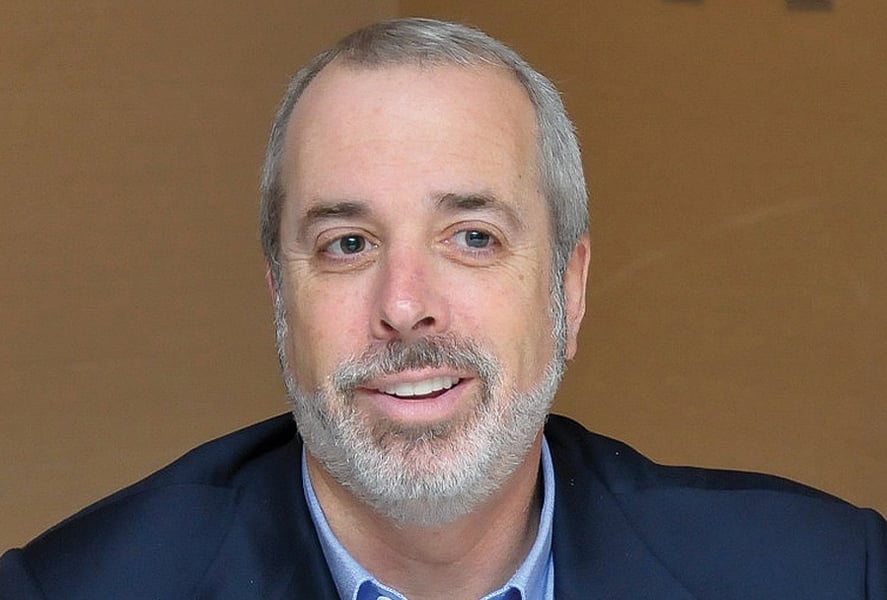
Ric Edelman believes in the future of cryptocurrencies so much, he is selling his personal
investment in Bitwise Investment Management, a creator of cryptocurrency index funds, so as not to have a conflict of interest should he recommend the funds to his clients.
The chairman of
Edelman Financial Engines, who made his first bitcoin investment in 2014, says cryptocurrencies, as well as a "broad array of crypto assets" and the underlying cryptocurrency technology blockchain, make up a only few percentage points of his overall investment portfolio.
However, he said he's in the process of divesting his Bitwise investment.
"Because our firm is exploring exponential technologies generally and cryptocurrencies specially as a potential investment opportunity for our clients, I want to make sure that there are no real or perceived potential conflicts of interests, and therefore I am divesting my investment in Bitwise so that if and when Bitwise introduces an ETF, and if and when my firm chooses to recommend it to our clients, there is no conflict of interest," he said.
Mr. Edelman, who believes it is only a
matter of time before the Securities and Exchange Commission approves the first bitcoin exchange-traded fund, has also established the Advisers Blockchain and Crypto Council to help bring financial advisers up to speed on investing in cryptocurrencies.
Although Mr. Edelman is intent on increasing awareness among advisers of the fast-evolving digital currency, he is equally intent on keeping most retail investors from being taken for a ride down the black hole of cryptocurrency, which has
declined by 82% over the past year.
Jeff Benjamin: What percentage of your personal portfolio is invested in cryptocurrencies?
Ric Edelman: It's very small. I'm following the advice that I give to consumers, which is if you are going to invest in cryptocurrencies (which is, by the way, not something I recommend for most people), you should keep it to 1% or 2% of your portfolio. Certainly, no more than 5%.
And plan on experiencing extreme volatility. You need to plan on owning the asset for years, perhaps decades. And be prepared to lose 100% of whatever you invest.
For these reasons you need to own a very small percentage, and for many people the answer should be zero.
JB: Where do you think most financial advisers are when it comes to
understanding cryptocurrencies?
RE: I've been speaking on the subject at industry conferences for the past five or six years, and from conversations that I've had with thousands of advisers from around the country, it is fair to say the overwhelming majority know little to nothing about blockchain and cryptocurrencies.
Many are oblivious, many are in denial and a great many have a knee-jerk reaction due to their lack of knowledge that causes them to compare cryptocurrencies to tulip bulbs and Beanie Babies.
Only when advisers get the knowledge they need are they truly able to determine whether they should be recommending cryptocurrencies for their clients or how to dissuade clients if that is their choice.
JB: What is the objective of your new blockchain and crypto council?
RE: The effort is to address two basic questions: What is the level of knowledge and education within the advisory community about cryptocurrencies? And second, is leadership needed within the advisory community to increase adviser understanding about this space?
The answer to both questions is clearly obvious.
Advisers generally know very little about crypto and blockchain. As a result, advisers are unable to provide their clients with effective advice, and if this situation does not change, advisers will begin to lose credibility as investors are increasingly asking questions about blockchain and cryptocurrencies. The clients are seeking answers, and advisers are no more skilled than their clients.
In order to help advisers perform better in this area, we are developing educational programs to increase adviser knowledge.
JB: What kind of
impact could the financial planning industry have on cryptocurrencies?
RE: The impact from advisers is potentially huge. The RIA industry controls about $4 trillion in investor assets. It's an issue of supply and demand. There is a fixed supply of bitcoin and virtually all other crypto assets. So, the price is based largely on demand.
At the moment, the vast majority of financial advisers are not encouraging clients to purchase it, which is putting a clamp on demand.
If the advisory community were to decide that this was an asset class worthy of investment, similar to the energy sector or the manufacturing sector or the real estate sector, then you would see a flood of investor dollars going into this space, which would have a significant impact on the prices of these assets.
I believe that this is inevitable because I believe the SEC will eventually allow a bitcoin ETF to come onto the market. That's the primary obstacle that is preventing many financial advisers from being willing to recommend this asset class to their clients, including my own firm.
JB: Where does a
cryptocurrency asset fit in a portfolio?
RE: It's an alternative asset class, and alternative asset classes are becoming more and more important because of the increased movement toward passive investing.
Many advisers today are investing in stock and bond index funds, and as a result, the returns are more similar from adviser to adviser than they were when more advisers were offering actively managed funds. The risks to clients are therefore similar when engaging the traditional markets of stocks and bonds. Alternatives are therefore becoming increasingly important because they provide the opportunity to invest in either negatively correlated or non-correlated asset classes.
JB: Can this be accomplished by most advisers without a
registered crypto-focused fund or ETF?
RE: There are only two ways to buy it at present. One is to buy the coins directly, which forces you to go to an exchange, which is not only expensive, but also has a significant number of risks, including the viability of the exchange, the legitimacy of the exchange and the cybersecurity threats. It is cumbersome, it is complicated, it is expensive and it is very risky. And for all these reasons, most consumers don't have much interest in purchasing coins directly, nor are their financial advisers willing to encourage their clients to do it. I'm not willing to encourage mine for all those reasons. There's virtually no federal regulation at the moment, so there are a lot of bad players. The field is rife with fraud, and it's a very dangerous wild-west environment. And this is why we are not recommending crypto for our clients.
However, when the SEC approves a bitcoin ETF, many of those concerns will go away, and others will be reduced dramatically. And you will now have a product that can be easily and inexpensively purchased that can easily be incorporated into a diversified portfolio, under the purview and supervision of a financial adviser.
The second way to own it is through a private fund, such as Bitwise, but these funds are generally available only to accredited investors. They tend to require very large investment amounts. They are expensive, they are often illiquid and again, this makes them unsuitable for most investors.
JB: Do you accept cryptocurrencies as payment for your financial services?
RE: No, we don't. And the reason for that is our asset management fee is debited directly from the client's account. Clients don't actually write checks to pay for their fee.