
Office address: 240 Greenwich Street, New York, NY 10286
Website: bny.com
Year established: 1784
Company type: financial services
Employees: 50,000+ (globally)
Expertise: custody and asset servicing, global payments, trade finance, cash management, investment management, wealth management, index management, fixed income and risk solutions, money market and liquidity strategies, collateral and securities lending
Parent company: The Bank of New York Mellon Corporation
Key people: Robin Vince (CEO), Rajashree Datta (chief risk officer), Dermot McDonogh (CFO), Shannon Hobbs (chief people officer), Kevin McCarthy (general counsel), Jose Minaya and Leigh-Ann Russell (department heads)
Financing status: shareholder-owned company
BNY Mellon is a global financial services company based in New York City. It helps major institutions manage, move, and safeguard money and investments across global markets. The firm oversaw over $57 trillion in assets in September 2025 and runs investment and custody services.
In 1784, Alexander Hamilton and a group of merchants set out to rebuild New York's finances. They proposed the city's first bank at the Merchants' Coffee House to restore trade and credit.
The new Bank of New York aimed to be liquid, transparent, and solvent for wary investors. Within a decade, it was helping the young federal government steady public debt and win overseas confidence.
The bank later informed Hamilton's thinking when he became the first US Treasury Secretary. The bank then backed federal debt plans, tariff reforms, and confidence in the new dollar.
In 1792, its shares traded as part of the early New York Stock Exchange (NYSE) under a sycamore tree. Through the 1800s, the bank financed canals, railroads, and utilities that linked regional markets into a national economy.
The bank stayed liquid through the 1929 crash while thousands of US banks failed. After World War II, it expanded beyond Manhattan by acquiring city rivals and moving into nearby states. Mergers with Irving Trust in 1988 and Mellon Financial in 2007 created BNY Mellon, a global asset manager and custodian.
In recent years, BNY Mellon has pushed its cash platform into digital territory with Goldman Sachs. JPMorgan now sees their tokenized money fund service as a major step for the $7.1 trillion market, helping money funds stay attractive and usable as collateral.
Within this setup, the firm also keeps the official books and settlements while Goldman's GS DAP tracks token ownership. Through BNY's LiquidityDirect platform, multiple managers including BlackRock and Dreyfus offer tokenized money market fund shares to institutional clients.
BNY Mellon offers a wide mix of investment products built by specialist firms on shared global platforms:
BNY Mellon also provides custody, fund administration, and investment operations support. Its scale and data help institutional clients manage risk and reporting efficiently.
BNY Mellon says that its culture depends on people who are proud to work there. Its values are:
BNY Mellon states that its work environment also focuses on balance, with tools for health, wealth, time off, and flexibility. Employee benefits include:
BNY Mellon's scale guides its sustainability priorities. It emphasizes resilience and offers solutions that help clients and partners pursue their own sustainability objectives.
Robin Vince is CEO of BNY Mellon, leading the firm's global financial services businesses for clients worldwide. Before this, Vince served as president, and as vice chair and CEO of Global Market Infrastructure, overseeing clearance, collateral, treasury services, markets, and Pershing. Vince holds a bachelor's degree from the University of Nottingham in the UK.
BNY Mellon also highlights a senior leadership team, which includes:
BNY Mellon states that its leaders help keep client relationships strong and resilient. Their decisions aim to protect the firm and support clients through changing markets.
In 2025, BNY Mellon ETF Investment Adviser LLC was one of the fastest‑growing US managers with more than $1 billion in assets. Its ETF lineup has been drawing in institutions, pensions, and advisors that want liquid, low‑fee, tax‑aware exposure. This steady growth strengthens BNY's role in everyday portfolio construction as assets keep shifting from mutual funds into ETFs.
Bank of New York Mellon has also been in quiet talks with Northern Trust for more than a year. It is exploring a deal that would link its clearing and custody scale with Northern Trust's base of very wealthy clients. If the merger goes ahead, BNY could oversee more than $3 trillion in investment management assets and deepen its role with institutional, advisor, and ultra‑high‑net‑worth clients.
Tighter margins for custodians call into question RIAs riding for free.
The new CEO will lead the efforts to turn the bank around after a series of scandals.

Shares in the fund will be available only to institutional buyers.

Only one firm will win this fourth annual competition — and the promo that comes with it.

Trend is seen as part marketing and part endorsement of ESG's investment benefits.

Riskalyze chairman Lori Hardwick, Goldman exec Rana Yared joining the retirement fintech's board of directors.

Advisers need to accept that dinners and golfing won't cut it for business development in the future.

If firms want to keep pace with changing investor demographics, they have to hire more diverse viewpoints.

Powerful symbols require day-to-day actions by leaders to make firms more inclusive.
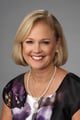
Shannon Kennedy from Bank of New York Mellon Corp. will lead a team of more than 200 people.

Getting rid of the paper involved in using the Automated Customer Account Transfer Service will also speed the process, robo says.

Executive says clients prefer to work with investment advisers because of the transparency, greater choice in investment options and fiduciary status of the business model.

Given the changing outlook on Federal Reserve rate moves, fixed-income decisions taken last year warrant a rethink.

James Crowley says the custodian is focusing on IT improvements and enhancing the client experience.

With Lori Hardwick and Drew DiMarino, Riskalyze wants to expand among enterprise firms and possibly take the company public.
