
Office address: 1155 21st St. NW, Washington, DC 20581
Website: cftc.gov
Year established: 1974
Company type: government agency
Employees: 630+ (full-time equivalents)
Expertise: derivatives regulation, futures trading, swaps oversight, options markets, market surveillance, fraud prevention, commodity trading, clearing organization oversight, intermediary regulation, digital asset markets
Parent company: N/A
Key people: Michael Selig (chair); Meghan Tente (acting general counsel); Frank Fisanich, Richard Haynes, Thomas Smith, and Paul Hayeck (acting directors); Taylor Foy (director)
Financing status: N/A
The Commodity Futures Trading Commission (CFTC) is an independent federal agency based in Washington. It regulates US derivatives markets, including futures, swaps, options, and cryptocurrency trading. The agency oversees more than $400 trillion in swaps market activity alone.
The CFTC's roots date back more than 175 years before the agency itself existed. Chicago merchants founded the Board of Trade in 1848 as a grain market, and forward contracts began trading almost right away.
Federal regulation arrived decades later with the Grain Futures Act of 1922, which created the large trader reporting system the CFTC still uses today. Congress then expanded oversight with the Commodity Exchange Act of 1936, covering cotton, rice, butter, eggs, and potatoes.
Market manipulation scandals in the mid-1900s set the stage for the CFTC's creation. The Great Salad Oil Swindle of 1963 bankrupted 16 firms after a businessman faked warehouse receipts for nonexistent soybean oil.
Record grain prices and manipulation claims in 1973 then pushed Congress to overhaul commodity oversight. President Gerald Ford signed the Commodity Futures Trading Commission Act in late 1974, and the new agency took charge in April 1975.
The young agency moved fast to prove its worth in the markets. It approved the first futures contracts on US Treasury bills in 1975 and Treasury bonds in 1977.
Cash-settled Eurodollar futures followed in 1981, and stock index futures came a year later. When Black Monday struck in October 1987, no CFTC-regulated systems failed and no firms defaulted on their obligations.
The 21st century tested the Commodity Futures Trading Commission with new markets, major crises, and bigger enforcement actions. Its World Trade Center office was destroyed on September 11, 2001, though all employees escaped without serious injury.
Enforcement reached new heights in 2022 when the CFTC ordered Glencore to pay $1.18 billion for market manipulation, the largest penalty in agency history.
The Commodity Futures Trading Commission also stepped up efforts to protect everyday investors and respond to new markets. In 2024, it joined FINRA and NASAA to warn retirees about precious metals fraud targeting IRA accounts. Then in 2025, the CFTC partnered with the SEC to launch Project Crypto–Crypto Sprint, a joint push to clarify rules for spot crypto trading.
The CFTC carries out its mission through specialized divisions, public resources, and innovation programs:
The Commodity Futures Trading Commission also regulates two types of trading organizations: Designated Contract Markets and Swap Execution Facilities. Its data division works to reduce information silos and improve market transparency across the derivatives industry.
The Commodity Futures Trading Commission says it has a diverse and accomplished workforce. Staff support the agency's regulatory mission daily. The agency highlights four core values:
The CFTC uses structured pay matrices to set salaries. Locality pay adjusts wages based on living costs. The agency offers a range of employee benefits:
The Commodity Futures Trading Commission's mission centers on sound regulation of US derivatives markets. Its culture and benefits support staff in working toward that goal.
Michael S. Selig was confirmed as the 16th CFTC chair in 2025 after nomination by President Donald J. Trump. Selig previously worked as a partner at an international law firm focused on derivatives and securities law. He holds a law degree from The George Washington University Law School and a bachelor's from Florida State University.
Helping Selig lead the Commodity Futures Trading Commission is an executive leadership team, which includes division and office heads:
The leadership team reports to the chair and carries out the agency's regulatory and enforcement work. Each division head oversees day-to-day operations in their area of responsibility.
The agency continues to crack down on fraud in the commodity pool space. The Commodity Futures Trading Commission sued a Michigan operator over an alleged $1 million Ponzi scheme. This case signals the CFTC's ongoing push to tighten oversight of small commodity pools and retail-focused products.
Beyond enforcement, the CFTC is also opening doors for innovation. In December 2025, the agency approved crypto firm Gemini's application to operate a designated contract market for prediction products. This move points to a future where the CFTC balances oversight with support for digital assets and emerging trading platforms.
Senate memo asks regulators to slow down implementation of Dodd-Frank; single standard of care biggest concern

ETFs for the precious metal now hold nine years' worth of U.S. supply; Soros, Paulson piling in, too

Analysts see larger rise in price of silver, as industries find new uses for the precious metal
The value of an investor's primary home wouldn't be taken into account when determining whether the individual were an accredited investor, according to a rule proposed by the Securities and Exchange Commission
Return to 2008 spending levels likely to hamstring SEC's — and others agencies' — ability to conduct studies, write new regs

In a bid to sync up with Dodd-Frank, the Commission plans to hike the net-worth requirement for 'accredited investors.'
We applaud President Barack Obama's executive order to restore “balance” to federal regulation and weed out rules that stifle job creation and make the U.S. economy less competitive
Lawsuit claims bank and HSBC placed large orders, then withdrew them

U.S. financial regulators, working to secure funding needed to implement new responsibilities mandated by the Dodd-Frank Act, are in line to be among the few agencies to benefit from the year's final congressional spending measure.
Officials at the Securities and Exchange Commission are considering setting limits on computer-trading algorithms — and may choose to require broker-dealers to monitor their orders — in the wake of the May 6 flash crash.
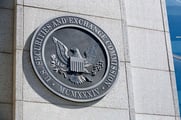
The Securities and Exchange Commission will have to forge ahead with the dozens of studies and regulations called for in the Dodd-Frank financial reform law without any extra funding until at least early March.
These are the following remarks delivered by Securities and Exchange Commission Chairman Mary L. Schapiro as part of the Brodsky Family Fund Lecture Series at Northwestern University School of Law on Nov. 9
RBC Wealth Management (U.S.) chief executive John Taft, the incoming chairman of the Securities Industry and Financial Markets Association, delivered remarks at the organization's annual meeting Nov. 8 in New York.
Waddell & Reed Financial Inc., the mutual-fund manager based in the heart of Kansas that caters to mom and pop investors, is an unlikely company to be blamed for sending Wall Street into a tailspin on May 6.

A government report revealed that exchange-traded funds got hit worse than any group of securities in the market plunge of May 6. How bad was it? Close to 160 ETFs temporarily lost all their value. Now, regulators are looking at ways to safeguard these 'new derivatives.'
