
Office address: One Columbus Circle, New York, NY 10019
Website: db.com
Year established: 1979
Company type: financial services
Employees: 89,700+ (global)
Expertise: investment banking, capital markets, fixed income, currencies, equity research, mergers and acquisitions, prime brokerage, market making, trading, securities clearing
Parent company: Deutsche Bank AG
Key people: Christian Sewing (CEO), James von Moltke (CFO), Fabrizio Campelli (head of investment bank), Marcus Chromik (chief risk officer), Bernd Leukert (chief technology, data and innovation officer), Claudio de Sanctis (head of private bank), Rebecca Short (COO)
Financing status: corporate-backed or acquired
Deutsche Bank Securities is a US-based broker-dealer that offers investment banking, trading, and advisory services. It serves institutional, corporate, and government clients as part of Deutsche Bank’s global investment bank.
This profile will place more emphasis on Deutsche Bank Securities, not just the entire group.
Deutsche Bank has roots in the US that go back to 1872, when it first entered the American market. The bank itself was founded in Berlin, Germany in 1870 to support global trade.
In the late 1800s, Deutsche Bank took risks in American railway investments. It worked with Henry Villard and helped reorganize the Northern Pacific Railroad after its collapse. The bank also supported industries like electric power, mining, and manufacturing.
World wars and changes in the economy led Deutsche Bank to adjust its US plans during the 1900s. After World War I, the bank worked to protect German investors and settle old business.
In 1979, the firm finally opened its own branch in New York. The 1980s and 1990s saw more growth, including new branches and the key purchase of Bankers Trust in 1999.
The Bankers Trust deal gave Deutsche Bank Securities a much larger footprint in the US and brought it into the heart of Wall Street. In 2001, the company was listed on the NYSE. By 2021, it had moved its Americas headquarters to One Columbus Circle in New York.
The firm has faced challenges as well, including a $19 million SEC penalty in 2023 for not meeting ESG promises through its asset management arm. Despite ups and downs, it remains a major player in US investment banking as it continues to adapt to new markets and regulations.
Deutsche Bank Securities delivers investment solutions with a global reach and deep market expertise. The firm is known for its strong research, advisory services, and ability to handle complex transactions for institutional clients.
Deutsche Bank’s US investment platform centers on Deutsche Bank Securities Inc. and its asset management arm, DWS. Specialized units like Deutsche Finance America add expertise in alternatives and real estate.
Deutsche Bank Securities states its culture focuses on empowering employees to work together and achieve results. The company says that its approach centers on people and is guided by four main principles:
The company offers a benefits program that supports a wide range of employee needs. These benefits seek to help the staff balance work and personal life:
Deutsche Bank Securities focuses on building diverse teams and fostering open dialogue across all levels. Programs like ATLAS help women managing directors move into senior roles, with a 100 percent success rate. ERGs, such as dbPride and VOWS, support inclusion for LGBTQI staff, veterans, and others.
Christian Sewing serves as the CEO of Deutsche Bank and oversees HR. He previously led both the Corporate Bank and the Investment Bank. Sewing joined the company in 1989 after completing a bank apprenticeship and earning a diploma from Bankakademie Bielefeld and Hamburg.
The management board is made up of leaders with deep experience in finance, risk, technology, and client service:
The management board sets the company’s strategy, risk, and financial direction. Each member is responsible for key areas of Deutsche Bank’s performance and control.
After strong first-quarter results and rising shares in 2024, Deutsche Bank set aside $1.4 billion for legal provisions related to its 2010 Postbank acquisition. This action puts its planned share buybacks at risk, which are key to rewarding shareholders and supporting long-term growth. Despite the setback, the firm maintains its financial targets and continues to focus on delivering value for clients and investors.
In 2025, one of the firm’s economists also addressed claims that firing Federal Reserve chair Jerome Powell could lower US debt costs. The topic came up after public calls to cut rates as a way to reduce government interest payments.
Deutsche Bank’s analysis showed that removing Powell and forcing big rate cuts would save far less than the $1 trillion some have suggested. By analyzing market reactions, Deutsche Bank shows clients that dramatic policy moves may not lead to real savings.
More than 1,000 employees have signed a union-backed letter opposing the bank's new three-day office mandate.

Collapse in US-Iran talks has sent government bond yields to multi-decade highs worldwide, piling fresh pressure on fixed-income portfolios.

Joseph Glick joins from Sequoia Financial Group to lead operations, tech and finance

They say the offering hid two facts before the stock cratered nearly 70%.

SpaceX, OpenAI and Anthropic listings could trigger billions in passive fund rebalancing as index rules accelerate benchmark entry.

Regulators on both sides of the Atlantic are scrutinizing a nearly $2 trillion market that has thrived in the shadows – and the pressure is mounting.

Separately, UBS strengthens its Manhattan presence with a defector from Deutsche Bank, while Cetera welcomes a father-daughter tandem from Osaic.

Veteran advisor takes on broader oversight as firm reshuffles leadership amid strong growth.

The most clustered forecasts in nearly a decade have some market watchers raising alarms about potential vulnerabilities and complacency in the markets.

Despite recent data pointing to an economic slowdown, investors have remained optimistic on hopes of a just-in-time Fed rate cut.
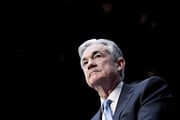
President Donald Trump's call to force rates down 300 basis points would produce far less than his hoped-for $1 trillion in savings, analysts say.

The firm has also appointed Mike Downing and Sean Brennan as co-presidents to its US operations as it looks to proceed with an ambitious five-year growth plan.

The greenback's wild slide has continued as erratic US policymaking spurs a "love-hate" relationship with international investors.

Data show the second-biggest wave of buyback announcements in 40 years, marking a sharp turnaround from companies' muted activity in March.

Prominent strategists say ongoing inflationary pressure hamstring's central bank's ability to support convulsing markets.
