
Franklin Templeton is a global investment manager based in San Mateo with 10,000 employees worldwide and more than 5,400 in the US. The company has managed $1.6 trillion in assets as of 2024 and has operated for 77 years. The firm offers mutual funds, ETFs, retirement and alternative investment solutions, serving clients in over 150 countries.
Key company information:
Core expertise areas:
Franklin Templeton began in 1947 in New York, when Rupert H. Johnson, Sr. named the company after Benjamin Franklin. He wanted the brand to reflect values like frugality and wise investing, which Franklin represented. The firm's first mutual funds focused on conservative equity and bond investments that appealed to a wide range of investors.
The company went public in 1971, which helped it expand and move its headquarters to California in 1973. By the late 1970s, Franklin Templeton had nearly $250 million in assets and about 60 employees.
The launch of Franklin Money Fund in 1979 marked a turning point, as it became the firm's first billion-dollar fund and set the stage for rapid growth in the 1980s.
Franklin Templeton doubled its assets almost every year in the early 1980s. By 1986, it was listed on the New York Stock Exchange under the symbol BEN. That same year, the company opened its first office outside North America in Taiwan.
The acquisition of Heine Securities in 1996 helped Franklin Templeton build a strong lineup of international equity and domestic funds. The company continued to grow with key acquisitions like Bissett in 2000 and Fiduciary Trust in 2001.
The firm expanded into alternatives with the acquisition of K2 Advisors in 2012 and launched its first ETF in 2014. In 2019, Franklin Templeton acquired Benefit Street Partners, boosting its alternative credit offerings.
The company made a landmark purchase of Legg Mason, which brought new investment solutions and expanded Franklin Templeton's reach in fixed income, equities, and alternatives.
In 2024, the company partnered with Microsoft to build a financial AI platform using Microsoft Azure AI services. This project aims to personalize client support and bring advanced intelligence to the firm's business.
Franklin Templeton also expanded its SMA platform in 2025 by adding managed options strategies to its Canvas platform. This gives advisors more tools to manage risk and customize portfolios.
Franklin Templeton offers investment products with daily pricing and a suite of advanced solutions for different investor needs. Their offerings cover both traditional and alternative investments, with options for individuals, professionals, and institutions.
Franklin Templeton provides several investment options with daily pricing:
Beyond traditional daily-pricing products, Franklin Templeton offers advanced investment solutions:
Franklin Templeton is also recognized for strategies that help with tax-efficient wealth management, sustainable retirement income, and efficient wealth transfer. The firm provides insights and tools for college education funding and other wealth planning needs.
Franklin Templeton states that its culture is global, supportive, and focused on progress and inclusion. The company highlights these core values as central to its approach:
According to the company, benefits are designed to support flexibility, self-care, and community involvement. Franklin Templeton offers a comprehensive benefits package to its employees:
Most benefits vary by country, so employees are advised to check with their Franklin Templeton recruiter for local details.
Jennifer M. Johnson is CEO of Franklin Templeton and leads the company today. Johnson has held leadership roles across investment management, distribution, technology, operations, and wealth management before becoming CEO in February 2020. She earned a bachelor's degree in economics from the University of California at Davis.
The executive team brings a range of experience and unique skills to Franklin Templeton's leadership:
Serves as executive chair and chair of the board, bringing decades of leadership and family legacy.
Vice chair who guides firm direction while upholding founding family values.
Works as co-president and chief commercial officer, focusing on commercial growth and global partnerships.
Co-president and head of public market investments, overseeing public market strategies and performance.
Serves as co-president, CFO, and COO, managing financial operations and business strategy.
Executive VP, general counsel, and assistant secretary, leading legal and compliance functions.
The leadership team values new ideas and welcomes different viewpoints from employees. They believe that working together and sharing perspectives leads to better results.
Franklin Templeton is working with Binance to create new digital asset products that connect traditional and decentralized markets. The company's focus is on using blockchain to make investing and settlement easier and more efficient for clients. The firm aims to bring tokenization into everyday investing and help clients benefit from new technology.
The firm is also rolling out agentic AI tools across its global operations by partnering with Wand AI, an AI platform. It plans to use these systems to boost productivity, improve research, and automate complex tasks for clients and staff. The company seeks to make AI a core part of how it invests and operates in the future.
Stay informed about Franklin Templeton's latest developments, strategic initiatives, and market updates. This section highlights recent news and announcements about the company's business, products, and industry activities.
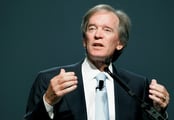
Pimco's Bill Gross, who's been touting the virtues of fixed-income investments for nearly forty years, is now talking up stocks. Why is that?
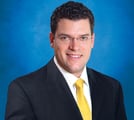
The sovereign-debt crisis in Europe has opened the door for contrarian investing in global fixed income, according to Michael Hasenstab, co-director of fixed income at the Franklin Templeton Fixed Income Group and manager of the $30 billion Templeton Global Bond Fund Ticker:(TPINX).
It's been just over a year since Peter Kraus took over as CEO of AllianceBernstein LP.
The sovereign-debt crisis in Europe is resulting in huge opportunities for value investors, speakers told attendees at Morningstar Inc.'s 22nd annual Investment Conference in Chicago last week.
Michael Hasenstab is senior vice president, portfolio manager and co-director of global fixed income at the Franklin Templeton Fixed Income Group.
Financial advisers find themselves dispensing calming words and holding hands with uneasy investors as the stock market extends its biggest decline in more than a year.
To pry shellshocked investors out of their cash positions, several big fund companies are nudging investors into the next least-conservative position: short-term-bond funds.
Just 28% of those surveyed knew that the market was up last year, while another 6% were unable to say whether the stock market was up, down or flat.
Financial advisers and branch managers chose American Funds as the firm which best meets their needs for marketing materials, according to a study released today by Financial Research Corp.
Fearing a backlash from investors who are still piling into bond funds, mutual fund companies are rolling out sales and marketing campaigns to encourage investors to shift assets into other products.
Shares of asset management companies fell with the broader market in afternoon trading Thursday even after several reported big earnings gains to close out 2009.
T. Rowe Price's target-date fund family was the best performing in 2009, followed closely by funds from John Hancock, according to Russell Investments research.
In the wake of the performance meltdown of many target date funds, a growing number of 401(k) plans are adding target risk funds to their lineup.
