
Office address: 261 Hamilton Avenue, Palo Alto, CA 94301
Website: wealthfront.com
Year established: 2008
Company type: financial services
Employees: 330+
Expertise: automated investing, robo-advisory, stock investing, bond ladders, cash management, retirement planning, tax-loss harvesting, college savings, socially responsible investing, home lending
Parent company: N/A
Key people: David Fortunato (CEO), Andy Rachleff (chair), Daniel Carroll (chief strategy officer), Alan Imberman, CFA (CFO), Julien Wetterwald (CTO), Kal Iyer (VP of engineering), Daniel Slate (head of core product)
Financing status: venture capital-backed
Wealthfront is a financial services company based in Palo Alto with over 1.3 million clients and $90 billion in assets. The company offers automated investing, stock investing, cash accounts, bond ladders, college savings, and home lending. The firm focuses on automation and has a strong presence among tech-savvy investors.
Co-founded by Andy Rachleff and Daniel Carroll, Wealthfront started in 2008 under the name KaChing to offer a unique investment marketplace. Early on, investors could pick portfolios managed by registered investment advisers and asset managers, but the model did not last.
By 2011, Andy Rachleff led a major shift by rebranding as Wealthfront and focusing on automated portfolios designed for individual goals.
The firm moved away from outside managers in 2012 and brought portfolio management in-house. Wealthfront set its advisory fee at 0.25 percent for assets above $25,000, making investing more affordable. Then it started serving employees at large tech companies and introduced direct indexing for high-net-worth clients.
The firm’s real momentum came in 2019 with the launch of interest-bearing cash accounts. These accounts quickly attracted more assets than its investment portfolios as they reached $47 billion in cash and $42 billion in investments.
The company continued to add new products, including automated bond portfolios. Wealthfront also reached $50 billion in AUM by 2023 as it drew more young investors to its platform.
In 2022, UBS planned to acquire the company for $1.4 billion, but both parties ended the deal later that year. UBS instead invested in a convertible note, keeping Wealthfront’s valuation steady.
By 2025, the firm had 1.3 million clients and $90 billion in assets. It filed for an initial public offering as its customer base of tech professionals and Millennials continued to grow.
The firm uses technology to help clients build and manage diverse portfolios. Wealthfront focuses on automation and low-cost investment options:
Wealthfront also offers transparent pricing and digital planning tools. Clients benefit from easy account setup, historical performance data, and a user-friendly platform.
Wealthfront states that its mission is to build a financial system that puts people first, not institutions. The company uses technology to simplify investing and to reach today’s investors.
Employees receive a range of benefits, including the following:
According to Wealthfront, it operates without sales staff or financial jargon and only focuses on simple, client-first solutions. The company values diversity and looks for “big thinkers” who want to improve financial lives.
David Fortunato serves as Wealthfront’s CEO and previously held the role of president. Fortunato joined the company in 2009 as its first CTO and helped launch services in 2011. He earned a bachelor’s degree in computer science and economics from Amherst College.
The key staff at Wealthfront brings a mix of experience and technical skill:
This team includes professionals with various credentials. Many hold Series 7 and 66 registrations and have decades of industry experience.
In 2025, Wealthfront took a major step by privately filing for an initial public offering with the SEC. This move shows the company’s growth as it now manages over $85 billion in assets and serves more than a million clients. The IPO supports the firm’s goal to remain independent and deliver long-term value for clients as financial technology evolves.
After submitting its confidential filing, the firm announced it would list on the Nasdaq as WLTH. The Nasdaq listing will let Wealthfront raise capital, invest in product development, and attract new clients nationwide. Strong financial results, including $339 million in revenue and $123 million in net income, support this next stage of growth.
Reduce your reliance on people by increasing your use of technology and have the ability to expand beyond your geography.
The company is tackling two trends in financial technology: better dashboards for clients and pulling in held-away assets.

Robo-advisers might have more reasons to be worried about the next bear market than investors do.
Pairing technology with humans goes beyond asset management, by getting to know the client — and maybe even their future.

Three robo-advisers are pulling in new information on all types of client accounts in the past month alone to improve service.
The statement is targeted at direct-to-consumer platforms seeking registration in the state.
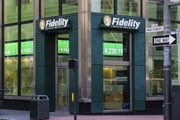
Fidelity Investments, the second-largest U.S. mutual fund company, will test an automated-investment service starting Wednesday on a small group of existing customers.

The firm has amassed four times the amount of assets held by either Betterment or Wealthfront and more than twice as much as Schwab.
Last year's acquisition will bring the firm information on held-away assets and widgets to analyze all aspects of clients' financial decisions.

The robo-adviser saw a 55% increase of total rounds since 2010.

It is no secret that financial giants like Charles Schwab and Vanguard Group have disrupted the robo-adviser industry. Just look at their assets under management.

As rivals expand, the robo hasn't hinted at any plans to partner with advisers.

In spite of tough hurdles, online platforms are positioning to offer plans to the underserved.
Advisers that embrace this disruption and offer a wider range of services will thrive and prosper in the digital age.

Retail robos have a lot to offer investors, but are they really as good as they seem?
