
US producer prices were unchanged in June, slower than expected. The Producer Price Index (PPI) held steady month-over-month, below the consensus forecast of a 0.2% increase, while annual PPI rose 2.3%.
Despite a notable two-month surge in durable goods prices - the largest since mid-2022 - discretionary consumer spending weakened in the second quarter, prompting widespread discounting in travel services. This soft demand helped contain inflation, even as tariffs began to push up goods prices. Economists expect the inflationary impact of tariffs to grow in coming months, though weak business pricing power may continue to blunt their effect.
"Tariffs are raising the prices of goods but are being offset by lower prices of nontraded services. The inflationary impact of tariffs will likely increase in coming months; even so, weak business pricing power may continue to brunt their effect on inflation," Comerica Chief Economist Bill Adams wrote to InvestmentNews in an email.
The latest PPI data suggests the Personal Consumption Expenditures (PCE) price index was flat in June, with core PCE - excluding food and energy - edging down 0.1%, reinforcing the view that inflation remains under control.
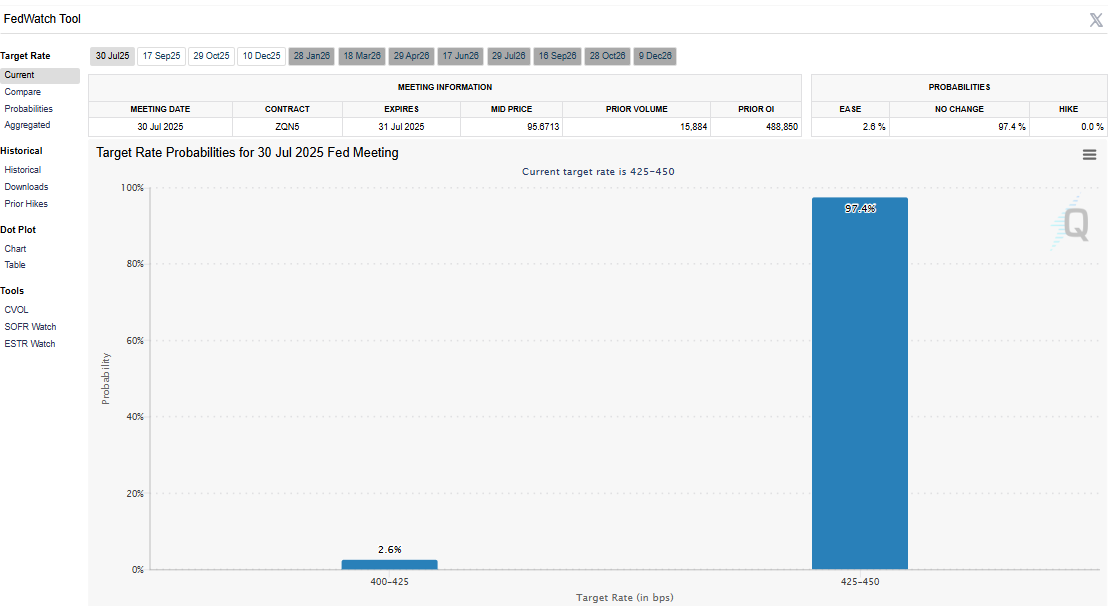
The Federal Reserve is expected to hold interest rates steady at its upcoming meeting.
"Disinflation remains, but the Fed will be undeterred in keeping rates steady until September. As long as the labor market remains strong and resilient, rates aren’t likely to move meaningfully lower, and that’s a good thing. Inflation has hurt millions of Americans and being able to focus on that was needed," Jamie Cox, managing partner at Harris Financial Group, wrote in an email to InvestmentNews.
Additionally, the Fed's Beige Book revealed 10 out of 12 districts expect future economic activity to either flatline or soften in the coming months. Investors should expect margin compression as businesses held off raising prices because of customers’ growing price sensitivity. Business leaders in several districts plan to postpone both hirings and layoff decisions until they get clarity about trade policy.
"Overall business activity was up in the last month, but the outlook was slightly more pessimistic. We should be watchful for signs of margin compression at the business level, financial stress via rising delinquency rates, and a sluggish housing market as inventories rise," LPL Financial's Chief Economist Jeffrey Roach wrote.

These challenges are “changing the economics we see retirement savers face,” said Christopher Ceder of Goldman Sachs Asset Management

Richardson firm joins as Kestra builds out its platform with new leadership, technology, and expanded planning tools.

Retiring RIA seller David Laidlaw alleges the Carnegie valued his stake on $11.7 million EBITA while pitching potential buyers on $21.3 million.

New tool gives RIAs and family offices AI help vetting private market deals, with some users reportedly halving review time.

Investors got projected returns dressed up as real ones, SEC says
As AI makes financial information more accessible than ever, Lana Hock explains why human judgment, trust, and empathy remain the qualities clients value most in a financial advisor
Northern Trust’s Ken Lassner shows advisors how to convert volatility into after-tax portfolio gains

