
For decades, the standard playbook for diversified portfolios was straightforward: pair stocks with bonds and let each hedge the other when markets turn.
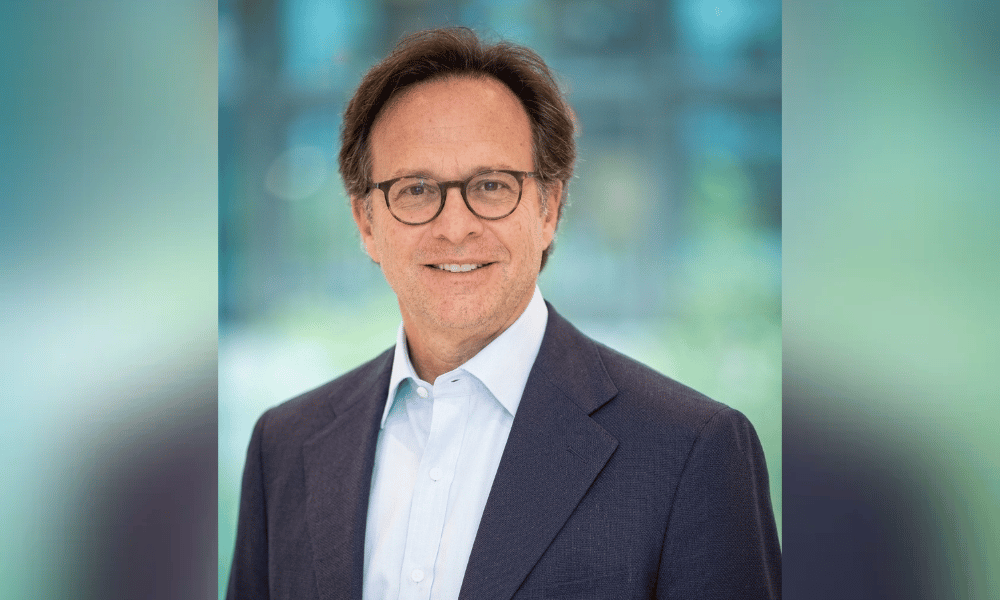
Jeffrey Rosenberg, managing director and senior portfolio manager within BlackRock Systematic in New York, has told InvestmentNews that framework is showing its age and that the emergence of AI as a dominant macro force is making the case for change more urgent than ever.
"The diversification benefit of bonds is more regime-dependent than many investors became accustomed to during the decades before the pandemic," said Rosenberg, who co-leads systematic fixed income active products at BlackRock, overseeing strategies including the iShares Systematic Alternatives Active ETF (IALT) and the iShares Managed Futures Active ETF (ISMF). "When inflation or supply shocks dominate, stocks and bonds can become positively correlated and decline together. We saw that very clearly in the post-pandemic environment."
At the same time, U.S. equity benchmarks have grown more concentrated in a small number of mega-cap companies, which means that owning hundreds of stocks no longer provides the breadth of diversification the holding count might suggest. The result, Rosenberg says, is a traditional stock-bond portfolio with fewer genuinely independent sources of return than most advisors assume.
One of the most significant shifts in fixed income over recent years, Rosenberg says, is that the income opportunity has become considerably more attractive, even as the diversification relationship with equities has become less reliable.
"For much of the post-global financial crisis period, investors were accepting very low - and at times negative - real yields while bonds provided powerful portfolio diversification," he said. "Today that tradeoff has changed. The diversification benefit is less reliable, but the income opportunity is considerably better."
For income-oriented clients, including retirees, Rosenberg sees attractive opportunities in higher-quality credit - particularly in front-to-belly maturities - where investors can capture meaningful yield without taking disproportionate duration or credit risk. He cautions against reaching further down in quality when credit spreads are already tight.
"Strong corporate fundamentals can support credit, but tight spreads mean investors aren't necessarily being paid to move aggressively down in quality simply to pick up incremental yield," he said.
The opportunity, in his view, is less about chasing the highest yield and more about taking advantage of the fact that today's starting level of rates allows investors to build meaningful income with higher-quality assets and a more balanced risk profile.
One area where Rosenberg sees meaningful evolution is active fixed income ETFs - a category that has drawn significant advisor interest as it has grown in scale and sophistication. He frames the development as the convergence of two distinct innovations: the ETF structure itself and active management.
"An index bond ETF gives you efficient exposure to a benchmark, but an active ETF enables the manager to decide where to take duration, credit and other risks rather than simply accepting the composition of an index," he said. "That becomes particularly valuable in an environment where inflation, interest rates and correlations are less stable."
For advisors, Rosenberg highlights the concept of precision - the ability to disaggregate a bond portfolio rather than simply owning the Aggregate Index. The ETF ecosystem, he argues, is giving advisors and model managers access to portfolio-construction tools that institutional active managers have long used.
Research from BlackRock's investment and portfolio solutions team indicates that only approximately 35 percent of advisor-managed portfolios currently allocate to alternatives, suggesting meaningful room to broaden return drivers, according to BlackRock's alternatives investing insights page.
"In many ways, ETFs are giving advisors and model managers access to the same kinds of portfolio-construction tools that institutional active managers have traditionally used," Rosenberg said.
AI is a constant presence across Rosenberg's analysis - not as a thematic equity trade, but as a macro force reshaping portfolio construction from the ground up.
"AI isn't just a micro story," he said. "Increasingly, it is the macro story. The enormous infrastructure and capital-spending buildout is supporting investment, economic growth and, through the wealth effect, consumption. But it can also add to inflationary pressures by increasing demand for energy, infrastructure and other constrained inputs, while the enormous demand for investment capital creates competition for capital that can put upward pressure on real borrowing costs."
That framing has direct implications for portfolio construction. Rosenberg identifies three dominant themes currently at work in markets - AI, inflation, and oil and geopolitics - and notes that they are increasingly interconnected. Geopolitics influences oil; oil influences inflation; inflation drives rates, commodities and the broader macro outlook. The result is that exposures that look diversified by asset class may ultimately be tied to the same underlying drivers.
This is where liquid alternative strategies - including long/short and market-neutral approaches - become particularly relevant, in his view. "Long/short and market-neutral strategies can use short positions to mitigate common market or thematic exposures and seek to isolate more idiosyncratic sources of return," he said. "In an environment where more of the portfolio may ultimately be connected to a small number of dominant macro themes, understanding those common return drivers becomes increasingly important."
Alternatives ETFs have drawn substantial interest in 2026, with the category taking in nearly $30 billion in net new assets in the United States through mid-year - led by IALT - representing approximately 2.5 percent of all ETF flows, according to data cited by Advisor Perspectives (July 2026).
Asked where he sees the greatest risk of portfolio missteps over the next 12 to 24 months, Rosenberg identifies three concerns.
The first is assuming that the diversification relationships of the pre-COVID era will simply reassert themselves. "Inflation remains a much more important macro risk, and that means bonds may not always provide the offset to equity weakness that investors became accustomed to," he said.
The second is reaching for risk where investors are not being adequately compensated - particularly by moving down in credit quality when spreads are already tight and fundamentals are, by most measures, healthy.
The third is what Rosenberg calls failing to recognize common drivers beneath apparently diversified portfolio exposures. If AI, inflation and geopolitics are all interconnected, then a portfolio that looks diversified across asset classes may in practice carry concentrated exposure to those same underlying themes. "That's why I think investors need to focus not just on diversifying assets, but on diversifying strategies and sources of return," he said.
For advisors looking for a framework on where to start, Rosenberg suggests thinking about liquid alternatives not as a replacement for stocks and bonds, but as an additional layer of return drivers - strategies whose outcomes do not depend primarily on broad market direction. IALT, he said, is intended to serve as a "return-seeking diversifier": a complement to traditional allocations with differentiated sources of return that are less tied to equity or credit market performance.
Systematic investing, he argues, is well suited to this environment precisely because of its breadth and discipline. "A systematic process can combine many different sources of information and return in a consistent, diversified and repeatable way," he said. "That can be valuable whether the objective is generating alpha, improving diversification or building more resilient portfolios."

The SEC's restructuring plan would bring the CAT under direct federal oversight, eliminating a decentralized governance model.

The new Portfolio Model Management capability lets advisors scale investment implementation while retaining client-level flexibility.

Demand for formal youth investing education is surging, but advisors may be the missing piece in filling the classroom gap.

Raymond James lures a $125M Merrill Lynch advisor in Charlotte while a Stifel pair breaks away to go independent in Southern Oregon

Pave Finance, DPL Financial Partners and Gottfried & Somberg also add senior leaders as RIAs and wealthtech firms deepen their benches
Advisors are broadening the conversation beyond savings to help clients prepare for the realities of longer lives
Growing wealth, evolving priorities, and untapped opportunities are reshaping how women approach long-term investing.

