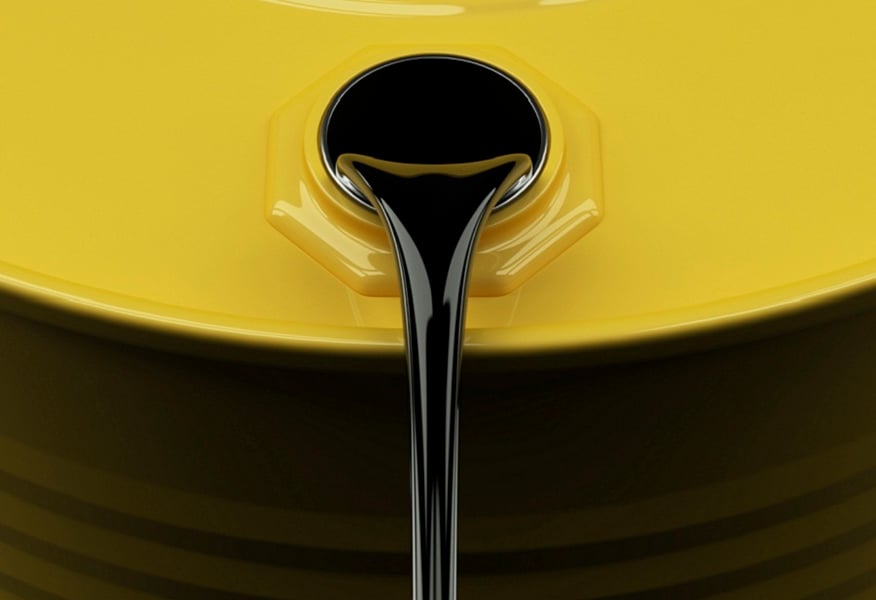
Anyone who has put gas in their car recently can certainly relate to the immediate benefits of cheap oil. And since consumer spending represents about 70% of the U.S. economy, many of the big thinkers are leaning hard on the argument that lower fuel prices, and energy prices in general, are the best case for a strengthening economy.
The cynic, however, might argue that oil prices could suddenly take off on a massive rally, effectively gobbling up all that extra consumer pocket change, and thereby stalling the already lackluster economic momentum.
Well, hold your horses there, Mr. Skeptic, because while there is plenty to worry about on both the global and domestic fronts,
spiking oil prices should not be among those fears. At least not anytime soon.
That is the reality that investors and financial advisers will need to embrace, and learn to navigate, as so many signs point toward a stronger dollar, weak commodity prices, and trouble ahead for equities and junk bonds. Add to that a
Federal Reserve determined to force interest rates higher, and you've got more of the same when it comes to oil prices.
GUNDLACH'S CALL
Last week, during his 2016 outlook conference call DoubleLine Capital founder Jeffrey Gundlach diverted briefly from an
otherwise bearish tone to suggest that at around $30 a barrel, oil might be approaching a near-term bottom.
For those spending sleepless nights fretting over a global oil glut that has pushed the price of the commodity down nearly 80% from the $148 peak in the summer of 2008, Mr. Gundlach's call might be welcome news.
Any well-formed forecast that's contrary to all those other outlooks for even cheaper oil is worth considering. But, in typical fashion, Mr. Gundlach immediately goes on to qualify the heck out of his oil-bottoming prediction by showing how production has continued to climb well past the point in 2014 when the price began sliding.
INVENTORIES
Oil inventories are now about 25% above where they were during any of the past 10 years.
In essence, even if the price of oil is finding a low point, we're stuck with cheap oil for the time being, and no realistic technical or fundamental case can be made for the price climbing to levels that will revive the now-floundering U.S. shale industry, or the broader energy sector.
Even a miraculous, but unlikely, 50% spike in oil to around $45 a barrel, won't get us all the way back to full strength for the energy sector.
Stewart Glickman, an equity analyst at S&P Capital IQ, expects oil to be rangebound this year, hovering between $30 and $50.
With that in mind, Mr. Glickman said energy-sectors stocks will be “less bad in 2016,” than they were in each of the past two years when the energy sector trailed the overall S&P 500 Index by more than 20 percentage points.
The “less bad” forecast is supported in part by an increased correlation between energy-sector stocks and the price of the oil. But remember, even that scenario requires some upward price movement for oil in order for it to actually be considered rangebound.
$11 OIL?
As the price of oil has threatened to drop below $30 a barrel, some worrywarts have started reflecting on 1998 and 1986 when oil prices dropped to the $11 range. However, in those cases production was exceeding storage capacity levels. We're not there yet.
There is, of course, the issue of Iran coming on line, adding even more oil to the global market glut. But the silver lining there is, we'll know within a week how much oil they plan to pump, which will add clarity to that concern.
In the context of the global picture, oil isn't everything. But it's a lot.
“Right now, oil is a pretty important piece because it relates to issues with currencies, global GDP, and credit problems, and if we can get a bottoming in oil, that might be the best we can hope for this year,” said Robert Doll, chief market strategist at
Nuveen Asset Management.
On playing that bottom, Mr. Doll echoed sentiments of Mr. Gundlach. “Don't try to bottom fish in the energy sector," he said. "Don't be a hero.”
Higher oil prices, at this point, might best be described as a pipe dream. So, maybe the best we should expect is stable oil, and there are some forces in place for that.
“Simplistically speaking, the cure for low oil prices is low oil prices, because that increases demand and also takes the unprofitable production off line,” said Hank Smith, chief investment officer at Haverford Trust.
Now, that's a man who believes in the forces of supply and demand. And believe we must, because at this point it's all we've got.
Well, that and cheap gasoline.