
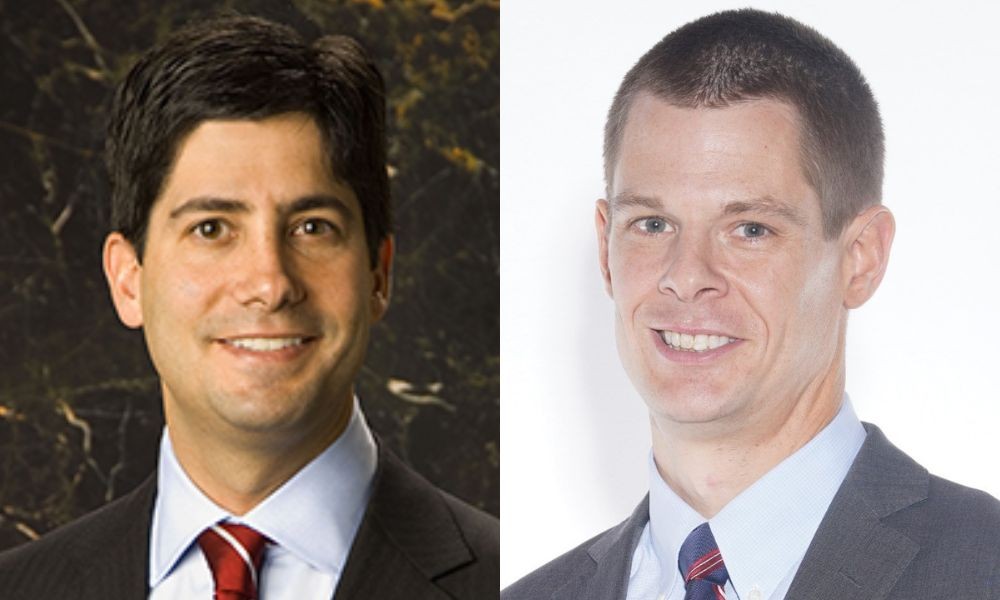
President Donald Trump’s nominee to lead the Federal Reserve, Kevin Warsh, used his confirmation hearing this week to again bang the AI drum, touting the hugely disruptive technology as a vital productivity tool for U.S. business. Advisors are closely watching what this means for their businesses and the broader U.S. economy.
The inexorable rise of AI has sparked major changes for advisors, both in how they work, and the technology’s broader implications. Earlier this year, for example, tech stocks plunged as fears about AI’s impact sent shockwaves through the market.
Advisors, however, have leapt to adopt AI, which has even been touted as a solution to the industry’s advisor shortage.
AI certainly has a champion in Trump’s Fed chair pick. Warsh who would become the wealthiest Fed chair ever, if confirmed, would also be “the first tech bro” in the role, according to CNBC, which cites his close links to Silicon Valley.
During Tuesday’s hearing Warsh was fulsome in his praise of AI. “The pace of change in these technologies is accelerating,” he said. “AI, which I think of really as American ingenuity, gives America a huge headstart relative to our competitors around the world.”
However, he acknowledged that the technology is “not without real risks and real challenges,” adding that “a forward looking, reform-oriented central bank needs to be on the front end of it.”
AI-related stocks are climbing in the wake of Warsh’s testimony, with Palantir Technologies Inc. (Ticker: PLTR) up 2.9% and Microsoft Corp. (Ticker: MSFT) up 1.3%. Shares of Google parent Alphabet Inc. (Ticker: GOOG) are up 1.4%, outpacing the tech-heavy Nasdaq’s gain of 1%.
The issue of AI and productivity was one of the key takeaways from Warsh’s confirmation hearing, according to David Doyle, head of economics at Macquarie Group. “Warsh made several remarks alluding to the possibility of strong supply side gains and productivity growth from AI, but with more limited demand side impacts,” he said. “Such a description suggests an outlook for disinflation as it indicates the supply side of the economy may grow faster than the demand side, leading to a wider output gap.”
Doyle notes that, historically, higher productivity, and profitability, has driven a surge in business investment, pushing the neutral rate higher. “Moreover, there is broadening evidence that tech related inflation is accelerating as strong AI related demand is pushing up prices,” he added.
Others have also flagged this possibility. Earlier this year, Federal Reserve Governor Michael S. Barr warned that the AI boom could be inflationary in the near-term.
Elsewhere, advisor productivity has been in the spotlight around AI. A recent Morgan Stanley analysis, for example, framed the technology as an aid to operations rather than an existential threat.
For Warsh, AI should be seen firmly within a historical context. “This is the most disruptive moment in modern economic history in the U.S. and the world,” he said, during the hearing. “Today we call it artificial intelligence. Two years from now we’re going to call it business cap ex and three years from now we’re going to call it just ordinary business.”
“I think the essential elements of a new policy for the Federal Reserve is to get access to better data and to dig deeper into the productivity possibilities that can come out of this new investment wave.”
However, Republican Senator John Kennedy took the opportunity to warn Warsh about the hype swirling around AI. “Here’s my worry that a lot of this stuff about artificial intelligence making us more productive is a bunch of hype by people who want to sell stock and an IPO,” he said. “I’d be careful there."

Salespeople at the firm often went beyond the matching algorithm to recommend network advisors on its Zoe Wealth platform, according to the regulator.

The Protect College Sports Act would cap school payments and codify NIL rights, with implications for advisors guiding young athletes.

"I know the number that I want to be able to retire on, and now I just want out," says Wilmington Trust's Marguerite Weese, describing a common refrain among business-owner clients.

Bessemer and Brown Brothers Harriman veteran Robert Ludricks III and private markets specialist Olof Akesson join the ultra-high-net-worth push on the East Coast.

765 investors were promised 260% annual returns on truck leases
As AI makes financial information more accessible than ever, Lana Hock explains why human judgment, trust, and empathy remain the qualities clients value most in a financial advisor
Northern Trust’s Ken Lassner shows advisors how to convert volatility into after-tax portfolio gains

