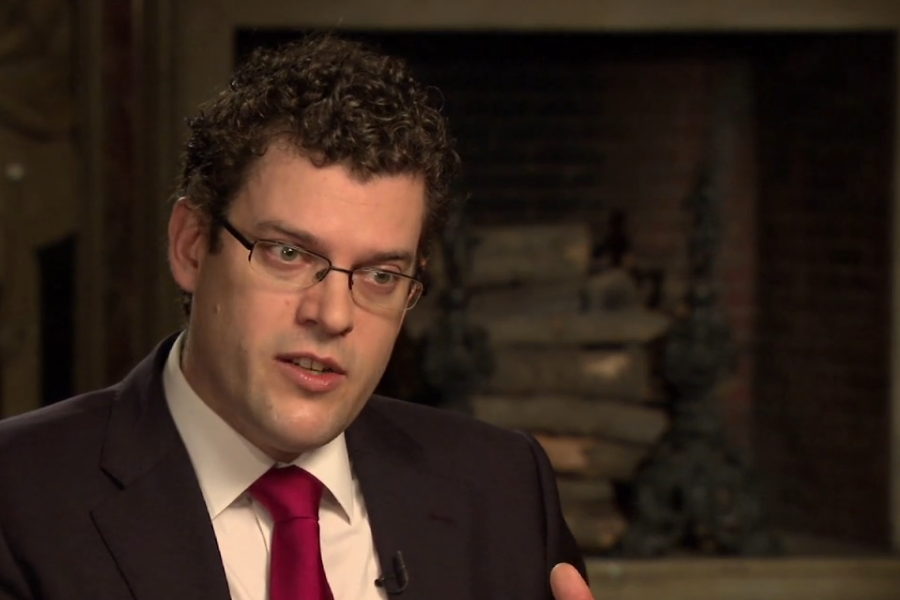
The beat-down suffered broadly across the emerging markets over the past few years has left some value in its wake, according to Michael Hasenstab, manager of the $48 billion Templeton Global Bond Fund (TPINX).
Investors would be wise to proceed with caution, but definitely proceed into the emerging economies, said Mr. Hasenstab, the opening keynote speaker at the 28th annual Morningstar conference in Chicago on Monday.
“We're talking about the most unloved asset class of the past three or four years,” he said. “You cannot take a shotgun approach to investing in the emerging markets; you have to take a rifle approach because the currencies will not move together.”
On that point, Mr. Hasenstab said he expects the U.S. dollar will enter a second phase of appreciation versus the Japanese yen and the euro.
The headlines regarding the recent dire straits of many emerging economies, he added, don't tell the whole story of the value that exists in select countries.
On the extreme end, he said, “If you're looking for a really cheap place to vacation, it would be hard to beat Mexico right now.”
Despite what he described as the worst financial crisis since the 1980s in Brazil, Mr. Hasenstab said he made a significant bet on the country late last year because he believes the country's financial woes are “quite manageable.”
“Yes, there's a crisis there, but we see an exit out of that,” he said. “And Ukraine is the first sovereign debt restructuring that happened in a win-win way.”
CHINA, VENEZUELA
Mr. Hasenstab added that much of his outlook for the emerging markets hinges on the Chinese economy, which he sees moving toward a soft, rather than more abrupt, hard landing.
“Believing that China can engineer a soft landing all has to do with their two-speed economy,” he said. “Huge swaths of China are in
recession today, but that's the old economy. The other side to that is the growth of the service sector where you're seeing real innovation and growth.”
It is ultimately about taking on some currency risk, and appreciating that currencies tell the story of the underlying economy, he said.
“Despite the shock to exchange rates, the solvency of many of these countries has remained intact,” he said. “But it's not uniform. There are some countries that are vulnerable.”
Mr. Hasenstab said he expects Venezuela to default.
“They can't even afford to pay for the paper they need to print more money,” he said. “That's not a good sign.”
Closer to home, Mr. Hasenstab said he believes the U.S. economy will be able to roll along a few more years without entering another
recession, largely because the recovery has been so slow.
“Given the strength in the labor market and the exceptionally slow recovery, I think the U.S. economy will be able to hang on a little while longer,” he said.