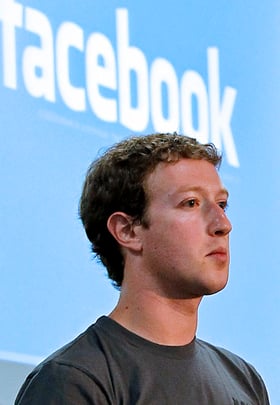
Facebook will go public in the fall of 2012.
Do I know this because I tapped my sources on Wall Street — or because Mark Zuckerberg has been whispering in my ear?
Of course not. I have as much contact with investment bankers as I do with the Slovakian ministry of defense. And Mark Zuckerberg has made no effort to befriend me on Facebook — probably because I don't have an account. (The truth is, I don't want to spend time on Facebook chasing after now-graying junior high school kids who didn't want to friend me when they had the real-world opportunity, and finding out they still don't want to friend me.)
No, the reason I know when Facebook will go public is because I've lived through countless market cycles and understand the public's love-hate relationship with stocks — and how Wall Street profits from it.
Here's my reasoning for the timing of the Facebook
IPO.
First, it will take months for the Securities and Exchange Commission to complete its current investigation of disclosure rules for privately held companies. Nothing will happen until that's done, even though the investigation itself will lead nowhere because the issue is a whole lot of hoo-ha over nothing. Who's hurt by the private trading of private company shares? Probably no one, and if a few are, they're just the wealthy individuals who have access to such deals, so no one will publicly come to their defense anyway.
Reason No. 2: We're in the early to early-middle stage of an equity bubble. With the Fed's foot to the floor on the cash-creating pedal, a lot of liquidity is migrating onto the stock market.
After all, where else can it go?
We're still working off the real estate excesses of the last bubble, so there's not going to be another construction boom for a while. And Corporate America would much rather engage in financial legerdemain like stock buybacks and M&A deals than take a risk in real new business ventures. So with corporate profits so lush — after all, each employee is doing the work of two — stocks now look like a good buy to institutional investors.
The public, of course, still has the scars from the flash crash and the last stock market implosion. A decade of zero equity growth while riding a roller coaster of market booms and busts does not sit well with retail investors. But give 'em time.
Over the course of 2011, as interest rates remain puny and a municipality or two gets bailed out or effectively goes bust, retail investors will be looking at the Dow and S&P as those indexes reach new highs and think, “Hmm, maybe now is the time to get back into equities.”
One notable bull, in fact, Laszlo Birinyi, predicts that the S&P 500 will rally to 2,854 by September 2013.
With the stock market almost always delivering great performance in the third year of the presidential election cycle, retail investors in 2012 will have a year of “proof” behind them that the equity markets have indeed turned around. Whether a Republican wins the White House in November 2012 or President Obama gains re-election by following the Clinton example and tracks to the center, the electorate will see the rising market and a slowly expanding economy as signs that things are getting better.
In such an environment, they'll be clamoring to buy shares in Facebook, which by that time could have every man, woman and child on the planet as a user.
Facebook's most recent shareowners —
Goldman Sachs and a Russian investment firm (does the term “impatient capital” come to mind?) — will see the good times of late 2012 as the perfect moment to cash in their chips. And who better to provide them an exit but a throng of eager retail investors dying to get into a sure thing.
Of course, the new president will be inheriting a still-recovering economy and a container-boatload of debt. The stock market is probably more likely to sink under such a weight than rise, but by that time, the big money will have cashed out. And Mark Zuckerberg will be smiling as he rings the NYSE bell.