

Rebalancing flows may lead to an exodus of around $300 billion from global stocks by the end of the year, according to JPMorgan Chase & Co.
Large multi-asset investors may need to rotate money into bonds from stocks after strong equity performance so far this month, strategists led by Nikolaos Panigirtzoglou wrote in a note Friday. They include balanced mutual funds, like 60/40 portfolios, U.S. defined-benefit pension plans and some big investors like Norges Bank, which manages Norway’s sovereign wealth fund, and the Japanese government pension plan GPIF, the strategists said.
“We see some vulnerability in equity markets in the near term from balanced mutual funds, a $7 trillion universe, having to sell around $160 billion of equities globally to revert to their target 60:40 allocation either by the end of November or by the end of December at the latest,” the strategists wrote.
If the stock market rallies into December, there could be an additional $150 billion of equity selling into the end of the month by pension funds that tend to rebalance on a quarterly basis, they added.
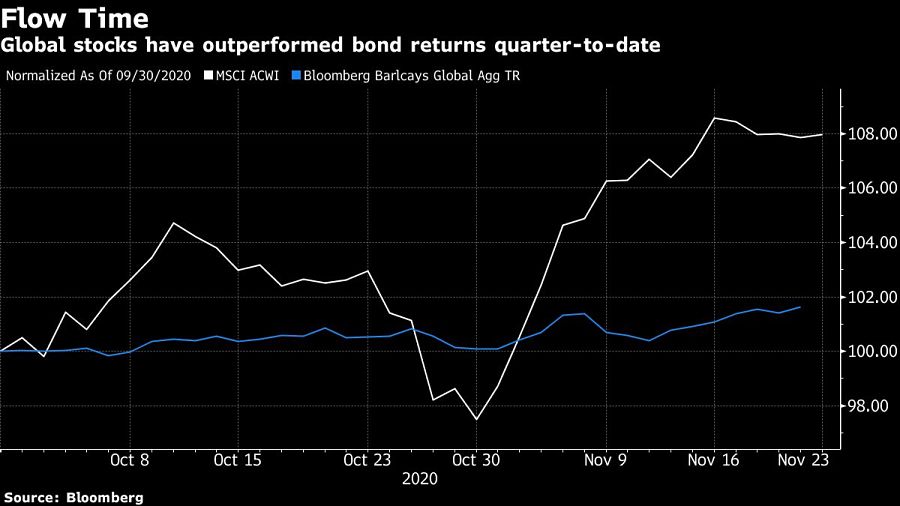
An MSCI gauge of global stocks reached a record on Nov. 16. It’s up more than 10% this month as positive news about COVID-19 vaccines emerges and as concerns about the U.S. election began to fade. The Bloomberg Barclays Global-Aggregate Total Return Index has risen around 1.5%.

“I’m seeing more disputes like this between advisors and other advisors at the same practice,” said one industry executive.

Longer retirements and steady inflation could drain retiree portfolios before heirs inherit, with 4% net returns running dry by year 34.

Beth Emswiler and Andrew Borner join as senior managing directors as the private bank widens its push for ultra-high-net-worth clients

Morningstar advisor survey finds admin work, rising client demands are offsetting efficiency gains from greater technology adoption.

Raymond James, UBS and Prime Capital Financial also announced additions as advisor recruiting stays brisk across wirehouse and independent channels
As AI makes financial information more accessible than ever, Lana Hock explains why human judgment, trust, and empathy remain the qualities clients value most in a financial advisor
Northern Trust’s Ken Lassner shows advisors how to convert volatility into after-tax portfolio gains

