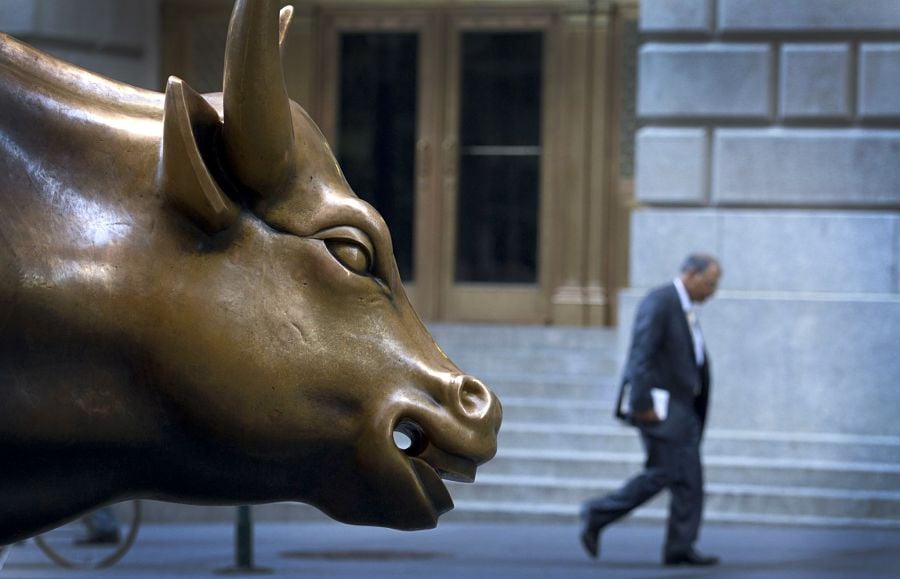
The latest eye-popping rout in equities has stoked the debate that's gripped Wall Street all year: Is the record run in U.S. stocks doomed?
In essence, bulls and bears are squaring off over whether the economy and earnings have peaked, portending a halt to a nine-year surge that's added more than $16 trillion to the value of American equities.
Evidence exists to support both sides, with Tuesday's sell-off firming conviction among bears that the economy is headed for a slump that even a trade deal can't prevent. Optimists point out that the slide, while deep, erased less than half of the six-day rally sparked by the Federal Reserve's dovish turn. Trade tensions already eased and a hot jobs report Friday would only embolden bulls.
Here's a recap of the key arguments:
Earnings
What matters most to equity investors is corporate profits, and there's consensus that 2018's heady growth won't be matched. The debate here hinges on whether earnings will expand at a slower pace or actually decline.
Bull case: This year's 20% growth rate won't be matched, but Wall Street still predicts a 10% gain in 2019, which is hardly a cause for worry. Since 1980, earnings growth has peaked 11 times, according to Dan Suzuki, a portfolio strategist at Richard Bernstein Advisors. The S&P 500 was higher a year later in 10 cases, with an average gain of 18%.
Bear case: It'll be a stretch to get to 10%, with analysts steadily ratcheting forecasts lower. They expect S&P 500 companies to earn $175.10 a share next year, down from $177 in September. More cuts loom, with energy companies still predicted to deliver 20% growth even after oil's plunge.https://cdn-res.keymedia.com/investmentnews/uploads/assets/graphics src="/wp-content/uploads2018/12/CI118198127.PNG"
U.S. Economy
Economic growth delivers earnings, and it's here the debate gets most heated. Significant metrics show the American economy is kicking. The glass-half-empty view holds that growth has peaked and
recession won't be far behind.
Bull case: Stocks will rally as GDP stays robust, inflation steadies and unemployment holds at record lows. Odds that the U.S. will fall into a recession in the next year stand at 15%, according to Bloomberg's U.S. Recession Probability Forecast index.
Bear case: Trouble looms as the housing market wobbles, the consumer shows signs of tiring and the
Federal Reserve teeters on the brink of a policy mistake.
Federal Reserve
Dovish or hawkish?
Bull case: Chairman Jerome Powell took policy off auto-pilot with his dovish turn, giving the Fed room to pause if inflation stays tepid and signs of a slowdown mount. Fewer hikes keep corporate America's borrowing costs in check and keep the economy humming.
Bear case: The Fed's path is anything but clear. Markets expect fewer rate hikes than the central bank currently projects, and hawks still have a voice, most recently in New York Fed President John Williams. Stocks could be in for a nasty surprise if a pause isn't in the cards.
Yield Curve
The spread between short- and long-term Treasuries has been narrowing for months, raising alarm that a reliable recession signal is imminent.
Bull case: There's no need to fret about an inversion as output has remained strong for several quarters. Even if the curve does invert, stock investors needn't immediately panic. Canaccord Genuity research shows that after all but one of the seven inversions since the 1950s, stocks were higher a year later, with returns of as much as 21%.
Bear case: The two-year/10-year spread will turn negative and a recession won't be far behind. It's a bad omen for equities, according to
Bank of America strategists, who see a "baby bear" market as a result.https://cdn-res.keymedia.com/investmentnews/uploads/assets/graphics src="/wp-content/uploads2018/12/CI118197127.PNG"
Corporate Credit
Companies are saddled with a combined $9 trillion of bond debt, almost double the level in 2008, and equity investors are showing a preference for stronger balance sheets.
Bull case: There are few catalysts for a big downturn in the credit market, especially as the U.S. economy and earnings remain strong. Companies have also issued less debt this year, giving them more room to tame existing obligations and shore up profits.
Bear case: Credit quality has deteriorated — nearly half of the investment-grade market is rated just one tier above junk — and bond investors say a market rout is overdue. Equity investors will get caught up in the turmoil.
Trade
Tariffs have raised costs across industries, threatening to upend profit forecasts and slow the economy. In about 90 days, the levies could get more onerous, or China and the U.S. may have an agreement to cut them.
Bull case: The 90-day truce provides a chance to make progress toward a deal that could remove one of the market's biggest headwinds. China signaled a willingness to ease tensions, and both countries see the economic benefits of a detente.
Bear case: A stalling in the trade spat just elongates the volatility and bluster for equities. With few details emerging, companies that have seen tariffs take a toll up to this point are left with more uncertainty and confusion regarding what lies ahead.