
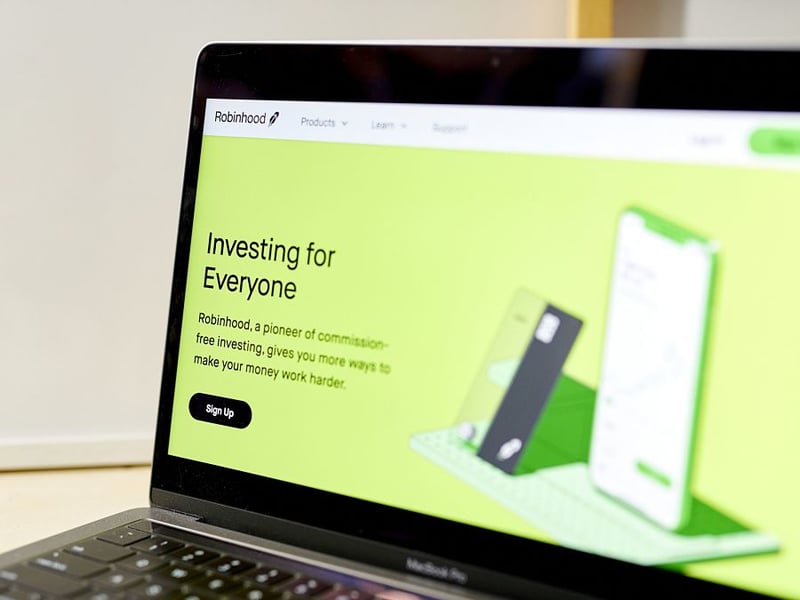
Robinhood Markets closed 2025 with its strongest financial performance to date, posting record full-year revenue of $4.5 billion and fourth-quarter revenue of $1.28 billion, according to its latest earnings release.
The results, released after the closing bell on Tuesday, highlight sustained customer growth, rising platform assets, and broader product adoption as the company continues to expand beyond its core trading business.
After-close trading reflected investor concerns regarding cryptos and weaker profits with Robinhood’s shares down 7% by 5pm and off by 24% so far this year.
For the full year, Robinhood reported net income of $1.9 billion, with diluted earnings per share of $2.05. In the fourth quarter alone, diluted EPS totaled $0.66. Net deposits reached $68.1 billion in 2025, including $15.9 billion in the fourth quarter, driving total platform assets up 68% year over year to $324 billion.
Management reiterated that the company’s long-term direction remains. “Our vision hasn’t changed: we are building the Financial SuperApp,” said Vlad Tenev, Chairman and CEO of Robinhood.
Fourth-quarter transaction-based revenue rose 15% from the prior year to $776 million, supported by strength in options, equities, and other transaction categories, partially offset by lower cryptocurrency revenue. Net interest revenue increased 39% to $411 million, reflecting growth in interest-earning assets and securities lending activity. Other revenue more than doubled to $96 million, led by higher Robinhood Gold subscription revenue.
User and engagement metrics continued to climb. Funded customers increased 7% year over year to 27.0 million, while Robinhood Gold subscribers rose 58% to a record 4.2 million. Average revenue per user grew 16% to $191.
Chief Financial Officer Shiv Verma pointed to both the scale achieved in 2025 and the company’s outlook. “2025 was a record year where we set new highs for net deposits, Gold Subscribers, trading volumes, revenues, and profits, and we closed the year with a strong Q4,” he said.
The company also highlighted continued momentum across retirement, advisory, banking, prediction markets, and international expansion initiatives. Preliminary January 2026 data showed ongoing deposit growth and rising margin balances, while Robinhood outlined higher planned investment spending to support product development and expansion.
“2026 is off to a strong start, and we are incredibly excited about our plan and momentum for the year ahead as we focus on shipping great products for customers and driving profitable growth for shareholders,” added Verma.

In a constant fight over control of clients, the financial advice industry has a long history of such allegations and disputes.

Retirement fintech Vestwell has hit profitability and $200 million in annual recurring revenue, powering savings programs for 750,000 employers and Wall Street’s biggest firms

Meanwhile, &Partners has drawn another Wells Fargo team based in Missouri, while an experienced South Carolina advisor has returned to Cetera from LPL.

Faulty Forms 1099 and account statements reportedly left some Vanguard brokerage customers overpaying or underpaying taxes for over a decade.

The democratization of ETFs cuts both ways
As AI makes financial information more accessible than ever, Lana Hock explains why human judgment, trust, and empathy remain the qualities clients value most in a financial advisor
Northern Trust’s Ken Lassner shows advisors how to convert volatility into after-tax portfolio gains

