
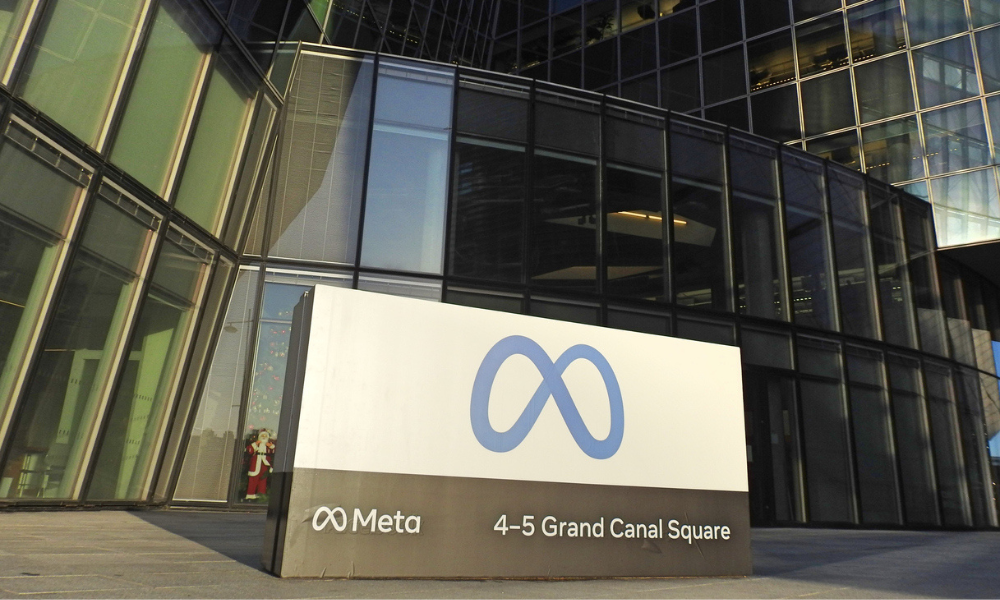
Mark Zuckerberg, founder and chief executive of Meta Platforms Inc., has published a wide-ranging vision statement today (August 10, 2026) promising to deliver "personal superintelligence" to billions of people.
AI agents that would, in his words, work around the clock to improve users' finances, health, careers, and relationships. But the vision arrives amid the backdrop of Meta reporting that its free cash flow had collapsed 91% year over year, falling to $784 million in the second quarter of 2026 from $8.55 billion in Q2 2025.
Meta has committed to capital expenditures of between $115 billion and $135 billion for the full year 2026, according to company guidance issued in January; nearly double the $72.2 billion spent in 2025. Total operating expenses for 2026 have been revised upward to $165–$169 billion, up from $117.7 billion the prior year. The buildout is centered on large-scale data centers intended to power next-generation AI inference and training workloads.
The essay, The Future is for Everyone is a strategic positioning document aimed squarely at regulators, potential competitors, and the broader investment community.
Zuckerberg argues that Meta occupies a unique lane because while most AI laboratories are building tools for governments, enterprises, and institutions, Meta is focused on personal superintelligence for individual consumers. The company's distribution advantage (3.6 billion daily active users across its family of apps, including 2 billion on Instagram alone) is the underlying logic for why that positioning may be defensible.
Meta remains one of the world's most effective advertising machines. Second-quarter revenue rose 28% year over year to $60.8 billion, driven in part by an 18% increase in ad impressions and a 6% rise in average price per ad reported as of Q4 2025. The advertising flywheel, still spinning, is what is funding the AI ambition.
The risk, however, is duration. Net income for Q2 2026 came in at $15.85 billion, or $6.18 per share (down 14% year over year) partly reflecting $2.4 billion in legal expenses and $1.18 billion in severance costs tied to May layoffs. Meta shares fell $24.76, or 4.2%, to $560.85 in after-hours trading following the earnings release, signaling that Wall Street is watching the capex clock carefully.
One detail in Zuckerberg's manifesto that deserves closer attention from investment analysts is his reference to a "dynamic auction mechanism" for compute access.
In a world where AI services become utility-like infrastructure, the ability to price access to computing resources dynamically (similar to how cloud providers like Amazon Web Services and Microsoft Azure operate) represents a potential new revenue stream for Meta that sits outside its traditional advertising model.
The company has not provided financial guidance on this component, but it reflects an awareness that the long-term monetization of AI may look more like enterprise software than digital advertising.
Zuckerberg also announced the launch of "America's Workforce Academy," a skilled trades training initiative tied to the communities surrounding Meta's new data center sites. The company cited a $50,000-per-teacher bonus paid out in Richland Parish, Louisiana; a function of increased local tax revenues from infrastructure investment. This kind of community benefit framing is increasingly important for technology companies navigating bipartisan scrutiny in Washington.
Zuckerberg states that Meta's independent board of directors will approve safety criteria for AI model releases and review whether each release adheres to those criteria. He also calls on frontier AI laboratories, Meta included, to share intermediate training checkpoints of new models with the federal government for review, and to contribute technical resources toward hardening critical infrastructure against cybersecurity threats.
Whether these commitments translate into meaningful oversight or remain aspirational will be a key question for institutional investors applying governance screens to large-cap technology holdings.

Faulty Forms 1099 and account statements reportedly left some Vanguard brokerage customers overpaying or underpaying taxes for over a decade.

The democratization of ETFs cuts both ways

Independent broker-dealers snap up experienced advisors as competition for established practices intensifies.

Derek Flowers, a nearly 30-year veteran, is set to retire in mid-January, handing the reins to the executive who helped lead the bank's regulatory turnaround.

The campaign spans broadcast TV and streaming, as the brokerage faces slowing client net flows and an $8.1 billion advisor team that left to launch an RIA this month.
As AI makes financial information more accessible than ever, Lana Hock explains why human judgment, trust, and empathy remain the qualities clients value most in a financial advisor
Northern Trust’s Ken Lassner shows advisors how to convert volatility into after-tax portfolio gains

