
Is it a bubble, a justified AI buildout or both? Inquiring advisors want to know.
The Nasdaq 100 gained 10.6% and the Nasdaq Composite gained 8.9% in May, outperforming the broader market for the second consecutive month, driven by outsized strength in semiconductor and AI-related names. But as prices and valuations rocket higher, advisors are increasingly being asked by clients whether technology stocks are supported by genuine underlying demand, which has undoubtedly remained strong.
Adding to the tech bubble case are reports of trillion dollar IPOs for AI-related companies whose valuations are increasingly difficult to benchmark against traditional metrics.
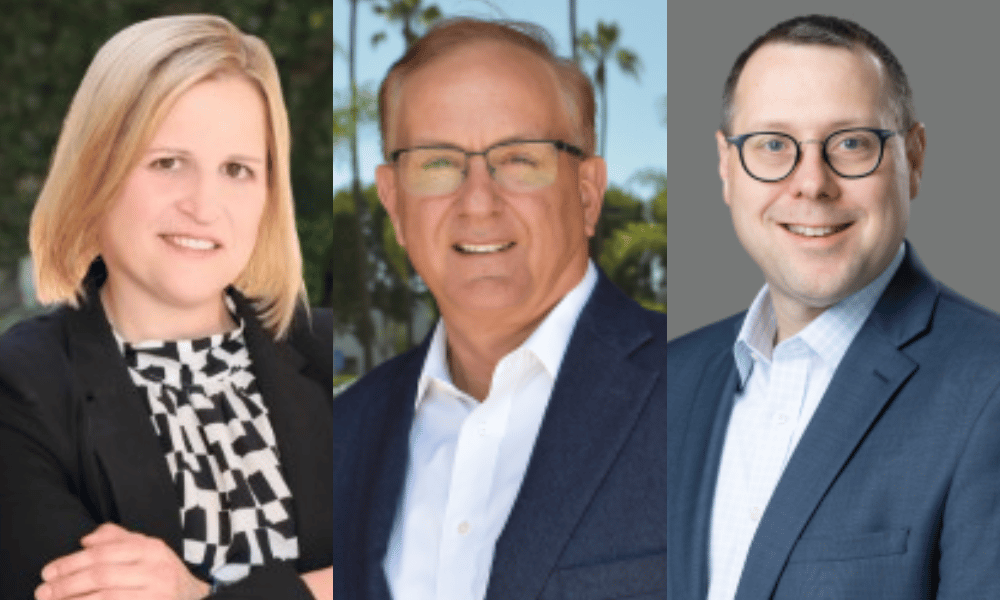
Matt Dmytryszyn, chief investment officer at Composition Wealth, believes that eventually the large technology stocks that provide AI models and compute capacity will need to demonstrate attractive returns on capital. As a result, he expects demand to moderate or decline at some point, but in his view that juncture remains at least a few years out. And with elevated geopolitical risks and economic ambiguity, it appears investors are gravitating toward sectors and industries where they have greater conviction in the outlook over the next few years, according to Dmytryszyn.
“A significant variable is how long elevated revenues and margins will persist, especially for semiconductor companies. We know there are shortages today and they are likely to continue into 2028. An open question remains whether there will be a refresh cycle that occurs as demand starts to level off,” Dmytryszyn said.
Elsewhere, Victoria Greene, chief investment officer at G Squared Private Wealth, a partner firm of Sanctuary Wealth, says the price action in AI infrastructure names like Nvidia and Micron Technology are less worrisome and speculative to her as long as the fundamentals continue to warrant it. Any revisions down or deceleration in growth, however, would be a signal that the market has gone too far.
“We think AI enterprise spending will accelerate meaningfully in the second half of 2026 as actual adoption is implemented beyond a chat bot or Claude tokens. The next phase is full integration into processes and systems not as an add-on, plus 1 type situation but AI agents doing real workload,” Greene said, adding that the world is trending toward “more chips and data, not less” and autonomous driving will also require the massive infrastructure buildout now underway.
When it comes to gargantuan IPOs like SpaceX and Anthropic, Greene is a bit wary of the “gold rush” market sentiment around them and the index rules being changed. Both have huge potential in her view, but she does not believes their actual earnings justify the massive premiums quite yet.
“Investors need to approach some of these valuations with a hefty dose of skepticism. Yes, the opportunity is there but this is also a time to scrutinize and not just get FOMO,” Greene said.
Mike Serio, chief investment officer at Trilogy Financial, notes that, historically speaking, few market participants can spot true bubbles with regularity and only after the fact is confirmation seen.
“Certainly negative black swans occur more than our models predict. One reason lies in that most of our models are based on physics and not behavioral economics, which is much more difficult to predict with accuracy. An example would be the GFC where we saw some negative 6 sigma events as measured by our models. In reality, 6 sigma events should occur approximately only twice per billion trials,” Serio said.
Presently, he says the main question facing wealth managers is whether all the capital spending will pay off. The demand side can be reliably estimated in his view, but the profitability side is much harder to quantify with respect to both timing and magnitude. And as with any new technology revolution there will be winners and losers.
“What we do know is that some companies will emerge dominant. Looking at the internet revolution of the late 1990’s, we did get some incredible world changing companies. But remember for every Alphabet there were many more Ask Jeeves and Netscapes,” Serio said.
Andrew Graham, founder and portfolio manager at Jackson Square Capital, also referenced the dotcom bubble, pointing out that profitability peaked in 1997 and deteriorated well before the boom ended. Nevertheless, corporate profit margins remain stable today with productivity growing and wage growth decelerating. Furthermore, corporate borrowing and leverage rose sharply to fund the record levels of investment spending back then while most of the financing of capex has come from free cash flow with much less debt on the balance sheet today.
“Credit spreads widened from mid-1998 to 2000, a warning sign we have yet to see,” Graham said.

The deal gives Envestnet institutional-grade trading and tax technology alongside Vestmark's advisory client base

The AI-driven RIA has doubled its advisor base to over 150 this year and is on pace to top $100M in annual recurring revenue

New trading tools let advisors execute and rebalance client portfolios directly, while firms retain permission-based control.

New ADP-delivered solution gives small and mid-size businesses access to 3(38) fiduciary oversight and participant-level advice for one fee.

Boston Hill Advisors joins Hightower's national platform as the mega-RIA's latest Massachusetts move drives HTSW closer to its $50 billion target for 2026.
Northern Trust’s Ken Lassner shows advisors how to convert volatility into after-tax portfolio gains
Dan Biagini of American Equity says the steady decline of pensions, longer lifespans and a reset in interest rates are rewriting how advisors build retirement income

