
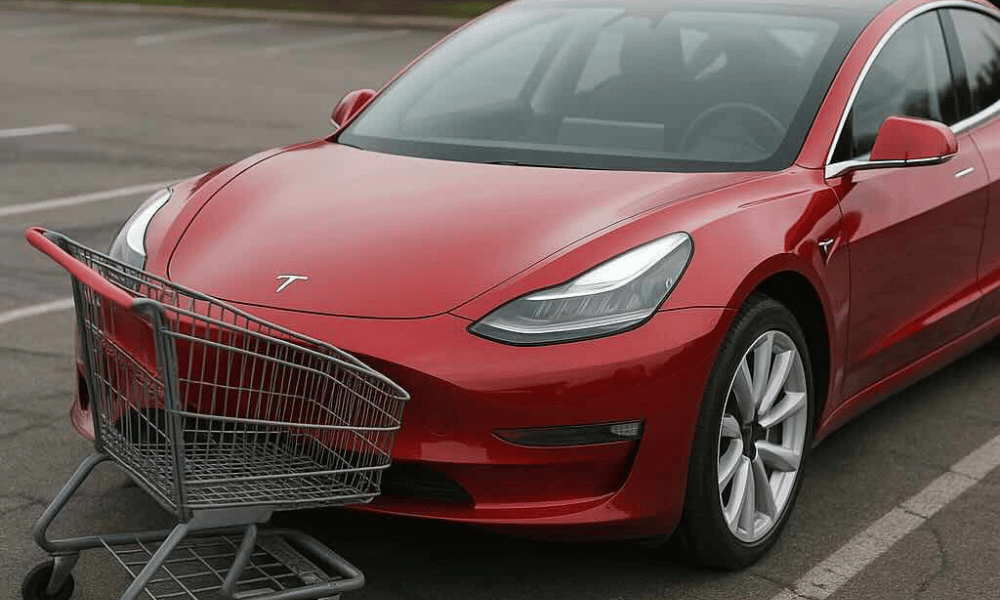
Tesla shares fell on Thursday after U.S. safety regulators opened a broad investigation into nearly 2.9 million vehicles equipped with the company’s Full Self-Driving (FSD) system. The inquiry adds to a series of regulatory and legal challenges that have unsettled investors and reignited debate over the company’s valuation.
The National Highway Traffic Safety Administration (NHTSA) said it is reviewing 58 reports of incidents involving FSD, including 14 crashes and 23 injuries. Regulators said the driver-assistance system, which requires human supervision, may have “induced vehicle behavior that violated traffic safety laws.”
The new probe follows complaints that Teslas using FSD ran red lights or steered against traffic, and it could lead to a recall if the agency determines the vehicles pose an unreasonable safety risk. Six of the incidents involved cars entering intersections on red signals, four of which caused injuries.
Tesla’s stock dropped roughly 2 percent in afternoon trading, extending a week of declines. The pullback reflects renewed uncertainty over potential recall costs, reputational damage, and the pace of development for autonomous driving technology—one of the company’s most heavily marketed growth engines.
The latest probe comes amid a period of heightened scrutiny for Tesla’s automation claims. NHTSA and members of Congress have questioned whether the company’s branding of “Full Self-Driving” and “Autopilot” exaggerates the systems’ capabilities. Tesla says the software “will drive you almost anywhere with your active supervision, requiring minimal intervention,” but stresses that it does not make the vehicle autonomous.
The company released a software update this week but has not commented publicly on the investigation.
Analysts said the episode reinforces investor concerns about execution risk in Tesla’s technology pipeline. “Regulatory friction is an underappreciated drag on valuation,” one U.S. equity strategist said, noting that litigation, recalls, and compliance costs could compress margins if they escalate into mandatory safety retrofits.
Tesla’s forward price-to-earnings multiple remains well above that of traditional automakers, reflecting high expectations for its artificial-intelligence and software platforms. But those same assets now face the dual test of market confidence and regulatory scrutiny.
The investigation adds to a growing list of legal pressures. In August, a Miami jury ordered Tesla to pay more than $240 million in damages over a 2019 fatal crash involving its Autopilot system, ruling that the company was partly responsible. Tesla said it would appeal.
At the same time, NHTSA continues to investigate other Tesla features, including a “summon” function that allows cars to drive toward their owners remotely and a separate case concerning the company’s reporting of crashes.
While none of these issues pose an immediate solvency risk, analysts say they could erode investor confidence in Tesla’s automation narrative—long a pillar of its premium market valuation.
For portfolio managers and RIAs, Tesla’s latest setback underscores the volatility tied to companies where valuation is built on untested or evolving technologies. Some funds may see weakness as a buying opportunity if the selloff is short-lived, while others are likely to stay on the sidelines until the regulatory picture becomes clearer.
Software-driven revenue streams are critical to Tesla’s long-term thesis - but every new probe delays monetization and raises the probability that regulators will require costly updates or retrofits.
Tesla’s shares have risen more than 25 percent year to date but remain sensitive to regulatory developments and broader market sentiment toward risk assets. With the company’s self-driving ambitions under renewed scrutiny, investors are now weighing whether innovation momentum can offset mounting legal and reputational risks.
The issue may not be whether Tesla can build a self-driving car—but how long shareholders are willing to wait for it to pay off.

Iowa's Greenwood Wealth Partners exits D.M. Kelly as UBS and Ameriprise win Merrill Lynch recruits in California and Florida

Less than 1% of pool funds went to actual trading, CFTC says

Plus, SEIA builds a governed data foundation for its in-house AI and Snappy Kraken debuts a read-only marketing coworker for advisors.

He owes $364 million but pays $100 a month

Broadridge, Wedbush and Alaris Acquisitions have also filled senior wealth management roles with hires from J.P. Morgan, Osaic and SageView.
As AI makes financial information more accessible than ever, Lana Hock explains why human judgment, trust, and empathy remain the qualities clients value most in a financial advisor
Northern Trust’s Ken Lassner shows advisors how to convert volatility into after-tax portfolio gains

