
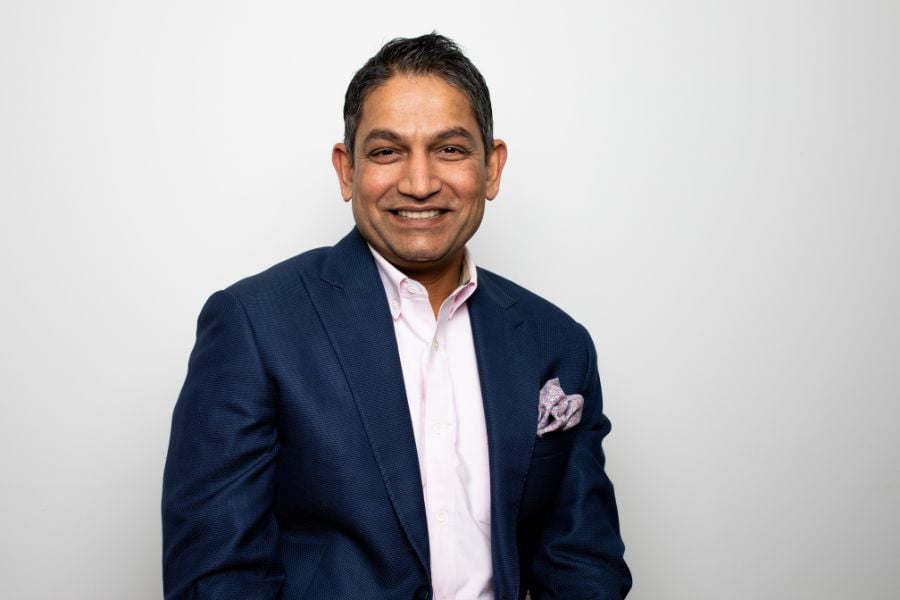
Milind Mehere has spent his career riding technology waves, but he says none of them compare to what AI is doing to wealth management software.
Mehere, who took over as chief executive of Advisor360 after building Yodle and co-founding Yieldstreet, said in an interview that his previous ventures modernized existing industries. The disruption in AI, he said, is much more fundamental and transformative.
"It resets how software itself is built and potentially how work gets done," Mehere said.
That reset is playing out at Advisor360, the Needham, Massachusetts-based technology platform that supports millions of households and tens of thousands of advisors. Mehere stepped in as CEO in June after serving on Advisor360's board for roughly two and a half years – long enough, he said, to see the company as still early-stage despite its scale, just because of how AI has upended the enterprise software roadmap over the past year.
Mehere argues the wealth tech competition has shifted away from feature counts. "The question isn't who has the most features, it's who has the best understanding of the client," he said, noting that client information is scattered across CRM systems, custodians, planning tools, portfolios, email and calendars.
That fragmentation problem is why Advisor360° built what it calls a unified data fabric – an open architecture connected to eMoney and, as of a partnership announced this spring, Conquest Planning's hybrid goals- and cash-flow-based planning engine. On top of that data layer sits what Mehere calls a trust fabric. "Better data doesn't just improve recommendation, it reduces hallucination, increases confidence and ultimately builds trust," he said.
He pointed out that advisors typically control only a slice of a client's full financial picture, which is why third-party data aggregation still matters even as that layer becomes commoditized. Advisors evaluating any platform, he said, should ask one question: "Can this platform truly understand my client?"
Read more: More data isn’t the same as more clarity
While 2025 was "the year of the note taker" for wealth tech, the industry is now shifting toward agentic capabilities – a movement Advisor360 was slightly ahead of with its acquisition of Parrot AI in January last year and subsequent buildouts. Still, Mehere was careful to separate automation from judgment.
"Wealth management isn't ordering dinner from DoorDash or hailing an Uber," he said. "These are decisions that affect people's lives, their children's legacy, their taxes and their financial future. So human judgment will always remain central."
Where AI adds value, he said, is in surfacing signals and action items a human could never track across hundreds of client relationships – a bonus that could top up a child's 529 plan after a market correction, or a mortgage reset from 2.5% to 6% that needs pre-positioning. Mehere calls that end state "ambient AI": agents monitoring continuously in the background so advisors spend their mornings acting on insights rather than gathering them.
"AI should do the work; advisors should make the decisions and the judgment calls," he said.
Asked about the biggest emerging risk as advisors lean more heavily on AI, Mehere pushed back against the conventional thinking of AI becoming so capable that it makes advisors unnecessary.
"The business risk is people trusting AI without understanding where the answers came from," he said, comparing it to how an AI tool can make unwarranted leaps or hallucinate answers when given vague instructions.
The challenge for the industry today, he said, comes down to explainability. Advisor360's note-taking tool cites its sources the way a Wikipedia article does, tracing a data point back to the CRM, planning tool or order-management system it came from.
"In wealth management, trust is the product," he said.
Looking ahead, Mehere predicted that much of the administrative load currently carried by teams of paraplanners will be automated within five years, freeing advisors to focus on relationships rather than paperwork.
But he also flagged a countervailing pressure: clients are increasingly showing up to meetings armed with their own AI-generated research, a dynamic he called an "arms race" between advisor-facing and client-facing AI.
With more than $100 trillion in wealth expected to transfer between generations in the coming decades, Mehere said younger, digitally native clients will demand the same convenience they get from consumer apps – while still wanting a human's judgment behind serious financial decisions.
"In today's world, the clients are asking the advisor, 'Why am I not in SpaceX? Why are you not putting me into digital assets?'" he said. "There are all these hard questions people are going to ask because now information is out there and completely open."

Salespeople at the firm often went beyond the matching algorithm to recommend network advisors on its Zoe Wealth platform, according to the regulator.

The Protect College Sports Act would cap school payments and codify NIL rights, with implications for advisors guiding young athletes.

"I know the number that I want to be able to retire on, and now I just want out," says Wilmington Trust's Marguerite Weese, describing a common refrain among business-owner clients.

Bessemer and Brown Brothers Harriman veteran Robert Ludricks III and private markets specialist Olof Akesson join the ultra-high-net-worth push on the East Coast.

765 investors were promised 260% annual returns on truck leases
As AI makes financial information more accessible than ever, Lana Hock explains why human judgment, trust, and empathy remain the qualities clients value most in a financial advisor
Northern Trust’s Ken Lassner shows advisors how to convert volatility into after-tax portfolio gains

