
The markets turned ugly this week as Democrats’ “Blue Tsunami” midterm sweep sparked fears of an AI slowdown.
Just days before millions of Americans cast their vote, InvestmentNews spoke to investment experts at Schwab IMPACT 2026 in Boston to get their views on where the AI trade, which has propelled markets upwards spectacularly before this week, is heading.
Results from the midterms sparked a rollercoaster. The Nasdaq Composite fell 5.4% in afternoon trading on Thursday, Nov. 5, 2026, sliding into correction territory as investors dumped chip and data-center stocks after Democrats swept both chambers of Congress. The fear is that restrictions on data center construction would put the brakes on the building of critical AI infrastructure, although Friday’s rebound tempered a degree of Thursday’s meltdown.
The volatility spoke to a bigger concern: whether these companies can sustain growth, and whether they, and the markets, can handle the stress points around it.
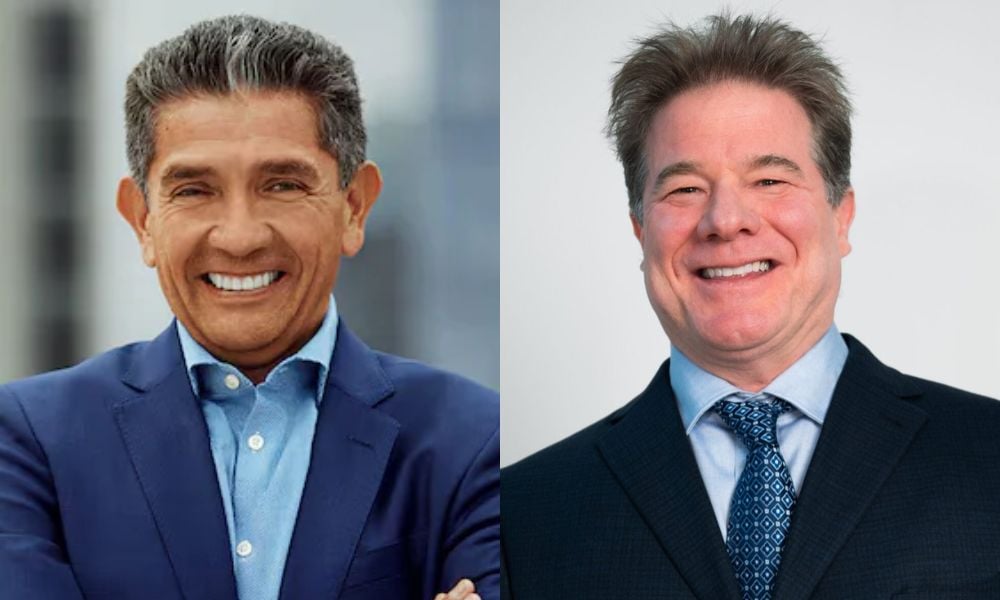
Omar Aguilar, CEO and CIO of Schwab Asset Management, pictured above left, said comparing the current situation to previous bubbles overlooks key characteristics of the big AI spenders.
“The typical thing is called anchoring, where people go back and look at different events in the past and say, all right, this looks like the late ’90s and the dot-com [era] and how that burst,” he said.
The difference, he said, is who is writing the checks. AI spenders “actually are the ones that are really good in terms of generating free cash flow,” with 60% to 70% of capital spending coming from mega-caps with “very strong balance sheets.” Unlike past bubbles, there are not “companies that don’t generate earnings, companies that are borrowing a lot of money.”
However, he warned that more and more companies are starting to rely on the debt market to expand the CapEx cycle. “I think that transition starts to get a little bit worrisome,” he said.
Tim Nyland, co-CIO of Synergy Asset Management, pictured above right, said his team has “isolated the fact that AI CapEx spending growth in terms of actual growth actually peaked in Q3 of this year.”
“It’s not that we’re going to see a decline in CapEx spend. Rather, what we’re going to see is the rate of increase or the growth rate itself is going to start declining.”
The problem weighing on this is the huge cost. Nyland pointed to “some instances of negative free cash flow,” including at Meta. “We’re seeing it with some of the other hyperscalers potentially,” he said. “The Magnificent 7 might fragment a little bit. We may no longer have a Magnificent 7. It might be a Mag 3, might be a Mag 5. We don’t know.”
While slower CapEx growth poses questions for investors, Nyland said “the only way we’re going to have a market crash or a wipeout is if CapEx spending comes to a complete halt,” which he said would “drive us into a pretty deep recession.” That is not his base case, rather he anticipates “a gradual slowdown in the AI CapEx commitment and actual spend.” It also sits apart from the fears of political restrictions on data center construction that rattled markets this week.
Aguilar also sees a slowdown coming. “We do anticipate a deceleration of economic growth,” he said. Some tech companies are already cutting back. “They’re not stopping it, but they’re reducing their CapEx.”
Tom Skrobe, head of RIA business and portfolio solutions at WisdomTree, said advisory firms were already looking to diversify away from the S&P 500, which is of course heavily concentrated in AI stocks. Even before this week’s selloff, which was the S&P 500’s worst session since the April 2025 tariff rout, clients were looking to diversify, not out of fear of a major crash or correction, but because it was a prudent time to do so.
“We’re seeing a lot of RIAs asking us to take a look at their portfolio and possibly diversify a little bit away from the S&P, not totally away from it,” he said.
Skrobe, whose firm is known as a dividend manager, said dividend-weighted products add “diversification to your overarching portfolio.” He added that it makes sense “regardless of the timing of where you are in the investment cycle” to check portfolios for concentration in “one specific stock sector, one specific investment theme.”
As for the risk of a crash, he said before the selloff: “I don’t think it’s a big concern that there’s a crash or a big correction.”

Wells Fargo and UBS also add advisors from Morgan Stanley, Edward Jones, Merrill and Fidelity in a fresh round of wirehouse recruiting

How we got here – and what to do about it

AI trust gap: Americans want protection, not autonomy, in their finances

One in three of Goldman's 109 new partners comes from asset and wealth management, signaling the division's growing strategic weight.

Three firms secure experienced wealth management teams as advisor recruiting competition intensifies across the US.
Knighthead Life entered the market with a competitive MYGA. A strong launch earned advisor confidence and paved the way for FIAs.
As AI makes financial information more accessible than ever, Lana Hock explains why human judgment, trust, and empathy remain the qualities clients value most in a financial advisor

