
The Federal Reserve raised interest rates this week for the first time since July 2023 — defying months of pressure from President Trump to cut — and advisors are now bracing for what could be the first of several hikes rather than a one-off move.
The move follows months of holding rates steady, despite pressure from President Donald Trump to deliver a rate cut. The Fed made its last rate cut in December 2025.
So, what’s coming next? "This hike was overwhelmingly expected by market participants, so the decision itself is not a surprise,” said Nic Puckrin, macro analyst and founder of Coin Bureau, in a note. “The more important question is whether this is a one-off, or one of many.”
RATE HIKES LOOMING
More hikes are looming on the horizon, according to Macquarie Group, which updated its policy rate forecast in the wake of this week’s Fed decision. Macquarie now expects 50 bps in further hikes ahead with 25 bps likely to come in each of December and the first quarter of 2027. Including this week’s hike, this would mean 75 bps in total rate hikes and push the fed funds rate into the 4.25 to 4.5% range in the first quarter of next year. Previously Macquarie had anticipated 50 bps in total hikes and a fed funds rate in the 4.0 to 4.25% range in the first quarter of 2027.
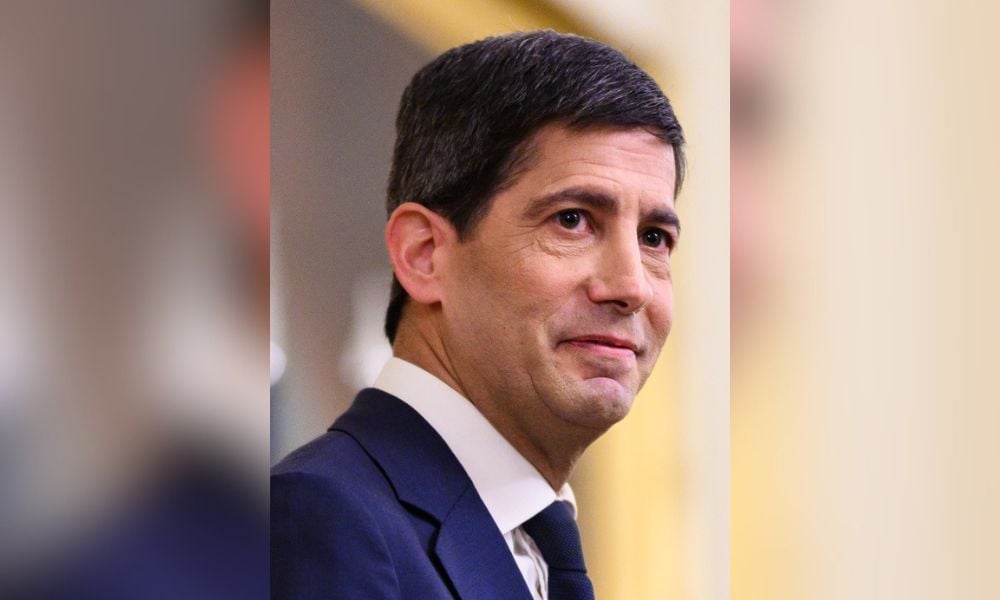
David Doyle, Macquarie’s head of economics, said that he saw several developments as hawkish in Fed Chair Kevin Warsh’s comments on the decision. “Chair Warsh described the action as ‘removing a dose of accommodation’ suggesting that he did not yet see policy as restrictive,” Doyle said, in a note. He added that the Fed’s statement on its latest decision also removed ‘supply shocks’ as a cited reason for elevated inflation, suggesting greater concern with underlying price pressures.
The CME’s FedWatch tool, which updates in real time, puts the probability of a rate hike to between 4 and 4.25% at 57.6% for the Fed’s October meeting. For the December meeting, the tool puts the likelihood of a rate hike between 4 and 4.25% at 45.9%. The chances of a December raise to between 4.25 and 4.5% are 44.3%.
ENERGY PRICES
As we look forward, the most important “known-unknown” influencing monetary policy will be the energy price shock, according to Bill Adams, chief U.S. economist, at Fifth Third Commercial Bank. “The higher gas and diesel prices go, and the longer they stay up, the more the Fed will hike,” he said, in a note this week. “Alternatively, a breakthrough unlocking energy supply from the Mideast could allow the Fed to refrain from further hikes.”
Oil prices have soared this year amid the ongoing conflict in the Middle East. Last week Goldman Sachs raised its forecast for oil prices, projecting a scenario whereby the price of crude jumps to $120 a barrel. However, oil prices have fallen somewhat this week amid an easing of supply concerns in Saudi Arabia.
But Rick Gardner, chief investment officer at RGA Investments, thinks that the Fed could well shift its strategy as the geopolitical environment changes. “While the Federal Reserve is expecting another rate hike in 2026, we remind investors that these telegraphs are not certain, and are subject to change,” he said, in a note. “If we were to see a reprieve in oil prices, that could throw cold water on another hike and make September's one and done.”
“Oil prices are high because of geopolitical issues, not due to any kind of secular and structural reason,” he added.
POLITICAL LANDSCAPE
Warsh and the Fed are also navigating a complex political landscape. “This increase sets the Fed and Warsh up for more direct conflict with the White House, given political pressure from President Trump, who is seeking lower interest rates,” said Katie Klingensmith, chief investment strategist at Edelman Financial Engines. “Additionally, there is tension with Treasury Secretary Bessent’s objective of lowering long-term rates, which are under pressure from government and AI borrowing.”
Unsurprisingly, the Fed’s decision this week prompted a strong reaction from President Trump. “Interest Rates in the United States should be 1%, or less,” he wrote on his Truth Social network Wednesday. “LOWER THE INTEREST RATES FOR THE UNITED STATES OF AMERICA, AND FAST!” he added.
“Expect to see more political tests for the Fed now that Chairman Warsh has shown that he hasn’t abandoned his inflation-hawk track record,” said Edelman Financial Engines’ Klingensmith. “This most certainly could give rise to lots of market headlines and volatility, particularly given that the last few weeks have seen a lot of focus on Treasury’s interventions into the long-term bond markets.”
Klingensmith notes that, while a rate hike doesn’t impact everyone the same way, it likely contributes stress to Americans already feeling stress around money issues. A Financial Confidence Report released this week from Edelman Financial Engines said that 72% of Americans are feeling money-related anxiety, either around the economy in general or their own personal finances.
“The impact depends on where you sit in the economy—borrower or lender, spender or saver, heavily indebted or financially secure,” she said. “Higher rates make mortgages, credit cards, auto loans, small-business borrowing and education financing more expensive.”
“That pressure is particularly meaningful for households already struggling with affordability,” Klingensmith added.
Whether this hike proves to be the first of several or a standalone move, advisors should expect the debate to keep shaping client conversations — and market volatility — through the rest of the year, and, potentially, beyond.

Wall Street banks expand wealth services as ultra-high-net-worth client demands extend further above and beyond investment management.

The acquisition of $2 billion Gilbert & Cook extends a buying spree for the ultra-high-net-worth firm that has already touched six states this year.

After years of encouraging sacrifice and delayed gratification, advisors have to do the next emotional lift: helping clients let go of a potentially harmful scarcity mindset.

A new JPMorganChase Institute report reveals how deeply stock market wealth now drives everyday American spending, especially for retirees.

A survey of 507 solo agers finds most lack confidence in their plans and that systems, not just individuals, need to change.
Northern Trust’s Ken Lassner shows advisors how to convert volatility into after-tax portfolio gains
Dan Biagini of American Equity says the steady decline of pensions, longer lifespans and a reset in interest rates are rewriting how advisors build retirement income

