
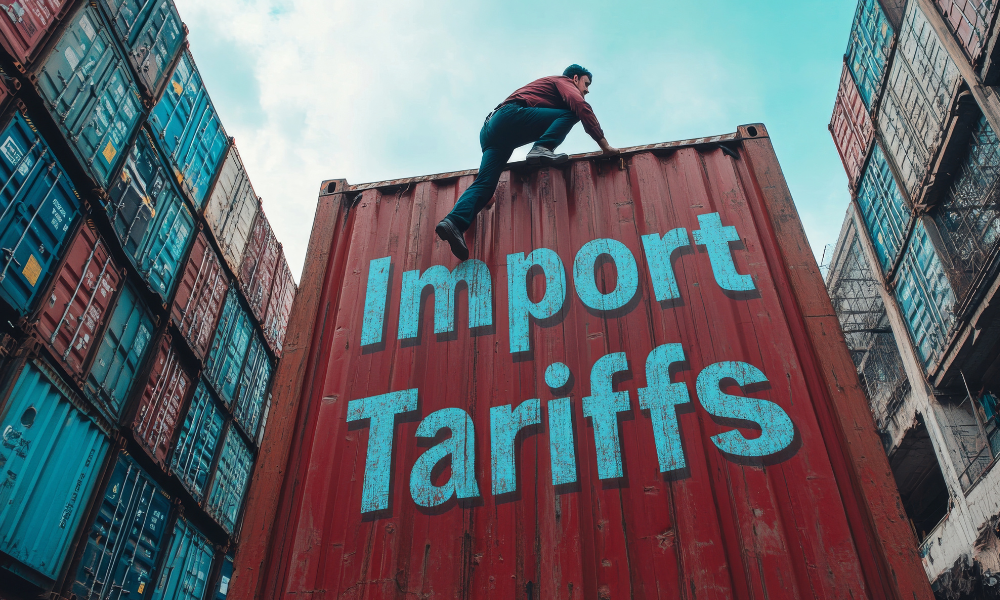
The second quarter of 2025 has been dominated by Trump’s tariffs; political, business, and market narratives have all been impacted. But today, many of them have been blocked.
A ruling late Wednesday by three judges acting for the US Court of International Trade said that the president’s use of a 1977 emergency law to bring in his ‘Liberation Day’ tariffs that upended global trade, was not appropriate and many of the tariffs are therefore void.
The Trump administration is expected to appeal, but for now, markets are reacting positively to a decision that has clipped the president’s wings and gives at least temporary relief to US international trade participants.
Tariffs are not dead in the water – that will likely be decided ultimately in an appellate court then the Supreme Court – and some tariffs are not affected by the court ruling such as those from Trump’s first term and levies on steel and some other sectors which were not imposed under the same legal framework. It’s worth stressing that it is the legal basis by which the tariffs have been imposed that has been ruled on rather than the legality of tariffs themselves.
But other levies, such as the 30% on imports from China, 25% on those from Canada and Mexico that fall outside USCMA, and 10% on most other countries’ goods sold to the US, could be stopped in the next two weeks.
The court ruling gives the administration 10 days to comply, but that’s a long time in politics and where there’s a will there’s a way. An unpredictable president is likely to find unpredictable solutions.
But what about the importance of tariff revenue to Trump’s “bigbeautiful bill”? Are Americans going to see their hopes of lower tax bills evaporate?
Goldman Sachs analysts don’t think so.
“This ruling represents a setback for the administration’s tariff plans and increases uncertainty but might not change the final outcome for most major US trading partners,” chief US political economist Alec Phillips stated in a client note. “For now, we expect the Trump administration will find other ways to impose tariffs.”
With approximately $200 billion expected from the tariffs, a similar figure to the deficit increase in 2026 that would result from the proposed fiscal package, Phillips believes the Trump administration will find another route to tariffs, adding that the tax agenda should endure anyway as lawmakers are not specifically including tariff revenue in their decision making.

Retiring RIA seller David Laidlaw alleges the Carnegie valued his stake on $11.7 million EBITA while pitching potential buyers on $21.3 million.

New tool gives RIAs and family offices AI help vetting private market deals, with some users reportedly halving review time.

Investors got projected returns dressed up as real ones, SEC says

Parents must still act to get the $1,000 federal seed and employer contributions, giving financial advisors a role in the rollout.

FINRA booted Rudy Anguiano from the industry for “conversion - the intentional and unauthorized taking of another person’s property.”
As AI makes financial information more accessible than ever, Lana Hock explains why human judgment, trust, and empathy remain the qualities clients value most in a financial advisor
Northern Trust’s Ken Lassner shows advisors how to convert volatility into after-tax portfolio gains

