
The votes have been counted after President Trump’s first 100 days in office.
At least the market’s votes, that is.
The S&P 500 has fallen about 8 percent since Trump’s inauguration on January 20th. The 10-year Treasury yield has dropped from 4.57 percent to 4.18 percent. Gold has surged from $2,746 per ounce to $3,323. Crude oil has declined from $78 a barrel to $61. And Bitcoin is down from around $102,000 to $95,000.
But what about financial advisors? How are they summing up the start to Trump's second time around?
And perhaps more importantly, what have they learned in the last 100 days that may or may not help them for the rest of the year, let alone the remainder of Trump’s term?
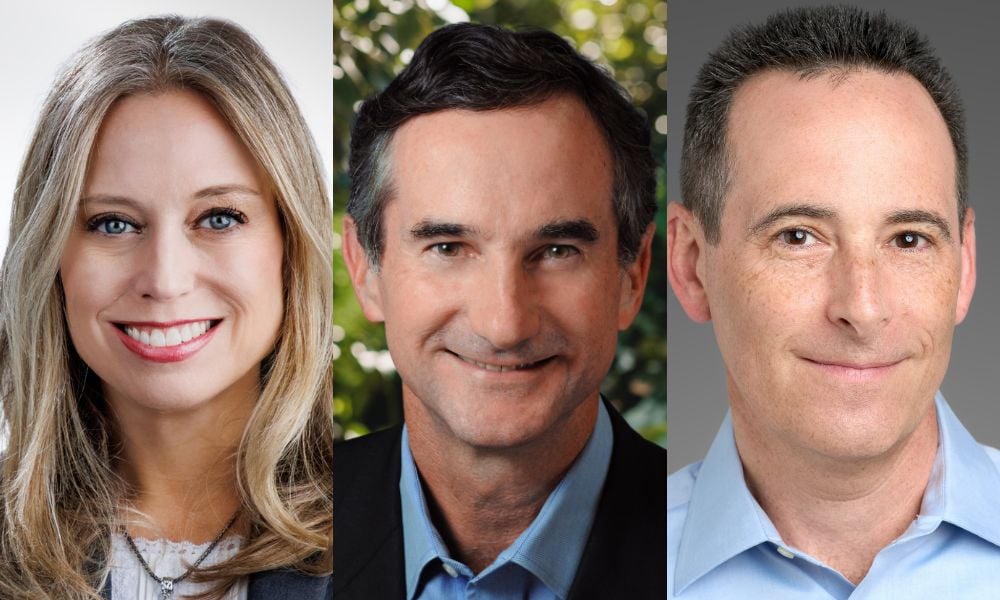
Becky Lightman, founder of Lightman Capital, for one, believes one of the biggest things she learned in the first 100 days of this administration is that when Trump messaged tariffs as a core part of his agenda, he meant it. In her view, most Americans didn’t realize the full implications of drastic increases in tariffs on their personal buying power or their investment portfolios.
She also learned that Trump closely watches the news and poll numbers, and he will often adjust his policies if he sees people he admires, such as JP Morgan CEO Jamie Dimon, criticize his actions. And like Lightman, he also pays attention to the markets.
“We are all realizing how much communication style really matters when it comes to the global markets. Surprising the markets is never a good thing, and the unforeseen magnitude of the tariffs catapulted the markets quickly into a volatility roller coaster. Investors feel like they are walking on quicksand,” Lightman said, adding that investment advisors are “reeling” from the fear caused by the rapidly changing messages.
In managing portfolios moving forward, she is already seeing advisors like herself make big changes. US equities beat international equities for decades, but she is now seeing a renewed focus on international markets, as well as a diversification away from the Magnificent 7.
“Even the bond markets have not been a safe haven and are experiencing a wave of volatility. We’ve seen a rotation into non-correlated assets and private investments,” Lightman said.
Meanwhile, Dann Ryan, managing partner at Sincerus Advisory, said the word he’s heard the most from the first 100 days of this presidential administration is "uncertainty." And while that might be the strategy of the administration - in other words, keeping trading partners on their toes, Ryan believes the investing community is struggling to process the White House's often-confusing messages.
“We think that’s the biggest lesson going forward: We will be on our own to make sense of this,” Ryan said.
He believes many advisors will take this lesson back to the need for portfolio diversification. However, Ryan also thinks advisors must now be nimble enough to catch every tactical shift or make strategic investment decisions based on much longer trends and viewpoints.
“Mean reversion will no longer be enough,” Ryan said.
Speaking of diversification, Nathan Sonnenberg, chief investment officer at Pitcairn, agrees the first 100 days of the Trump administration have underscored the importance of diversification and robust risk management. The severity and speed of tariff actions, persistent policy volatility, and the failure of traditional diversifiers require advisors to rethink their strategies, according to Sonnenberg.
For the remainder of 2025, he believes advisors should embrace a more global, multi-asset approach and prepare for additional market turbulence.
“Those who structure the most diversified and thoughtful portfolios will allow their clients to sleep well at night while still positioning them for success in their long-term goals,” Sonnenberg said.
Finally, Jim Carroll, senior wealth advisor and portfolio manager at Ballast Rock Private Wealth, said it quickly became clear in the first 100 days that the White House intended to implement its stated priorities in much more dramatic fashion than most people contemplated. In particular, the size and breadth of proposed tariffs was beyond anyone's predictions. The resulting market volatility was historic and caught many financial advisors flat-footed.
That said, even before the recent market swings, Carroll favored gaining broad equity market exposure through buffered ETFs, which provide protection against market sell-offs in exchange for some potential upside sacrifice during rallies. Given the current heightened volatility, he said these buffered ETFs have become even more appealing for their ability to mitigate daily market fluctuations.
Additionally, as concerns over a potential U.S. recession grow and a weakening U.S. dollar, Carroll has increased his exposure to global equities.
“It might surprise people that international markets like Europe and Latin America have significantly outperformed US indices year-to-date,” Carroll said.
On the fixed income side, Carroll has shortened the duration of his bond holdings to reduce sensitivity to the significant interest rate movements we've seen in the long end of the U.S. Treasury curve. And then in private markets, he is weighing opportunities for secondary funds as major players like Yale and Harvard need liquidity and are forced to divest.
“We also like niche asset-backed lending and select infrastructure investments that should be inflation resistant,” Carroll said.

Advisors with clients who own second homes in New York City face fresh uncertainty as the city seeks a stay and plans an appeal.

Meanwhile, a deal in the Midwest gives NorthRock Partners a new office in Wisconsin, while two teams join OnePoint BFG in Georgia and Atlanta.

These challenges are “changing the economics we see retirement savers face,” said Christopher Ceder of Goldman Sachs Asset Management

Richardson firm joins as Kestra builds out its platform with new leadership, technology, and expanded planning tools.

Retiring RIA seller David Laidlaw alleges the Carnegie valued his stake on $11.7 million EBITA while pitching potential buyers on $21.3 million.
As AI makes financial information more accessible than ever, Lana Hock explains why human judgment, trust, and empathy remain the qualities clients value most in a financial advisor
Northern Trust’s Ken Lassner shows advisors how to convert volatility into after-tax portfolio gains

