
Suffice to say, financial advisors have never been as active as they are right now when it comes to adding actively-managed ETFs to client portfolios.
And by all accounts they show no signs of slowing down.
The first active ETFs were introduced in 2008, almost two decades after the first passive ETFs hit the market. Nevertheless, active ETFs didn’t really pick up traction until regulatory advances in 2019.
Since active ETFs are generally more costly than traditional passive ETFs, one would think their attractiveness would be limited. Active ETFs, particularly those with complex strategies, often sport expense ratios of 0.75% or higher, compared to passive ETFs which can have expense ratios as low as 0.10% or even less.
The difference in cost has not held back demand for the investment vehicles however – and certainly not supply.
A report last month from Bloomberg Intelligence showed roughly 51% of the nearly 4,300 US-listed exchange-traded funds are ones overseen by fund managers who have more discretion to pick stocks or other securities, eclipsing index-following products for the first time. The Bloomberg data also revealed the number of active ETFs has more than doubled in the past five years, from just 23% in 2020.
Active ETFs account for only 10% of overall industry assets, despite the fact they have absorbed a record share of the nearly $462 billion sent to ETFs in 2025. At year-end 2024, equity, bond, and hybrid mutual funds had total net assets of $21.7 trillion and ETFs, active and passive, posted assets of $10.3 trillion.
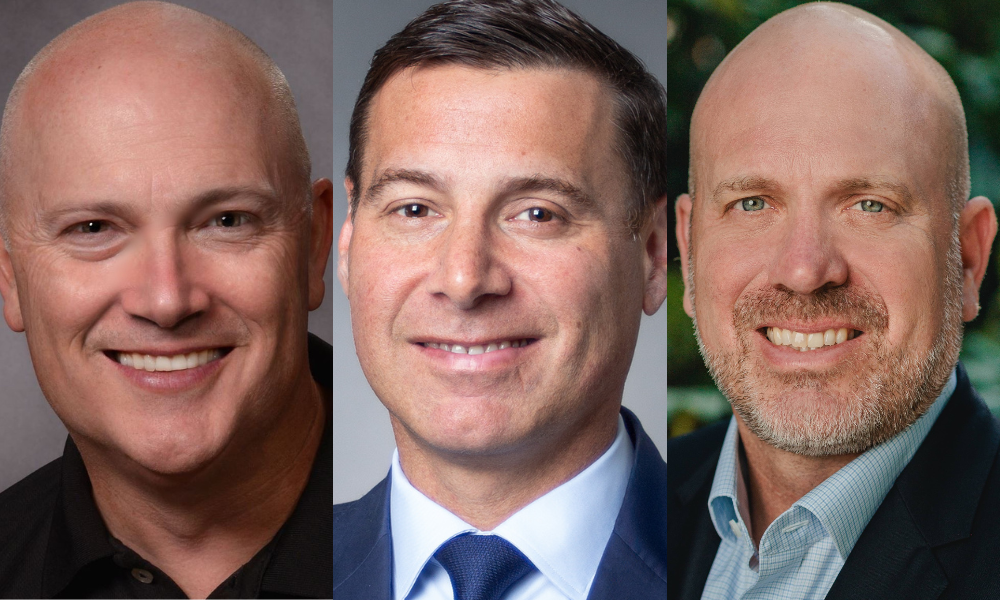
Christian Salomone, chief investment officer at Ballast Rock Private Wealth, believes periods of heightened volatility and shifting macroeconomic conditions have driven a sustained surge in demand for both active and outcome-oriented ETFs.
“The early months of 2025 were marked by trade tensions, changing expectations for Fed policy, and economic uncertainty, all which exposed the limitations of traditional passive index strategies. In response, advisors and investors turned to active ETFs for their ability to manage risk dynamically and seek outperformance,” Salomone said.
He added that outcome-oriented ETFs, which often employ options strategies to buffer downside or enhance income, also gained traction for their tailored approach to specific investment objectives. And while some of the volatility has subsided, client interest in these strategies remains elevated.
“Outcome-oriented products continue to appeal to income-seeking and risk-conscious investors navigating an uncertain economic environment,” Salomone said.
Along similar lines, Scott Dennis, head of ETFs at TCW, feels active ETFs are uniquely suited to counter the current market’s episodes of high volatility and uncertainty. He believes active management can respond in real time, helping navigate volatility, manage downside risk, and uncover alpha opportunities.
“While active ETFs are gaining traction, mutual funds remain valuable tools, and for many investors, a combination of ETFs and mutual funds can offer complementary exposure across investment styles and risk profiles. At TCW’s core, we are active managers and delivering our strategies through a broad range of multiple vehicles, including mutual funds and active ETFs, provides investors choice in how they want to invest with us,” Dennis said.
When it comes to volatility and risk, Timothy Smith, founder & CEO of Auroa Private Wealth, said the latest active ETFs can provide downside protection, such as with a buffer or floor, that protects against the full risk and volatility of stock market investing.
“Diversification does not protect against market risk, and so this is what I call a protective overlay. As to investment themes, this is similar to mutual funds and indexes that are thematic, but with the ability to participate and trade more like stocks,” Smith said.
Meanwhile, Ballast Rock’s Salomone said commodity ETFs, such as those tracking gold, are gaining popularity as advisors look to hedge against macroeconomic shocks. Similarly, inflation-hedging ETFs, composed of Treasury Inflation-Protected Securities (TIPS), offer another layer of protection in rising rate environments.
“Taken together, these tools position ETFs as flexible, powerful instruments for building resilient portfolios in today’s uncertain markets,” Salomone said.
TCW’s Dennis said TCW’s active fixed income ETF platform seeks to provide better portfolio outcomes for investors by “capitalizing on attractive alpha opportunities while actively mitigating downside risk.” The TCW Flexible Income ETF (FLXR), for example, not only allows for flexibility in investment strategies but does so with a high level of current income and a secondary objective of long-term capital appreciation.
As ETFs now span everything from low-cost index replication to options-based defined outcome strategies to fully active portfolio management, advisors say investors must take a more deliberate and structured approach to evaluating their choices.
“Is the strategy providing broad market exposure, targeting a specific sector, or serving as a hedging tool? This context helps inform decisions around asset allocation, investment horizon, and risk tolerance. From there, investors can determine whether the objective is best served by a passive, active, or outcome-oriented solution,” Salomone said.
Equally important, according to Salomone, is analyzing the ETFs underlying holdings and construction methodology in the context of the investor’s broader portfolio, in order to identify unintended concentration risk or overlap.
Wealth managers also stress that not all ETFs are created equal and as more products are launched the differences – and confusion – will grow.
“The ETF industry has already launched a tremendous number of innovative products across many different asset classes and strategies, which is exciting but also requires caution. Many of these strategies offer complex investment structures, that historically have been used primarily by institutions and high net worth investors and are now available to the everyday public,” Dennis said.

Richardson firm joins as Kestra builds out its platform with new leadership, technology, and expanded planning tools.

Retiring RIA seller David Laidlaw alleges the Carnegie valued his stake on $11.7 million EBITA while pitching potential buyers on $21.3 million.

New tool gives RIAs and family offices AI help vetting private market deals, with some users reportedly halving review time.

Investors got projected returns dressed up as real ones, SEC says

Parents must still act to get the $1,000 federal seed and employer contributions, giving financial advisors a role in the rollout.
As AI makes financial information more accessible than ever, Lana Hock explains why human judgment, trust, and empathy remain the qualities clients value most in a financial advisor
Northern Trust’s Ken Lassner shows advisors how to convert volatility into after-tax portfolio gains

