
Gross' Total Return ETF to charge hiked fee

Gross' Total Return ETF to charge hiked fee
Annual levy for exchange-traded fund will be 0.55%, while fee for namesake mutual fund is 0.46%
JUL 05, 2011
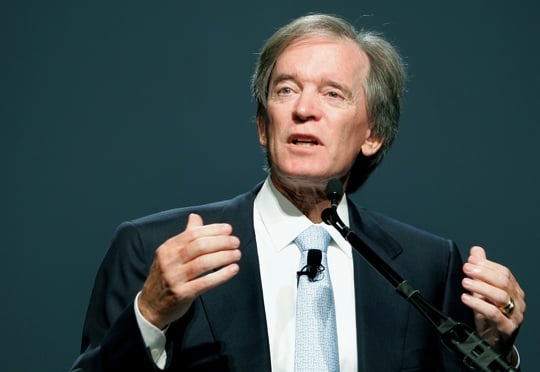
Pacific Investment Management Co.'s first active exchange-traded fund to be run by Bill Gross will charge annual fees of 0.55 percent, as the firm seeks to expand in the fastest-growing industry segment. Pimco disclosed the cost for the Pimco Total Return Exchange-Traded Fund in a filing today with the U.S. Securities and Exchange Commission. Newport Beach, California-based Pimco said in April it planned an ETF that will follow a strategy similar to Gross's top-ranked $242.8 billion Total Return bond mutual fund. The institutional share class of the mutual fund carries an expense ratio of 0.46 percent. Gross, 67, is the most prominent fund manager to offer his investment strategy in an ETF format. Total Return, the world's largest mutual fund, has climbed an average of 9 percent annually in the past five years to beat 99 percent of peers, according to data compiled by Bloomberg. Pimco, which is diversifying beyond bond mutual funds under Chief Executive Officer Mohamed El-Erian, pushed into ETFs two years ago. ETF assets have surged more than 10-fold since 2001 to more than $1 trillion as of May, according to Washington-based Investment Company Institute. The funds hold baskets of securities while trading throughout the day like stocks. Actively run versions seek to combine the skill of a manager selecting investments with the trading flexibility, lower fees and tax advantages of ETFs, which typically track an index. No Derivatives Unlike the Total Return mutual fund, which uses a combination of options, futures and swap agreements, Gross's ETF cannot invest in such derivatives. The SEC said in March 2010 it wouldn't approve new ETFs that make significant use of derivatives, pending a review of the practice that is still ongoing. Should the SEC lift the freeze, the Total Return ETF would invest in derivatives, Pimco said in its April filing. Pimco manages about $3.2 billion in 17 ETFs, including four that are actively managed. Expense ratios for Pimco's four actively managed ETFs range from 0.35 percent to 0.45 percent, according to the firm's website. Pimco Total Return Exchange-Traded Fund will trade under the ticker symbol TRXT, the firm said in April. --Bloomberg News--

Latest News

As Trump Accounts prep for July 4 launch, Franklin Templeton plans $1,000 match

“We are helping families take an important first step toward building a financial foundation for the next generation,” said Franklin Templeton CEO Jenny Johnson

Savant Wealth Management enters Maine with latest acquisition

Richard Brothers Financial Advisors joins the fee-only RIA, adding its first Maine office and $240 million in client assets

Clearstead adds $5.3B Philadelphia wealth team from myCIO

Cleveland RIA grows to $68 billion in assets as Philadelphia team, deepening its high-net-worth and retirement-plan practice.

Advisors still have questions on Trump Accounts ahead of July 4 launch

Financial planning leaders say unresolved rules on fees, Roth conversions and financial aid complicate comparisons with 529 plans.

Trust at Scale: How AI Personalization Rewires Business for Growth

AI can personalize at scale, but without trust, it falls flat.

SPONSORED Who builds the income when the pension disappears?

Dan Biagini of American Equity says the steady decline of pensions, longer lifespans and a reset in interest rates are rewriting how advisors build retirement income

SPONSORED Why direct indexing stopped being optional

Direct indexing is on pace to outgrow ETFs and mutual funds. Northern Trust's Ken Lassner explains why the advisors who get it wish they had started sooner.