
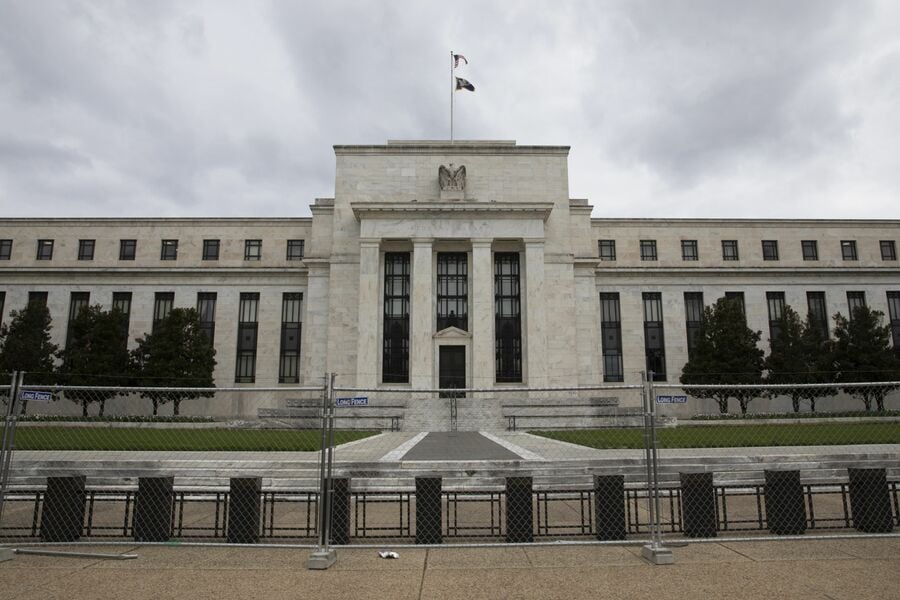
Federal Reserve officials are preparing to roll out another super-sized interest-rate increase in early November when they will also likely debate tactics for completing the most aggressive tightening cycle in four decades.
Officials have been rapidly raising rates after being slow to tackle inflation that proved more persistent than expected. But with rates now approaching levels that could weigh on economic growth, policymakers are beginning to lay the groundwork for shifting to smaller moves that get them to the finish line without going too far, while leaving the door open to going further if inflation doesn’t abate.
“Front loading was a good thing,” Chicago Fed President Charles Evans told a community banking symposium hosted jointly by his bank last Friday, reminding his audience that rates were down near zero in March. “But overshooting is costly too, and there is great uncertainty about how restrictive policy must actually become. So this is going to put a premium on the strategy of getting to a place and a level where policy can plan to rest and evaluate.”
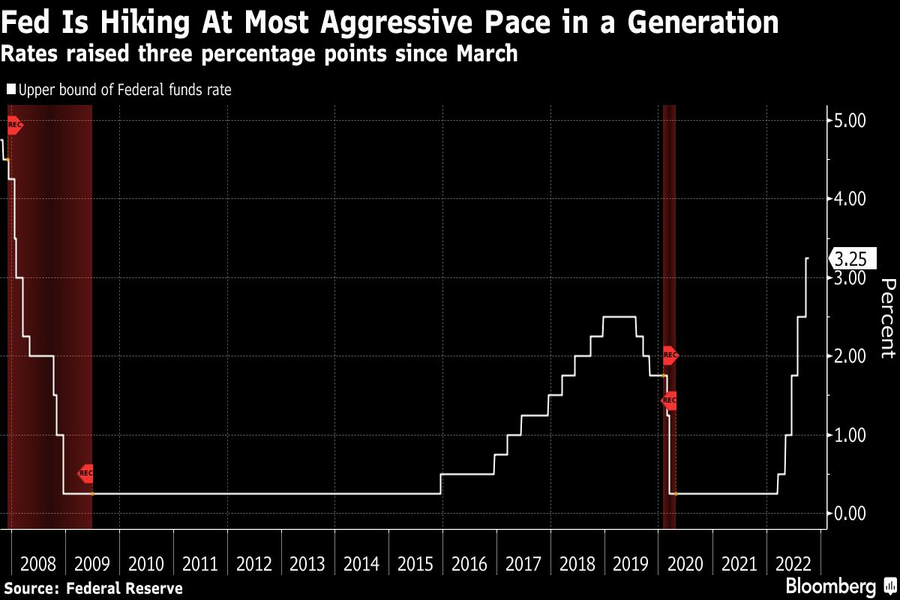
Officials, who now enter their blackout period ahead of the Nov. 1-2 policy meeting, want to raise rates to a level that restricts growth and hold them there for some time while inflation comes down. After they hiked rates by 75 basis points at each of the last three Fed meetings, the central bank’s benchmark rate is now at a target range of 3% to 3.25%.
Policymakers see rates rising to a median of 4.6% next year, according to projections released last month. Investors bet that the Fed will hike by 75 basis points at their Nov. 1-2 meeting, move by either 50 or 75 basis points in December, and end the tightening cycle at a peak around 4.9% in early 2023.
U.S. central bankers worry inflation will continue to spiral higher if they stop their rate hiking campaign too early. But if they raise rates too much, they risk pushing the economy into a painful recession.
San Francisco Fed President Mary Daly said Friday the central bank should start planning for a reduction in the size of rate increases, though it’s not yet time to “step down” from large hikes.
“It should at least be something we’re considering at this point, but the data haven’t been cooperating,” Daly said during a moderated discussion hosted by the University of California Berkeley. If officials raise rates by 75 basis points at the November meeting, “I would really recommend people don’t take that away as, it’s 75 forever,” she said.
“The Federal Reserve is primed for another 75-basis-point rate hike at the November meeting, even as chatter picked up late in the week about a possible downshift in the rate-hike pace after that.”
— By Eliza Winger (economist)
Downshifting to more incremental rate increases, such as a 50 basis-point increase in December, could give them room to keep hiking rates next year if inflation doesn’t start to decelerate as expected, said Derek Tang, an economist at LH Meyer in Washington. That reduces the risk that they bring rates higher than they would like, a helpful strategy since officials’ own forecasts show they are hesitant to cut rates next year.
But policymakers could face a communications challenge if investors misinterpret the downshift, stock markets rally and financial conditions ease, as they did after the Fed’s meeting in July, said Kathy Bostjancic, chief U.S. economist at Oxford Economics. “That’s counterproductive for the Fed,” she said.
Even if officials slow to a 50 basis-point increase in December, their next summary of economic projections, to be released after that meeting, could be deployed to send a hawkish signal that they’re willing to take rates higher, said Matthew Luzzetti, chief U.S. economist for Deutsche Bank Securities.
Still, the size of their move in December, and any shifts in their projections, will depend on what happens with the economy before then, he said. Officials will need to digest a slew of economic reports before they gather for their final policy meeting of the year, including two updates on consumer prices and two monthly jobs reports before their decision at the two-day meeting ending Dec. 14.
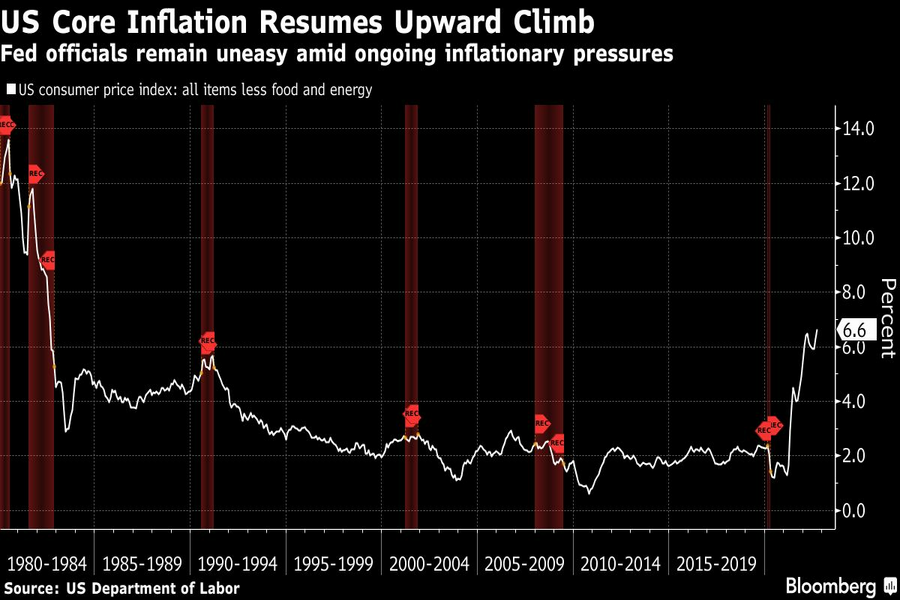
Some officials have said they want to see labor market demand come into better balance with supply and for there to be several monthly declines in U.S. core consumer prices, which strip out food and energy. But the measure rose 6.6% in September from a year ago, the highest level since 1982, according to a Labor Department report published earlier this month.
“Until that evidence shows up in the data, I think it’s hard to have strong conviction that they’ve done enough in terms of the terminal rate,” said Luzzetti.

New UMA, direct indexing and asset location capabilities aim to cut manual work for advisors managing personalized portfolios

As notetakers push into account opening, a consultant warns RIAs risk ‘buying redundancy’ instead of capability

The senior recruiter position at LPL Financial can lead to future success and industry leadership.

Hackers are already probing two bugs in software that runs most of the web. European Government and other major sites have already been taken down for emergency patches.

Unclaimed auto accounts can’t take family money, so advisors face questions on 529s, divorce terms, employer funding and stock gifts.
Knighthead Life entered the market with a competitive MYGA. A strong launch earned advisor confidence and paved the way for FIAs.
As AI makes financial information more accessible than ever, Lana Hock explains why human judgment, trust, and empathy remain the qualities clients value most in a financial advisor

