Last June, International Monetary Fund Managing Director Christine Lagarde, surprised everyone by wading into the U.S. interest rate hike discussion. “The inflation rate is not progressing at a rate that would warrant, without risk, a rate hike in the next few months,” she said.
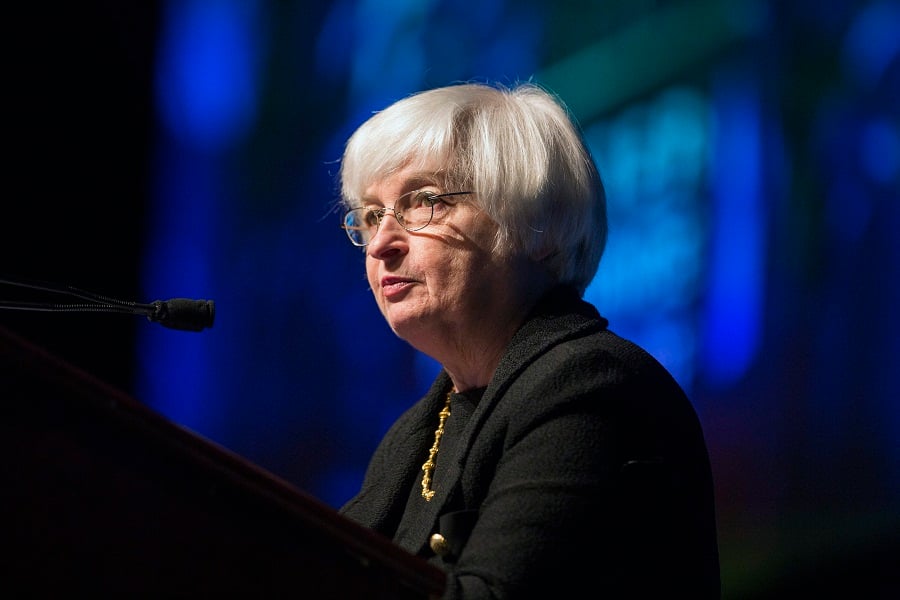
Many called the action unprecedented, but even more alarming was the apparent breakdown in communication that caused the IMF chief to feel the need to publicly call out the Federal Reserve. In September, it looked as though the Fed had taken heed of the warning when it decided not to raise rates. Fed Chairwoman Janet Yellen cited worldwide weakness and “the significant economic and financial inter-connections between the United States and the rest of the world.”
With central banks and monetary policy makers seemingly on the same page again, U.S. indices rallied back to within sight of new all-time highs when the world's largest and most influential central bank signaled to market risk participants that it had their back.
Then in December everything changed.
Buoyed by the quick stock market rebound and embarrassed by the months of public shaming by financial media and elected officials alike, the Fed capitulated and finally decided to raise rates.
Sadly, and in a move that signaled to investors that they can't be confident in the global central banking system, the Fed opted for self-preservation when it hiked rates for the first time in almost a decade. It seemingly didn't coordinate its action with any other global banking participant. In fact, at almost the same time, Japan lowered its rates into negative territory.
The December rate hike occurred in what will come to be known as the weakest liftoff economy in modern history. GDP was around half the average during the last three rate hike cycles in the past 20 years, and high yield spreads were nearly double the average during those same prior periods. What matters more than these stats is the trajectory, which makes the Fed rate hike even odder. If things were getting better and the economy was on a stronger footing, these stats would be improving. Instead, things have continued deteriorate since the hike.
On top of this, the world's biggest problem, which has been the overwhelming strength of the trade-weighted dollar, only got stronger after the Fed's out-of-touch action. The dollar's strength has caused commodities to become practically worthless and pushed the economies of emerging market countries such as Brazil, Russia and Venezuela to the brink of collapse.
What has become obvious in the past year is that instead of acting with their counterparts in mind, central bankers have begun to look out for their own interests. This signifies a significant shift from prior years, in the wake of the financial crisis, where actions seemed almost coordinated and in some cases were. This shift to a self-centered and in some instances, self-preservation, mode has sent ripples of uncertainty throughout the investment world.
For nearly five years, risk-takers and job creators have had the support of central banks, but they now realize they are standing alone. The market psyche has shifted from an environment in which central bankers wouldn't allow anything bad to happen to one in which disaster seems inevitable.
When this type of central banking-backed momentum crests and then shifts to a negative sentiment, it's hard to know just how fast we will crash land. Unwinding five years of money printing by the reserve currency of the world will be a very painful process for risk assets, especially if the market decides to force us to rip the Band-Aid off rather than to let things unwind slowly via the bleeding of financial institutions' balance sheets.
The only way to stop this downward trajectory and prevent a global currency war is for market participants to regain confidence in the global central banking system. They need to know the central bankers won't be pitted against each other.
Instead, coordinated actions showing continuity in the global banking system are required to prove the Fed's recent shift into self-preservation mode has ended. Ms. Yellen and company must publicly acknowledge that the spike of the dollar and its impact on rest of the world falls directly at the feet of the Fed. And they need to address how they are moving to be on the same page as the IMF and central banks around the world to prevent a global currency war.
Only by proving that the Fed has the global economy in mind can the tide of negative market psychology be stemmed.
Brett F. Ewing is chief market strategist and S. Lance Mitchell is research director with First Franklin Financial Services, a premier wealth management and investment firm based in Tallahassee, Fla.