
Anthropic expanded its push into financial services Tuesday, releasing 10 agent templates designed to handle tasks ranging from pitch deck generation to compliance screening.
The firm's latest rollout of skills, connectors, and subagents – which is more focused on the white-collar grunt work that happens at banks, asset managers, and insurers – marks just the latest episode in the wider evolving story of AI agents spreading across the wealth and investment industry.
In the past few months alone, there's been a flurry of firms across fintech, Wall Street, and the independent advisory channel deploying or souping up AI agents in their platforms.
In no particular order, those moves have included estate and tax planning bots from Wealth.com, "digital employees" being deployed at BNY and Goldman Sachs, Raymond James's reveal of its proprietary chat agent, and Altruist's Hazel agent, which may or may not have been unfairly flagged as the root cause of a April selloff across the wealth sector.
For advisors who have spent the past few years reconciling where AI fits in their practices, Anthropic's latest rollout might not be that much of a surprise. But it does create more urgency around what the technology can do – and what advisors and wealth firms should keep out of its hands.
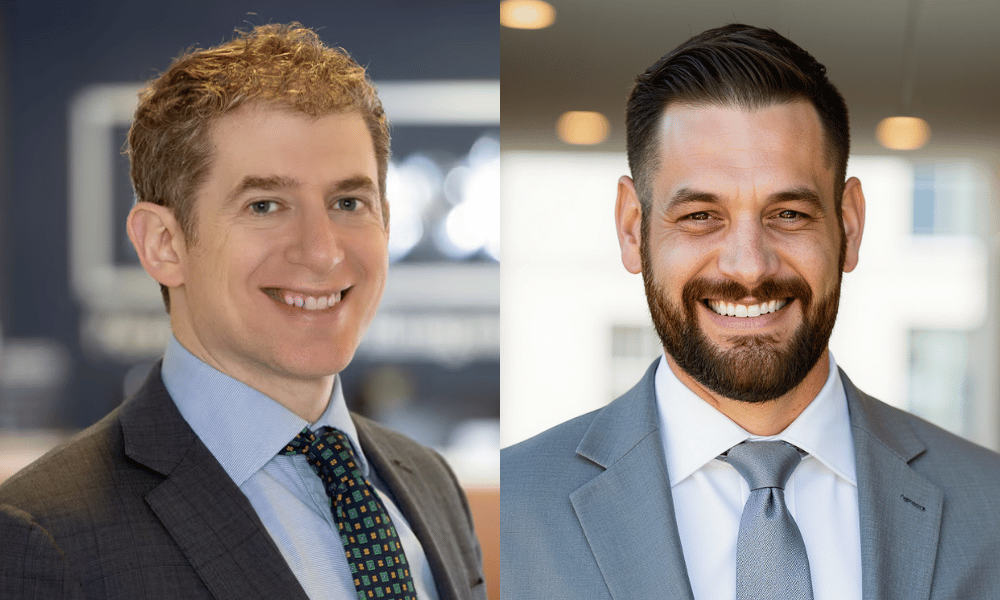
Andrew Altfest, president of Altfest Personal Wealth Management and founder of AI planning tool FP Alpha, has built AI into his firm's workflow and says the experience has clarified, rather than complicated, his thinking about where humans belong. In contrast to some practices that might fixate on operational efficiency, he argues that time savings from AI should be passed on into client relationships.
"We are doubling down on human relationships," Altfest said in comments to InvestmentNews. "Where an email would suffice pick up the phone, where a phone would suffice do a video, where a video would suffice go see the client."
That philosophy extends to the work itself. Altfest said he sees AI as capable of elevating someone with limited knowledge quickly, but its output still requires a human check.
"If I had an assistant, wouldn't I want to review the assistant's work first?" he said. "AI has gotten to the point in which it can raise someone with little knowledge to a high [level of] knowledge. However, work needs to be reviewed; AI is weak in certain things, and the advisor will always use judgment creativity, experience, and lean on the personal side to take to the client."
Brian Green, chief product officer at Merit Financial Advisors, said some tasks stay manual precisely because the act of reviewing them matters, independent of the result.
"Things like trade requests, reviewing the details, seeing the magnitude of the numbers ... It reinforces that this is someone's life savings and not just data moving through the system," Green said. "That moment of personal accountability is important, especially for developing advisors, and I wouldn't want to remove it entirely."
Both Altfest and Green pointed to the same friction point: moments where the analytically correct thing may not be the right thing for the client.
"Very few decisions in this industry are black and white," Altfest said. "Many things can be a 50/50 coinflip – does someone want full optimization or financial simplicity? The 80-year-old widow may prefer the simplicity over optimizing every last cent – those things matter and AI can't capture that."
For Green, that same style of case-to-case thinking often wins out over cold calculation. "Any moment where context, nuance or consequences matter more than optimization" is where he feels least comfortable handing judgment to an algorithm, he said.
"Before a recommendation goes out, a human needs to have sat with it, to think through the tradeoffs, the 'what ifs,' and how it will land emotionally with the client," Green said.
On the client-facing side, both said the stakes shift when conversations become personal. Green noted that client meetings often function as something closer to therapy than planning.
"Clients expect a human to be listening when the conversation turns emotional, uncertain, or personal," he said. "Knowing AI is behind the scenes is fine; knowing no human was truly involved would feel very different."
Altfest raised a related point about live interactions – the moments when a client brings up something unexpected and an advisor has to respond in real time.
"No one can Gemini their way out of a live question," he said.
While Anthropic is playing up the impact of its Claude technology among leading financial firms, the AI giant is still clear that its newly rolled-out agent templates would not take away human ownership of the final output for clients.
"Users stay firmly in the loop – reviewing, iterating on, and approving Claude’s work before it goes to a client, gets filed, or is acted on," Anthropic's Tuesday announcement read.
That's the same hill Green and Altfest stood on when asked where they draw the line between AI expediency and human judgment.
"The line is accountability," Green said. "AI can surface insights, model scenarios, and speed up execution, but when a recommendation affects someone's retirement, family or sense of security, a human must own the decision. The sense of responsibility can't be automated, and it's ultimately where trust comes from."
Altfest put it in terms of professional responsibility: "It stops at a finished work product. You are responsible for the work you are doing. Recognize LLMs are imperfect."

The Protect College Sports Act would cap school payments and codify NIL rights, with implications for advisors guiding young athletes.

"I know the number that I want to be able to retire on, and now I just want out," says Wilmington Trust's Marguerite Weese, describing a common refrain among business-owner clients.

Bessemer and Brown Brothers Harriman veteran Robert Ludricks III and private markets specialist Olof Akesson join the ultra-high-net-worth push on the East Coast.

Senate Democrats seek data on data center deductions under the 2025 tax law as proposals to tax artificial intelligence multiply.

Geopolitical shocks and market volatility pushed advisor deal decisions off course, denting third-quarter transaction volume by 19 percent.
As AI makes financial information more accessible than ever, Lana Hock explains why human judgment, trust, and empathy remain the qualities clients value most in a financial advisor
Northern Trust’s Ken Lassner shows advisors how to convert volatility into after-tax portfolio gains

