
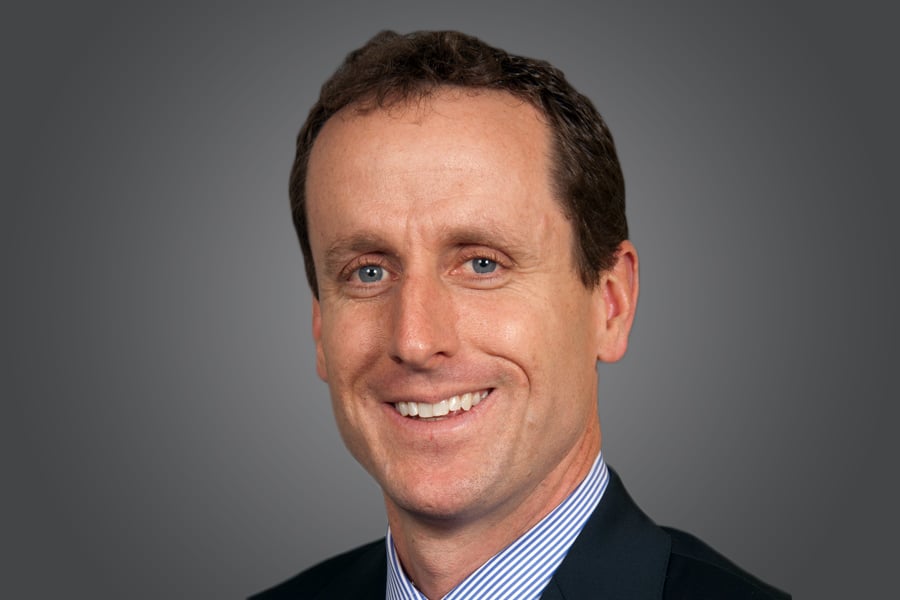
The industry trends that have emerged this year are heavily impacting advisers’ relationships with investors, and Mike Durbin, president of Fidelity Institutional, is working to get the company’s 13,500 financial advisory clients to embrace the paradigm shift.
Since taking the helm at one of the largest custodians in the business in 2017, Durbin has helped drive the assets Fidelity oversees to $3 trillion. And when it comes to deploying technology that aligns with industry trends, Durbin is ensuring that Fidelity delivers as he strives to keep up with the competition.
Last month, Fidelity's eMoney Advisor showcased its overhauled financial planning and wellness mobile app -- formerly Project Avocado, but redesigned as Incentive -- to focus on a client’s holistic financial health. In July, the company launched a mobile app called Fidelity Spire that aims to attract young adults to plan, save, invest and set short- and long-term financial goals.
In addition, Durbin hosts a new educational video series, Framework for the Future, in which he shares Fidelity’s latest insights on the macro environment, the impact on the wealth and investment management industry, and what he thinks advisers should do now to thrive in the future.
What follows is an edited version of Durbin’s conversation with InvestmentNews.
Nicole Casperson: How can advisers deliver value in new ways and transform their customers' experience?
Mike Durbin: There are two principal ways advisers can do that. One is to really avail themselves to the capabilities that their service providers, like their custodian, is providing to them now. As key service providers, we’ve been under this digital transformation for a number of years and if there is any silver lining to this pandemic period -- which is otherwise a terrible period -- it’s that [technology] adoption has picked up materially, and that happened really out of just the expediency advisers and their clients needed to get work done from home.
These digital capabilities became of the paramount importance, and that’s not just about money movement, but starting brand-new relationships. We transitioned whole new teams into independent RIAs remotely, and therefore opened their underlying customers' new accounts with Fidelity and transferred assets thanks to digital capabilities.
The second is the need for advisers to bring up what we call their value stock, which means shifting beyond a traditional focus on generically managing the money, which is still really important, but we think it's more foundational for advisers to embrace financial planning.
Ultimately, clients want to reach the goals they have for their families and understand how money plays a role in achieving those goals so that they can have peace of mind with a focus on leaving a legacy.
This is a period of time for advisers to get more empathetic and goal-based with the clients that they serve, because that's what households are focused on right now during what is a pretty stressful period.
Today, the conversation is fundamentally different. Your clients aren't picking apart why their portfolio is up or down by however many basis points relative to the market during this crisis. The question is: ‘Mr. Adviser, are we going to be OK?’
Planning is more productively sticky, so we just keep saying over and over again to advisers: Embrace planning, it's just a better business model. It really is an easier way for that adviser to demonstrate that they can be empathetic, they can get into more personal conversations and relationships with clients, not just the math relationship.
NC: How can advisers be more attractive to Gen Z investors just getting their feet wet with financial services?
MD: Gen Z is set to make up 40% of the consumer base in our economy this year. Now they're not that big in the investor base yet because a lot of the Gen Z population is still too young.
Gen Z is really focused on purpose in their portfolios and has an attraction to ESG investing. They want to have deep insight around exactly what's going on in their portfolio and what impact it has on the world around them.
So we're seeing a lot of early demand in ESG and these younger, newer investing generational cohorts need to be paid attention to because they're so large, and we don't see that focus on purpose as a fleeting one -- we think it’s durable because it’s a key expression of personalization.
NC: Could you tell me more about how technology aligns with those trends?
MD: Today, an adviser can give a highly personalized plan portfolio approach to an investor because technology can allow it.
Technology helps the adviser to hyper-segment through access to data and analytics that brands like Fidelity are already beginning to deploy. Tech also provides optionality around how advisers can price.
These rapidly expanding capability sets in tech that are coming allow providers to have a chance to demonstrate far deeper degrees of personalization than conventional wisdom might suggest.
With the way technology is evolving, you can be a large-scale provider and be hyper-personalized because you have these great data sets and data scientists available to you to serve up these extremely personal interactions or approaches. This is a growing demand.
NC: There is a trend among tech providers to commoditize financial planning via digital platforms like Fidelity Spire to bring more investors into digital advice. How do you see this trend panning out in the future?
MD: We see this sticking because this trend is coming at the request of our adviser clients, and our 401(k) sponsor clients that are coming with an institutional demand because they're hearing it from the end customers they're serving, or the employees that they're employing.
I don't think financial futures are going to get any easier for American consumers -- there's a lot to navigate. That’s not a comment about markets, it’s just finances are increasingly complicated through time. So whatever tools can help individuals get organized and get engaged we think have real sustaining power.
NC: Why should our adviser audience pay attention to M&A activity?
MD: There is this clear era of what we call ‘super-combos' or ‘M&A super-cycles’ that are still underway.
Big advisers are merging with smaller advisers, there have been mergers or deal activity among the key service providers. It's really important that advisers be wide-eyed about that and ask: How do they think about potentially being acquired? What are they looking for out of this firm and how they want their clients to be served long term?
A lot of that M&A activity is being fueled by this continuing pipeline of private capital that's come into this ecosystem. There's a lot of venture money flowing in to the overall adviser ecosystem because it's an attractive business that's driving a lot of innovation, which is great. But advisers need to think about how they are going to play in this era of rampant M&A activity.

Iowa's Greenwood Wealth Partners exits D.M. Kelly as UBS and Ameriprise win Merrill Lynch recruits in California and Florida

Less than 1% of pool funds went to actual trading, CFTC says

Plus, SEIA builds a governed data foundation for its in-house AI and Snappy Kraken debuts a read-only marketing coworker for advisors.

He owes $364 million but pays $100 a month

Broadridge, Wedbush and Alaris Acquisitions have also filled senior wealth management roles with hires from J.P. Morgan, Osaic and SageView.
As AI makes financial information more accessible than ever, Lana Hock explains why human judgment, trust, and empathy remain the qualities clients value most in a financial advisor
Northern Trust’s Ken Lassner shows advisors how to convert volatility into after-tax portfolio gains

