
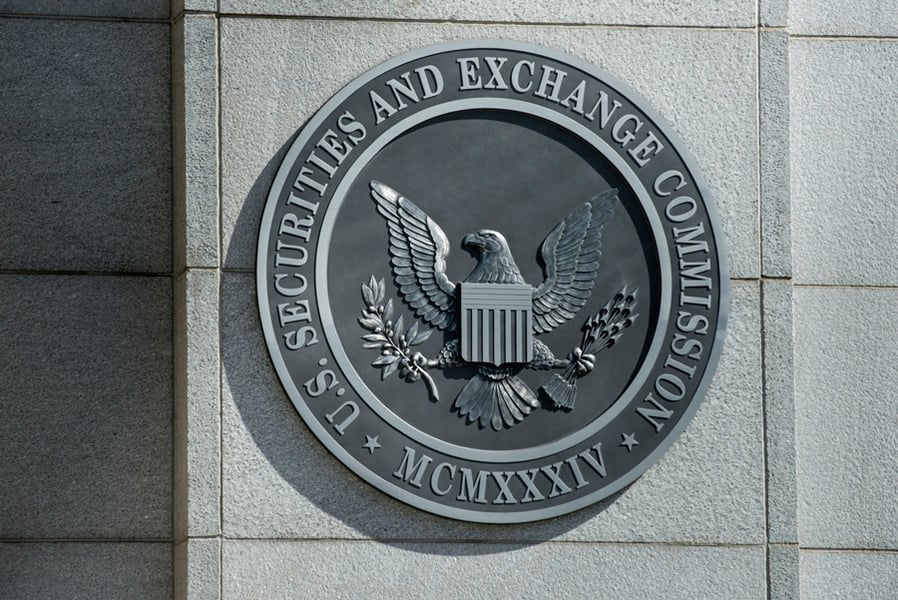
SEC enforcement against public companies and their subsidiaries collapsed to its lowest level on record in fiscal year 2026, with the regulator initiating just 16 actions - a 71% decline from the 56 brought in the prior year and the smallest annual tally since the Securities Enforcement Empirical Database began tracking data in fiscal year 2010.
The findings come from a November 2026 report by Cornerstone Research and the NYU Pollack Center for Law & Business, drawing on data from the Securities Enforcement Empirical Database (SEED), which covers enforcement activity from October 1, 2009, through September 30, 2026.
The 16 actions initiated in fiscal year 2026 were less than half the prior SEED low of 37 actions recorded in fiscal year 2013 and 52 fewer than the 68 brought in fiscal year 2022, the first full year under the previous administration. It marked the weakest opening year of any new SEC administration since at least fiscal year 2013.
"Under Chair Atkins, FY 2026 SEC enforcement against public companies and subsidiaries dropped to its lowest level since the start of SEED in FY 2010, significantly lower than prior post-transition years," said Choi in the report.
The retreat in enforcement volume was matched by a sharp contraction in financial penalties.
Total monetary settlements in fiscal year 2026 reached $184 million - the lowest in SEED and more than $600 million below the prior year's total. The average settlement fell to $12 million, down 18% from the fiscal year 2025 average of $15 million, while the median dropped to $1 million, a 76% decline from the $4 million median the year before.
Notably, 99% of total monetary settlements in fiscal year 2026 consisted of civil penalties, the highest such share in SEED. Disgorgement and prejudgment interest - traditionally the mechanism for returning funds directly to harmed investors - totaled just $1 million for the year, the lowest on record and roughly $100 million below the next-lowest total recorded in fiscal year 2025.
Only 63% of settling defendants faced a monetary settlement at all, the lowest share since fiscal year 2010 and well below the fiscal year 2017 to 2025 average of 92%. No defendant in a public company or subsidiary action admitted guilt, the first time that has occurred since fiscal year 2021. Between fiscal year 2022 and fiscal year 2025, an average of 21 public company or subsidiary defendants per year had admissions of guilt.
For independent advisors and wealth managers tracking regulatory risk, the shift in SEC enforcement posture has practical implications. As InvestmentNews has reported, advisors face evolving compliance expectations as SEC priorities shift under the Atkins administration, particularly around private fund oversight and retail investor disclosures.
Chair Paul Atkins has been explicit that quantity is no longer the benchmark for the enforcement program.
In remarks delivered at the Conference on Financial Market Regulation on May 8, 2026, Atkins stated the SEC "no longer measure[s] the success of [its enforcement] program by the quantity of enforcement actions" brought.
The qualitative shift is visible in the data. Half of all fiscal year 2026 actions against public companies and subsidiaries involved Issuer Reporting and Disclosure allegations, up from 39% in fiscal year 2025 and consistent with the administration's stated priority of pursuing accounting and financial fraud. All civil actions brought in fiscal year 2026 carried Issuer Reporting and Disclosure allegations, the third consecutive year that figure stood at 100%.
Fiscal year 2026 also marked the first year in SEED with no actions involving Foreign Corrupt Practices Act allegations, down from an average of 10% of actions annually between fiscal year 2017 and fiscal year 2025. The absence follows an executive order issued by the White House on February 10, 2025, pausing FCPA enforcement by the Department of Justice.
Meanwhile, a larger share of actions in fiscal year 2026 named individual defendants than in any of the prior 10 years, in line with Enforcement Division Director David Woodcock's stated goal of "[h]olding individual wrongdoers accountable," as he outlined in September 2026 remarks before the 12th Annual Government Enforcement Institute.
Advisors looking to understand the full regulatory landscape in the current environment can explore InvestmentNews' coverage of what RIAs should have on their radar right now as the Atkins-led commission continues to reshape its enforcement approach.
The composition of enforcement activity also shifted in fiscal year 2026. The SEC brought 25% of public company and subsidiary actions as civil actions, the highest percentage since fiscal year 2013 and more than double the 10% average recorded between fiscal year 2017 and fiscal year 2025.
Three of the four civil actions brought in fiscal year 2026 were not resolved on the same day they were initiated, the second-highest such share in SEED behind fiscal year 2021. All 12 administrative proceedings, by contrast, were resolved on the day they were initiated, consistent with historical norms.
Cooperation incentives have also shifted under the current administration. Only 53% of defendants in settled actions had cooperation noted by the SEC, the lowest share since fiscal year 2014 and below the fiscal year 2017 to fiscal year 2025 average of 66%.
In a notable change, 16% of settling defendants had cooperation noted with no accompanying monetary settlement - the highest share since fiscal year 2010 - suggesting the commission is increasingly willing to forgo penalties when companies voluntarily self-report and remediate.
The report was co-authored by Stephen Choi, Bernard Petrie Professor of Law and Business at New York University School of Law and co-director of the Pollack Center for Law & Business, alongside Cornerstone Research colleagues Sara E. Gilley, Heather B. Lazur, and Evan Schweitzer.
The report's research sample covers 1,065 enforcement actions initiated against 903 public companies and subsidiaries between October 1, 2009, and September 30, 2026. The full report is available through the SEED database at seed.law.nyu.edu.
Advisors seeking a broader view of how the leading firms in wealth management are positioning themselves amid a shifting regulatory environment can read InvestmentNews' 2026 5-Star RIA Firms for High-Net-Worth Clients special report.

An Ohio-based advisor departs Edward Jones to build an independent firm focused on retirees and business owners.

Broker-dealer enforcement actions surged 66% as the SEC and state regulators cracked down on Ponzi schemes and digital asset fraud.

The deal adds $221 billion in AUM and bolsters Marsh's alternatives and model portfolio capabilities for advisors.

New Jackson research finds multi-generational financial obligations are leaving pre-retirees dangerously off track.

Sanctuary Wealth’s Vince Fertitta examines what wirehouse advisors may leave behind when a career ends in deferred compensation rather than a sale
Growing wealth, evolving priorities, and untapped opportunities are reshaping how women approach long-term investing.
Knighthead Life entered the market with a competitive MYGA. A strong launch earned advisor confidence and paved the way for FIAs.

