
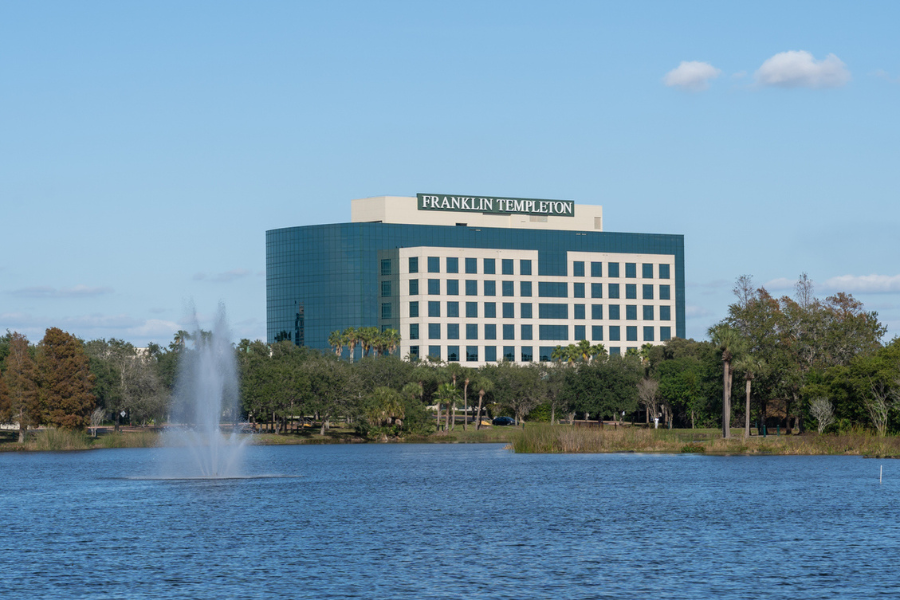
Franklin Templeton has opened its Canvas custom indexing platform to outside money managers for the first time, allowing competitors to distribute tax-managed versions of their proprietary strategies through the technology.
The San Mateo, California-based asset manager announced the launch of its Canvas Preferred Partner Program on Wednesday, marking a significant strategic shift for a platform that had, until now, served exclusively as a vehicle for Franklin Templeton's own investment products.
Canvas P3 – which initially includes MFS Investment Management, Federated Hermes, and T. Rowe Price – positions Canvas less as a proprietary product shelf and more as an open infrastructure layer for tax-aware portfolio management across the separately managed account industry.
"We built Canvas to help advisors deliver more personalized and tax-efficient portfolios at scale," Roger Paradiso, head of Franklin Templeton Custom Client Portfolios, said in the announcement. "Canvas P3 further expands our strategy suite and gives advisors a way to access strategies from other select asset managers they also want to work with while adding tax-aware implementation at the individual account level."
Under the P3 structure, participating managers contribute their existing investment strategies, while Canvas applies its tax overlay technology – encompassing tax-loss harvesting, tax-aware transitions, annual tax budgets, concentrated stock diversification, and client-specific restrictions – at the individual account level. The goal, according to Franklin Templeton, is to preserve each partner manager's investment philosophy while wrapping it in systematic after-tax optimization.
Mark Lavan, head of wealth management at Franklin Templeton, framed the initiative as a way to change the nature of manager conversations with advisors. "By bringing other managers' strategies onto the platform, Canvas can help transform a manager's conversations historically anchored in performance, into a more personalized and integrated portfolio experience for advisors and their clients," Lavan said.
The initial P3 strategies will be offered as SMAs, which are gaining traction among advisors to affluent clients who demand account-level customization. A February 2024 survey by Escalent Financial Services found that average SMA allocations among financial advisors were expected to rise from 18% to 26% by 2025, with high-net-worth advisors projected to push their SMA exposure from 23% to 31% in the same period.
The decision to extend Canvas to third-party managers represents the latest chapter in its evolution since Franklin Templeton acquired O'Shaughnessy Asset Management in late 2021. At the time of that deal, Canvas – originally developed by O'Shaughnessy as a direct indexing and custom indexing solution – had accumulated approximately $1.8 billion in assets since its 2019 launch.
In June 2024, Franklin Templeton struck a partnership with UBS Wealth Management to introduce Canvas-powered tax-managed SMA strategies – including offerings from ClearBridge Investments – to the wirehouse's single and dual contract SMA platforms.
By July last year, Franklin Templeton had added managed options capabilities, enabling advisors to implement risk management and income generation strategies within a single Canvas account. That September, it followed up with the introduction of tax-aware long-short strategies, starting with a U.S. Large Cap 130/30 structure.
As of mid-2025, Canvas had grown to approximately $13.8 billion in assets, against a total SMA platform of roughly $155 billion.
The P3 launch arrives at a moment when the wealth management industry's appetite for managed accounts shows little sign of slowing. According to Cerulli, managed account assets in the US reached $13.7 trillion in 2024, a gain of nearly 20% from the prior year. Cerulli expects that figure to grow at an annualized rate of 12.3% through 2028, reaching approximately $21.8 trillion.

Faulty Forms 1099 and account statements reportedly left some Vanguard brokerage customers overpaying or underpaying taxes for over a decade.

The democratization of ETFs cuts both ways

Independent broker-dealers snap up experienced advisors as competition for established practices intensifies.

Derek Flowers, a nearly 30-year veteran, is set to retire in mid-January, handing the reins to the executive who helped lead the bank's regulatory turnaround.

The campaign spans broadcast TV and streaming, as the brokerage faces slowing client net flows and an $8.1 billion advisor team that left to launch an RIA this month.
As AI makes financial information more accessible than ever, Lana Hock explains why human judgment, trust, and empathy remain the qualities clients value most in a financial advisor
Northern Trust’s Ken Lassner shows advisors how to convert volatility into after-tax portfolio gains

