
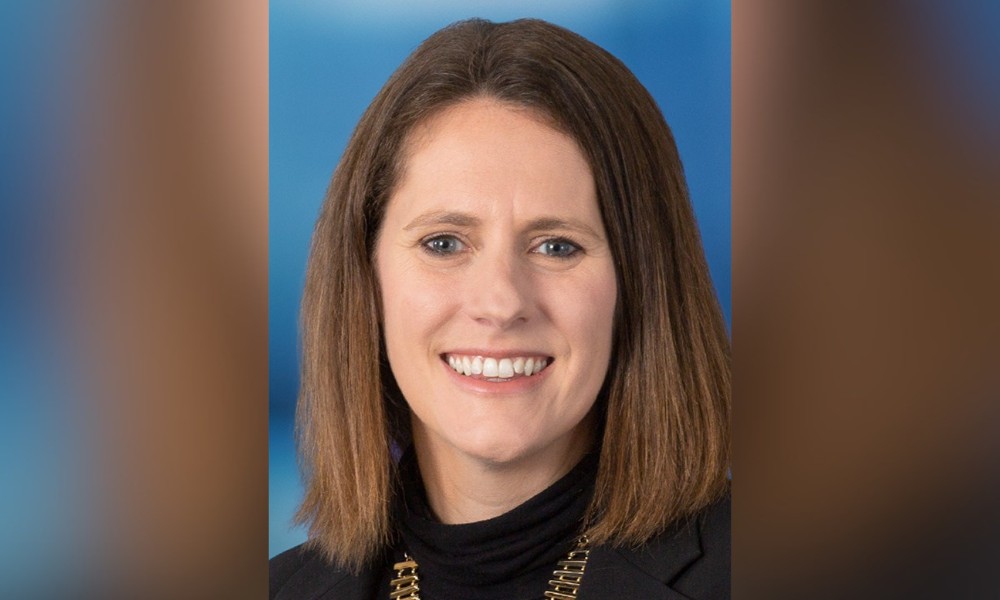
Franklin Templeton is making its AI push on multiple fronts, tapping into talent across the asset manager, while ensuring that human oversight still plays a critical role, according to Katrina Dudley, SVP of public market investments at Franklin Templeton Institute.
Dudley, who is involved in the deployment of AI within Franklin Templeton’s investment teams, explained that the company is steadfast in its commitment to the technology. “I think the message, it starts from the top … [Franklin Templeton CEO] Jenny Johnson is extremely committed to AI and that messaging is coming from the top of the house,” she said, during a media event at the company’s offices in New York City’s flatiron district Monday.
AI is firmly in the spotlight as the giants of the financial advisor industry look to boost operational efficiency. Last week, for example, Raymond James CEO Paul Shoukry said that AI is improving the relationship between advisors and clients but also acknowledged the technology's limitations.
Kevin Warsh, President Donald Trump’s nominee to lead the Federal Reserve was also beating the AI drum at his confirmation hearing last week, touting the hugely disruptive technology as a vital productivity tool for U.S. business.
During the media event, Dudley outlined Franklin Templeton’s AI capabilities, which include an internal analyst assistant, and PM Copilot, which she described as “a very new multi-agent technology” that the company has deployed. “Within our multi-asset we have Grommet, which is a kind of investment engine coach,” Dudley added.
The company is also hosting events to boost internal AI knowledge, according to Dudley. “We have an AI hackathon we hosted in January, we had just recently our reverse-mentor hackathon, so we brought in junior talent to partner with our most senior leaders in our investment teams on AI problem solving,” she said. “We have an AI champions network as well.”
Other companies are also harnessing their internal resources to fuel their AI rollouts. Raymond James, for example, is using focus groups as it ramps up the rollout of Rai, the company’s new AI operations agent. Elsewhere, asset manager Sagard told InvestmentNews that it uses an AI coach.
Franklin Templeton’s Dudley also explained that the company has an AI framework against which it is “measuring everything.” With regard to the shortcomings of AI, she highlighted “some of the personal pain points where you see the controls come into play.”
“Where you enter into our investment portal, which has got all our AI tools, there’s a reminder that comes in,” she said, noting that this urges users to “please verify” the information generated by AI.
As for the company’s broader AI push, she said that “different people are at different parts on that journey.”
“I would say that we’re meeting people at where they’re at but pushing from behind,” Dudley added.

Salespeople at the firm often went beyond the matching algorithm to recommend network advisors on its Zoe Wealth platform, according to the regulator.

The Protect College Sports Act would cap school payments and codify NIL rights, with implications for advisors guiding young athletes.

"I know the number that I want to be able to retire on, and now I just want out," says Wilmington Trust's Marguerite Weese, describing a common refrain among business-owner clients.

Bessemer and Brown Brothers Harriman veteran Robert Ludricks III and private markets specialist Olof Akesson join the ultra-high-net-worth push on the East Coast.

765 investors were promised 260% annual returns on truck leases
As AI makes financial information more accessible than ever, Lana Hock explains why human judgment, trust, and empathy remain the qualities clients value most in a financial advisor
Northern Trust’s Ken Lassner shows advisors how to convert volatility into after-tax portfolio gains

