
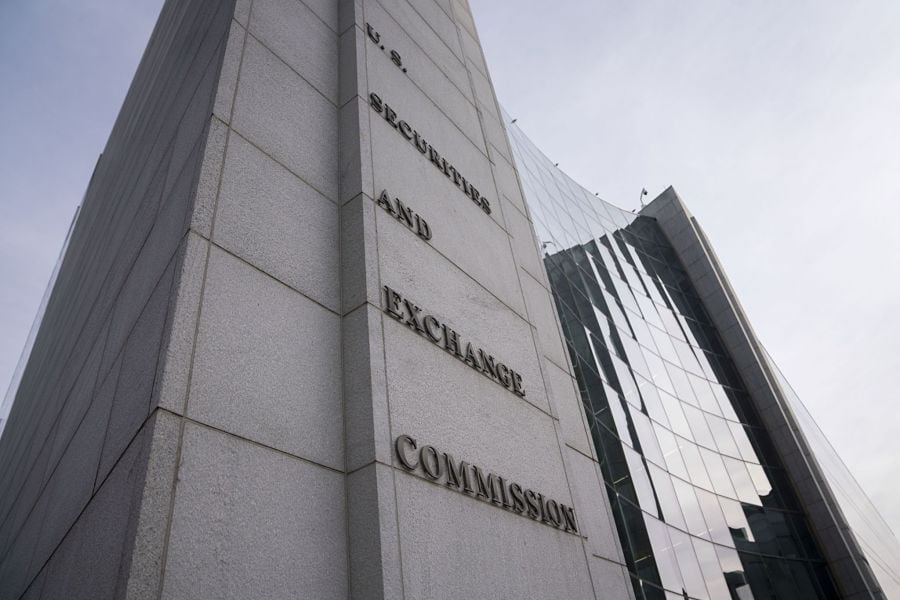
The SEC on Tuesday approved a final marketing rule that updates regulations for investment adviser advertising to reflect technological advances.
The new rule replaces the advertising rule, which was adopted by the Securities and Exchange Commission in 1961, and a rule on payments to solicitors established in 1979. The previous regulations centered on written communications, television and radio advertising. The newly approved rule contains principles-based provisions that can apply to online outreach, such as adviser marketing over social media.
The final marketing rule allows testimonials, endorsements, performance advertising and third-party ratings as long as they comply with anti-fraud protections and other conditions.
For instance, an advertisement must disclose whether the person giving an endorsement or testimonial is a client or is being compensated. Advertising of gross performance must be accompanied by net performance and performance data must be presented over a specific time period.
The new rule modifies “the definition of ‘advertisement’ to be more ‘evergreen’ in light of ever-changing technology,” the final rule states.
SEC Chairman Jay Clayton said advertising regulation reform was overdue.
“The marketing rule reflects important updates to the traditional advertising and solicitation regimes, which have not been amended for decades, despite our evolving financial markets and technology,” Clayton said in a statement. “This comprehensive framework for regulating advisers’ marketing communications recognizes the increasing use of electronic media and mobile communications and will serve to improve the quality of information available to investors. The new rule provides for an extended compliance period intended to provide advisers with a sufficient transition period, including to enable consultation with the Commission’s expert staff.”
The rule will go into effect 60 days after it is published in the Federal Register, or after the inauguration of President-elect Joe Biden on Jan. 20. That makes it vulnerable to a delay when the Biden administration comes into power and the SEC switches from a 3-2 Republican majority to a Democratic majority. The compliance date will be 18 months after the effective date.
The marketing rule was approved unanimously by all five SEC members, but the two Democrats on the commission, Allison Herren Lee and Caroline Crenshaw, expressed reservations about some changes to the final rule that make it differ from the proposal released in November 2019.
They opposed the removal of a provision that would have required advisers to review advertising for compliance before disseminating it. They also objected to carve-outs for communication about hypothetical performance in response to unsolicited requests from retail investors and for one-on-one communication with private fund investors.
“This rule makes a number of improvements in an area that is of paramount importance to investors — ensuring that their fiduciaries provide honest, clear and contextualized information about the complex services they provide,” Lee and Crenshaw said in a statement. “While we hope that our concerns about the loss of certain safeguards will not prove prescient, we believe it will be important for the Commission to closely monitor industry implementation of the rule to consider whether additional revisions or protections may be warranted going forward.”
In another change from the proposal, the definition of an advertisement will not extend to communications directed toward one person.
The Investment Adviser Association has made reform of the advertising rule a priority. The organization endorsed the final marketing regulation.
"We are pleased that the Commissioners and staff incorporated a number of requests made by the IAA – including permitting advisers to market themselves through social media and other modern means," IAA chief executive Karen Barr said in a statement. "We appreciate that the rule includes a targeted definition of advertising that allows advisory firms to continue their typical communications with existing clients. We are also pleased that the SEC focused on the compliance program requirements in lieu of the proposal requiring pre-approval of all marketing materials."

$1.7M invested from an inheritance. Then the phone went dead.

The pre-IPO platform sold $430M in units while allegedly rigging prices behind the scenes.

A Nationwide survey finds 47% of GLP-1 users have never discussed the drugs’ financial impact with an advisor, even as many dip into savings.

The hundreds of millions of dollars from a sale of Inspired Healthcare properties does not mean an immediate windfall for investors.

Its SEC filings said one thing - a congressional probe said another.
Knighthead Life entered the market with a competitive MYGA. A strong launch earned advisor confidence and paved the way for FIAs.
As AI makes financial information more accessible than ever, Lana Hock explains why human judgment, trust, and empathy remain the qualities clients value most in a financial advisor

