
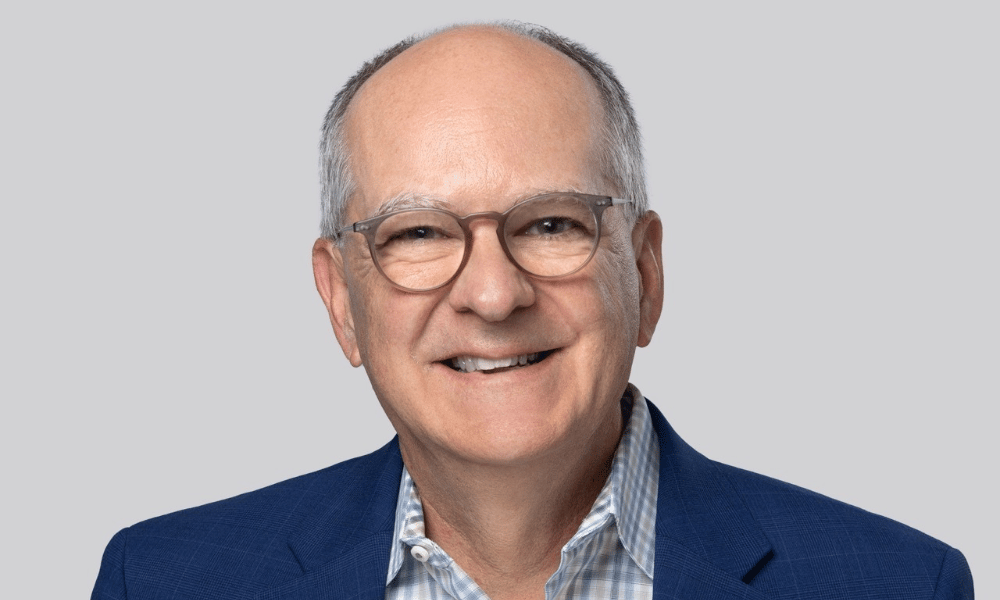
For the better part of a decade, fixed income was a reluctant passenger in client portfolios - something to hold for stability, not to rely on for returns. That calculation has fundamentally changed, according to Steve Dean, CFA, chief investment officer at Compound Planning, a $4 billion digital family office and registered investment advisor based in New York.
"For the first time in many years, the defensive part of a portfolio can contribute to the return objective rather than simply protect it," Dean told InvestmentNews. "High-quality fixed income can now provide meaningful income, attractive prospective returns, and diversification benefits within the same allocation."
With investment-grade bond yields now competing directly with equity returns, Dean says that advisors face a new set of conversations with clients and a higher bar for every riskier asset in the portfolio.
When bonds offered near-zero yields, the logic for taking on equity volatility or locking capital in private markets was almost automatic. That incentive has diminished. Dean describes this as a "rising hurdle rate" - a concept with direct implications for how advisors evaluate today's most popular investment themes, including artificial intelligence stocks and private credit.
"If you can earn an attractive yield in high-quality fixed income, taking on equity volatility or locking up capital in private investments needs to offer a compelling incremental benefit," Dean said. "The higher hurdle rate doesn't mean avoiding risk. It means investors should be more demanding about how they're compensated for taking it."
For AI-related equities specifically, Dean says the emphasis must shift from the scale of AI spending to actual earnings, cash flow, and returns on invested capital. Higher discount rates place pressure on valuations dependent on earnings far into the future, he notes, and while he remains positive on AI's long-term potential, he draws a sharp distinction between companies benefiting from an investment cycle and those that will ultimately generate attractive returns on that investment.
In private markets, the same discipline applies. Dean says Compound Planning wants to see a meaningful premium for illiquidity, complexity, fees, and underwriting risk, alongside genuinely differentiated sources of cash flows or risk exposures. "A private investment shouldn't earn a place in the portfolio simply because it's private or offers an attractive headline yield," he said.
The debate over the traditional 60/40 portfolio has intensified in recent years. Dean's view is that the fundamental principles of portfolio construction are more relevant today than during the low-rate era, not less.
"The case for a balanced portfolio has strengthened," he said, noting that the fixed income allocation can now make a much more meaningful contribution to expected portfolio returns. The important caveat, he adds, is that stock-bond correlations can turn positive during inflation shocks - meaning advisors should evaluate diversification across different economic scenarios rather than rely solely on historical correlations.
Compound Planning suggests a range of 10 to 20 percent in alternatives, though Dean emphasizes that figure is not mandatory. The key criterion is whether an alternative investment offers something that investors cannot obtain more efficiently in liquid public markets. Reported low volatility from infrequent valuations, he warns, is not necessarily genuine diversification.
Dean identifies one error he sees repeatedly in advisor behavior since yields moved higher: allowing the current rate environment to dictate portfolio construction rather than letting each client's long-term objectives drive the allocation.
"Higher yields don't mean investors should abandon equities or alternatives and move entirely into bonds," he said. "The rise in yields may allow some clients to meet their objectives with less overall portfolio risk, but they do not eliminate the need for growth assets."
For advisors whose clients now ask why they should accept equity volatility or private credit illiquidity when bonds are yielding attractively, he says the right answer begins with the client's objective, not with any particular asset class. Clients with long investment horizons still need equities for the growth component that bonds, however attractive, cannot replicate. For those evaluating private credit, the question is whether the incremental return over liquid, high-quality bonds justifies the liquidity sacrifice and the fees.
"If that compensation isn't there," Dean said, "we're perfectly comfortable owning liquid, high-quality bonds instead."
Dean has more than 30 years of experience across markets, beginning his career in the economic research department of the Federal Reserve before spending more than two decades at AXA Investment Managers, where he worked in research, investment modeling, and global product strategy. He joined Compound Planning in September 2022 and leads the firm's public and private model portfolio development.

A continuity plan is one of the most important risk tools an advisor has, and the right successor is easier to find among peers

“Advisors should not sit on the sidelines,” said Advisor360’s Milind Mehere.

The broker-dealer revs up its RIA push with Mainstay, which manages 401(k)s for GM and Ford workers, following CW Advisors' route.

New MCP server and Claude Compliance API connector let RIAs and broker-dealers query archived records and capture AI chats for supervision.

While RIAs have mastered the art of caring for clients, many have been slower to invest in their own people.
A continuity plan is one of the most important risk tools an advisor has, and the right successor is easier to find among peers
Advisors are broadening the conversation beyond savings to help clients prepare for the realities of longer lives

