
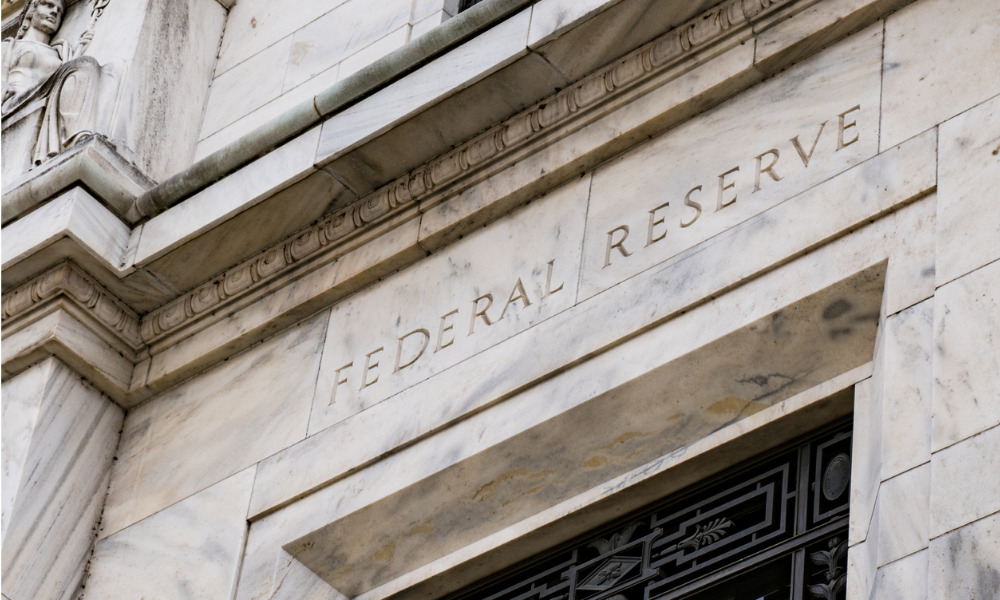
The Federal Reserve’s September policy meeting is set against a backdrop of heightened political drama, with a narrow Senate majority confirming a new member to the FOMC as an appeals court makes a pivotal decision in a White House push to terminate Federal Reserve Governor Lisa Cook.
Stephen Miran, President Donald Trump’s senior economic adviser, was confirmed to the Federal Reserve board late Monday, just hours before the central bank’s highly anticipated September policy meeting.
The Senate approved Miran’s nomination by a narrow 48-47 vote, with Alaska Senator Lisa Murkowski joining Democrats in opposition, citing concerns about the Fed’s independence.
Miran, who will take unpaid leave from his White House role as chair of the Council of Economic Advisers, becomes the first executive-branch official to serve on the Fed board since 1935. He told lawmakers at his confirmation hearing that he intends to act independently, but his dual-hatted arrangement has drawn criticism from both sides of the aisle as well as former central bank officials.
“It was a very bad signal not to resign the position in the administration,” former Boston Fed president Eric Rosengren told the Wall Street Journal.
Murkowski said that Miran’s decision not to step down “raised her concern about compromising the Fed’s independence.”
Miran’s confirmation comes at a pivotal time for the Fed, which is widely expected to announce its first interest rate cut since December 2024. While his vote is not likely to be decisive, some analysts suggest he could dissent in favor of a larger reduction than the quarter-point cut anticipated by markets.
Miran has previously criticized the Fed’s approach under Chair Jerome Powell and has aligned with Trump’s calls for more aggressive monetary easing.
Amid these developments, a federal appeals court on Monday blocked the Trump administration’s attempt to remove Fed Governor Lisa Cook ahead of the central bank’s highly anticipated meeting this week.
The three-judge panel from the US Court of Appeals for the District of Columbia Circuit denied the administration’s emergency request, allowing Cook to participate in the Federal Open Market Committee’s two-day session.
Cook has adamantly denied allegations of mortgage fraud, which were first raised by Trump’s housing finance director and are now the subject of a Justice Department investigation.
The panel’s 2-1 decision left in place a lower court injunction while Cook challenges the legality of her removal. Judge Bradley Garcia, joined by Judge J. Michelle Childs, wrote that Cook’s claim she was not given proper notice or opportunity to respond had merit, and that removing her now would “upend, not preserve, the status quo.”
Cook’s lawyers argue that the allegations are unproven and unrelated to her performance at the Fed, and that the president’s move violates the Federal Reserve Act’s requirement that board members can only be removed for cause. In court filings, they said the situation “calls for orderly process and sober deliberation – not a destabilizing rush to judgment.”
The White House has indicated it will appeal the ruling to the Supreme Court.
In a separate story by the Journal, Spokesman Kush Desai said, “The President lawfully removed Lisa Cook for cause. The Administration will appeal this decision and looks forward to ultimate victory on the issue.”

Retiring RIA seller David Laidlaw alleges the Carnegie valued his stake on $11.7 million EBITA while pitching potential buyers on $21.3 million.

New tool gives RIAs and family offices AI help vetting private market deals, with some users reportedly halving review time.

Investors got projected returns dressed up as real ones, SEC says

Parents must still act to get the $1,000 federal seed and employer contributions, giving financial advisors a role in the rollout.

FINRA booted Rudy Anguiano from the industry for “conversion - the intentional and unauthorized taking of another person’s property.”
As AI makes financial information more accessible than ever, Lana Hock explains why human judgment, trust, and empathy remain the qualities clients value most in a financial advisor
Northern Trust’s Ken Lassner shows advisors how to convert volatility into after-tax portfolio gains

