
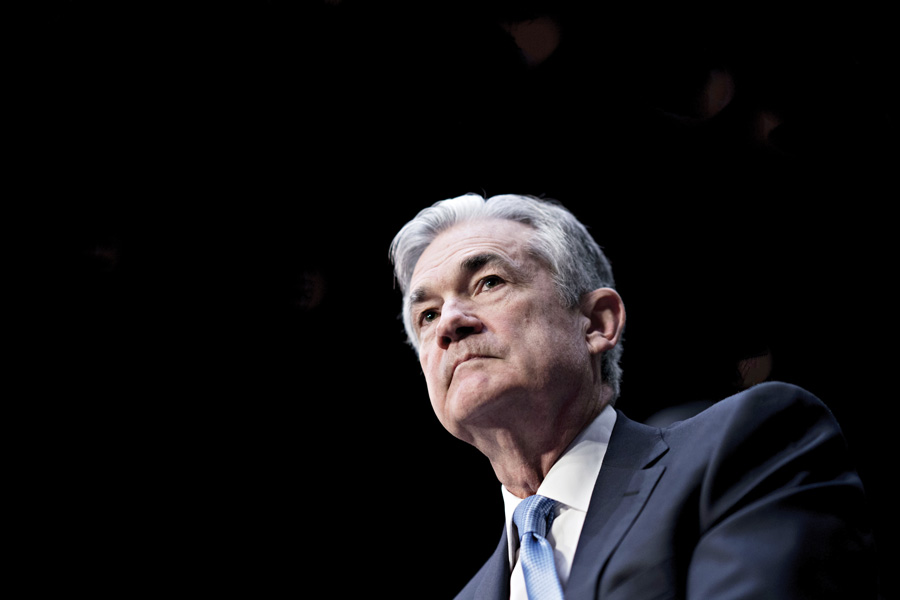
Jerome Powell, the former chair of the Federal Reserve who now serves as a Fed governor, delivered a pointed defense of central bank independence on Sunday, warning that political interference risks permanently eroding public confidence in the institution.
Speaking at the John F. Kennedy Presidential Library in Boston to accept the 2026 John F. Kennedy Profile in Courage Award – given by the John F. Kennedy Library Foundation – Powell framed the Federal Reserve alongside the courts, universities, and Congress as pillars of American democracy now facing a concerted stress test.
His remarks, his first extended public comments since the conclusion of his chairmanship last month, carried unmistakable weight given the turbulent final months of his tenure.
"Democratic institutions take much time, effort, and patience to build but can be torn down all too quickly," Powell said in prepared remarks. "It is essential that we preserve what is good about these institutions, even as we strive to improve them."
For financial advisors and wealth managers monitoring the Fed's direction – and the interest-rate environment that drives portfolio strategy – Powell's warnings carry direct implications. A central bank perceived as beholden to political pressure would likely struggle to anchor inflation expectations, impacting both long-duration bond positioning and retirement income planning.
Powell described a sustained effort by the Trump administration to reshape the Fed's decision-making, including public calls for his resignation, a Department of Justice criminal probe opened into the $2.5 billion renovation of the Fed's Washington, D.C., headquarters – which was subsequently dropped in April – and attempts to remove Fed Governor Lisa Cook from the board.
Powell made clear that he saw a link between those moves and President Donald Trump's repeated demands for more aggressive interest rate cuts than warranted by the Fed's data-driven framework.
"If any administration finds a way to remove Fed officials over policy differences, then future administrations will do so as well," Powell said. "The public would lose faith that the central bank will make decisions based only on what's best for all Americans."
The Fed's structure, Powell noted, was specifically designed to insulate monetary policy from political cycles. "These protections have served the public well, and administrations from both parties have respected them," he said.
In announcing Powell as the 2026 award recipient earlier this year, the Kennedy Library Foundation cited his efforts to safeguard "one of the country's most essential apolitical institutions" in the face of "sustained personal and professional risk," according to the foundation's statement.
Powell's choice to remain as a Fed governor after stepping down as chair is itself a signal. As reported across multiple news outlets, he decided to continue in the role partly because of what he regards as ongoing threats to the institution's independence.
His continued presence also blocks the possibility of the Trump administration appointing an additional member to the seven-seat Fed board for the time being.
Kevin Warsh, 56, was sworn in as the 17th chair of the Federal Reserve late last month in a ceremony held at the White House – the first such swearing-in conducted there since Alan Greenspan took office in 1987, according to CNBC. The Senate had confirmed Warsh, in a 54-to-45 vote described by JPMorgan Chase strategists as the most divisive confirmation in the Fed's modern history.
Warsh, a former Fed governor who served on the board from 2006 to 2011 and later became a visiting fellow in economics at Stanford University's Hoover Institution in Stanford, California, signaled from the outset that he intends to run a different kind of central bank.
"I will lead a reform-oriented Federal Reserve, learning from past successes and mistakes, both escaping static frameworks and models and upholding clear standards of integrity and performance," he said at his swearing-in ceremony.
His first Federal Open Market Committee meeting as chair is scheduled this month in a session that markets and independent financial advisors are keeping a close eye on.
Despite Trump's public pronouncements that rates will fall "very quickly" under Warsh's leadership, market expectations suggest the Fed is more likely to hold rates steady through most of 2026, with a possible rate increase in early 2027 not off the table.

Nearly half of private firms forgo 401(k) plans even as new data ties them to higher stock option uptake among employees.

New research finds just 12% of wealth management firms have reached AI leader status, and it isn't spending that separates them

Affinity fraud refers to investment scams that prey upon members of identifiable groups, such as religious or ethnic communities.

Self-serve access to Strategic Advice Manager promises onboarding in days, as RIAs weigh how deep to take AI adoption.

Elios Financial Group joins Carson Wealth as the Omaha RIA adds to a record year of industry dealmaking.
Northern Trust’s Ken Lassner shows advisors how to convert volatility into after-tax portfolio gains
Dan Biagini of American Equity says the steady decline of pensions, longer lifespans and a reset in interest rates are rewriting how advisors build retirement income

