
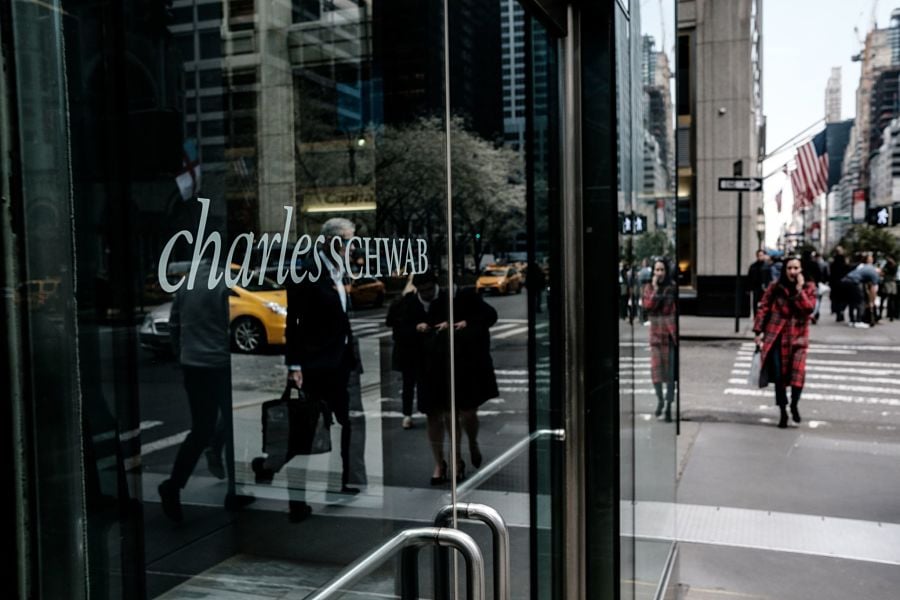
William Galvin, Secretary of the Commonwealth of Massachusetts, on Wednesday charged Charles Schwab & Co. over unethical and deceptive practices that allowed a third-party investment adviser to continue to collect advisory fees from Schwab customers’ accounts for years after his registration had lapsed.
The financial adviser at the center of the allegations is James Patrick O'Connell, who was last registered as an investment adviser in 2014. Since then, he has collected at least $125,000 in investment advisory fees, according to the Massachusetts complaint.
The Massachusetts Securities Division discovered the alleged illegal activities while investigating a complaint of exploitation of senior citizens by O’Connell, according to a statement by Galvin.
Charles Schwab is a leading custodian for investment advisers and works with thousands of independent financial advisers.
A spokesperson for Charles Schwab wrote in an email that the firm is committed to its compliance responsibilities and earning the trust of its clients. The spokesperson did not mention the Massachusetts allegation.
O'Connell did not return a call Wednesday afternoon to comment.
Galvin’s office is seeking an order requiring Schwab to reimburse investors for all fees paid to O’Connell while he was unregistered. The Massachusetts Securities Division is also asking that O’Connell and Schwab be fined.
State securities regulators have been busy recently bringing enforcement actions against unregistered investment advisers.
O’Connell was removed from Schwab’s platform in 2012 for allowing his registration to lapse for nearly two years, which also resulted in a reprimand from the Massachusetts Securities Division.
Despite this removal, Schwab took no steps to monitor customer accounts for further payments to O’Connell, who collected at least $46,000 in investment fees from Schwab brokerage accounts over a period of more than six years while remaining unregistered, the complaint alleges.
O’Connell continued to make recommendations to clients and collect fees from their accounts, and also made recommendations that were unsuitable, according to the complaint. He issued blanket recommendations without respect to individual client needs and over-concentrated portfolios in global communication infrastructure companies, Massachusetts alleges.

Also, Orion has added BlackRock, Fidelity, and Vanguard to its custom portfolios suite, and RedBlack has set up a new headquarters after crossing a trillion-dollar milestone.

Also, New York-based Legacy Edge Advisors names its first-ever CEO, while Novare Capital Management hires a Vanguard veteran with a multigenerational planning focus.

Asset managers are racing to bring private market products to retirement plans, but cost and liquidity concerns linger.

Treasury's latest tax-exemption crackdown on private schools lands in the wake of a separate push to restrict refundable credits for some immigrant filers.

Workforce trust measures predicted which companies came out ahead during COVID-19. The same dynamic may now be playing out across the AI transition — and the data suggests the spread could be just as wide.
Northern Trust’s Ken Lassner shows advisors how to convert volatility into after-tax portfolio gains
Dan Biagini of American Equity says the steady decline of pensions, longer lifespans and a reset in interest rates are rewriting how advisors build retirement income

