
The intersection of Washington politics and Wall Street is seen regularly in the hopping back and forth of high-profile executives and attorneys from big-name firms to top jobs at various government agencies, a conflict of interest that no one wants to discuss except for a few stubborn corporate governance sticklers. There's simply too much cash at stake to raise a serious fuss.
Senior executives and attorneys from Wall Street investment houses routinely round out their resumes with a few years of government service at or near the top of an agency. The most notable example is Henry Paulson, chairman and CEO of Goldman Sachs Group Inc. from 1999 to 2006, who then became Secretary of the Treasury.
Paulson oversaw the bailout of Wall Street in the wake of the credit crisis in 2007 and 2008. The conflict was huge. How could one of Wall Street's most prominent executives decide the fates of investment banks he formerly competed against without some inherent conflict, regardless of the best of intentions?
The Treasury Department's bailout of Wall Street was more than 14 years ago. Much has changed in the almost decade-and-a-half since the Troubled Asset Relief Program bought $700 billion of distressed real estate assets and mortgages.
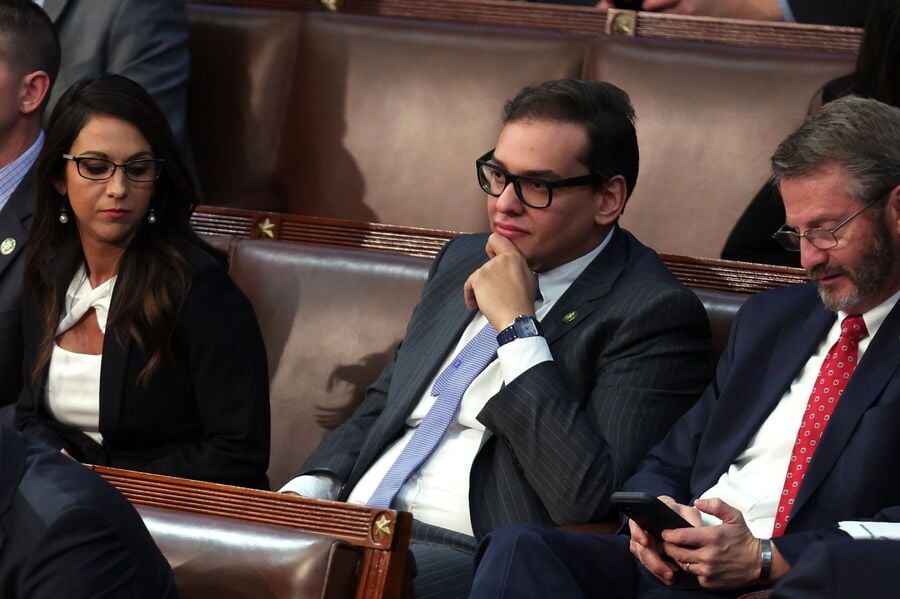
Yet the ugly intersection between Washington politics and the world of finance persists, although this latest version doesn't involve the titans of the industry, like a senior executive at a storied investment bank. No, the conflict of the moment bubbles up from the opaque world of unregistered securities, unlicensed salesmen and fly-by-night fundraisers, and the face of it is the infamous, newly sworn-in Republican congressman from Long Island, George Santos.
According to a report this month in the Wall Street Journal, Santos "persuaded" an investor to make a sizable, six-figure investment in a Florida company that the Securities and Exchange Commission in April 2021 claimed was a Ponzi scheme. That company, Harbor City Capital Corp., and its founder, Jonathan P. Maroney, raised more than $17 million through a series of unregistered and fraudulent securities offerings, according to the SEC's complaint.
Santos, who has also been accused of lying about his resume and his career in finance, is not a registered broker or investment advisor, according to searches of industry records. He is not named in the SEC's complaint, but according to the Wall Street Journal, Santos "was hired in 2020 to raise capital for the company, Harbor City Capital, and landed at least one significant investment from a wealthy investor."
In 2020, Santos was already involved in politics and making his first run at Congress. And that June, the Alabama Securities Commission issued a cease-and-desist order prohibiting Maroney and Harbor City from selling securities in the state, according to the SEC's complaint. State regulators are often the first to come upon such scams and alert the SEC or the FBI.
When the investment failed to generate the promised returns, Santos told the client he had raised nearly $100 million and invested his own family’s money in Harbor City, according to the Wall Street Journal report.
Harbor City Capital sold high-yield promissory notes that funded the company's customer lead generation sales business, according to the SEC. Maroney and his related companies stole about $4.5 million and used another $6.5 million to pay investors phony returns, which are integral to running a Ponzi.
Eventually, the truth in this matter will come out. Santos' office did not return a call to comment about the allegation that he raised money for an alleged Ponzi scheme.
According to the Wall Street Journal, Santos has denied wrongdoing and previously said in interviews that he wasn’t named as a defendant in the SEC’s lawsuit against Harbor City Capital.
Santos isn't a registered salesperson, but he certainly behaved like one, according to the Wall Street Journal's report. That's consistent with the proliferation of off-Wall Street frauds of the past decade, including the $1.2 billion Woodbridge Group real estate scam and the $280 million 1 Global Capital loan fraud.
Such scams increased because of salesmen who, like Santos, had a whiff of Wall Street about them but in the end were illegitimate. It's unclear how the major securities regulators, namely, the SEC and the Financial Industry Regulatory Authority Inc. are dealing with the ever more numerous George Santos-type salesmen ripping off the American investing public and giving financial advisors a rotten name. To the SEC's credit, it did shut down Harbor City Capital before it became a giant mess.
Investment frauds have expanded in ways most Wall Street executives and financial advisors never would have foreseen in 2008. In the case of Harbor City Capital, investors "were solicited primarily through Harbor City’s website and a series of on-line marketing videos featuring Maroney posted on YouTube," according to the SEC.
One of the firms where Santos claimed to have worked is Goldman Sachs. Is it any wonder that a guy who sold unregistered securities for an alleged Florida Ponzi wanted people to think he worked at the same firm as the former Secretary of the Treasury?
“The White House has extremely strict ethical guidelines with respect to issues like this,” said Press Secretary Karoline Leavitt.

Just how much does it cost for a financial advice exec to stay out of prison?

The advisor both prices FSK's private loans and gets paid on those prices, the suit claims

The proposal would end decades of paper-first delivery rules, but keeps a paper opt-out and draws early praise from fund and annuity industry groups.
The Trump accounts are “generationally changing” and bring financial literacy to youth, said IRS chief Frank Bisignano.
Northern Trust’s Ken Lassner shows advisors how to convert volatility into after-tax portfolio gains
Dan Biagini of American Equity says the steady decline of pensions, longer lifespans and a reset in interest rates are rewriting how advisors build retirement income

