
A bear market refers to a period when securities experience a sustained decline in value. These conditions are often marked by falling prices, reduced investor confidence, and increased selling activity.
In this article, we define bear markets, outline their stages, and share practical ways to help clients stay resilient.
A bear market is defined as a prolonged period of declining securities prices. In the stock market, a bearish market occurs when a broad market index drops at least 20% from its most recent high and stays at depressed levels for a sustained period of time. This threshold helps distinguish normal market fluctuations from deeper, more persistent downturns.
The core characteristics of a bear market include:
As prices decline, investors shift away from risk by moving into cash or fixed-income securities. This behavior causes further downward pressure on stock markets and contributes to extended weakness in the market.
Bear market is typically identified by tracking major stock market indexes that reflect overall market performance. Common reference points include the S&P 500 Index, the Dow Jones Industrial Average and the Nasdaq Composite. When these benchmarks fall 20% or more from recent highs, the broader market is considered to have entered a bearish market.
This is even if individual stocks or sectors perform differently during the same period.
In contrast, a bull market refers to a sustained period of rising stock prices, strong investor confidence, and expanding risk appetite. Bull markets tend to last longer and deliver the majority of long-term gains while bear markets are shorter but more intense.
A market correction is a significant decline in stock prices but more limited than a bearish market. A correction happens when a broad stock market index falls by more than 10% but less than 20% from its recent peak. While the 10% threshold is somewhat arbitrary, it signals a meaningful pullback rather than normal day-to-day volatility.
The key difference is in the scale and persistence. Once price falls reach 20% or more, the market is considered to have entered bear market territory. At that point, the downturn reflects deeper stress across financial markets and a wider loss of confidence from investors. In contrast, corrections are temporary pauses that realign prices with longer-term trends and do not signal a lasting decline.
Duration and severity also differ. Market corrections are usually shorter-lived, only lasting days or months. Bearish markets can stretch from several months to multiple years in more severe cases. Investor behavior shifts accordingly. During corrections, investors may remain cautious but engaged while bearish markets are marked by increased selling and a stronger move toward perceived safety. Historically, most corrections do not turn into bearish markets.
No two bear markets are identical. However, these phases help explain how downturns emerge and eventually stabilize:
The early warning phase occurs when market prices are still relatively high and investor confidence remains strong. However, beneath the surface, risks begin to build. Economic indicators may start to weaken, corporate profits may slow, or valuations may appear elevated. Some investors quietly reduce exposure and take profits even as the broader market continues to appear stable.
In the breakdown and acceleration phase, stock prices begin to fall more sharply. Selling activity increases across market indexes and negative developments weigh heavily on sentiment. As losses deepen, confidence deteriorates and more investors move to exit positions. This phase typically marks the point when markets clearly enter bear market territory.
Capitulation reflects a period of intense fear and pessimism. Investor confidence is severely weakened and many participants sell assets to avoid further losses. Trading volumes often rise as selling accelerates, reinforcing downward pressure on prices. During this phase, risk aversion dominates and investors shift toward perceived safer assets.
Despite the widespread pessimism, panic selling should be the last thing in an investor's mind:
The final stage involves stabilization and the emergence of early recovery signals. Price declines slow even if volatility persists. Lower valuations begin to attract buyers and sentiment gradually improves. Although confidence remains fragile, sustained buying activity and improving conditions sets the transition towards a new bull market.
Bear markets are a recurring feature of US stock markets. Historical data shows that bear markets have occurred regularly across different economic environments and market cycles. Since 1928, the US stock market has experienced roughly two dozen bear markets. Over long periods, bear markets have occurred about once every four to five years though the exact timing varies widely.
Historical evidence shows that bear markets, while disruptive, have consistently been followed by recoveries. However, recovery timeframes vary. The sharp downturn in early 2020, triggered by the COVID-19 pandemic, stands out for its unusually fast rebound of just months. Others covered longer periods including those associated with the Great Depression and the dot-com collapse.
Bear markets tend to benefit participants who are positioned for volatility or focused on long-term outcomes. Those with diversified portfolios, adequate liquidity, and a clear risk framework are better able to withstand drawdowns without being forced to sell. Gradual accumulation strategies, such as investing in stages rather than all at once, can also benefit from lower prices.
Positioning portfolios ahead of a bearish market focuses on preparation, not prediction. History shows that bearish markets are only identifiable after price falls have already occurred and attempts to time the market consistently fail.
Risk-aware positioning begins with acknowledging that market downturns are a normal part of long-term investing. A portfolio built to withstand these cycles focuses on resilience rather than short-term performance. Here's how to position portfolios for this eventuality:
Spreading exposure across asset classes, sectors, and market segments helps reduce reliance on any single source of return. While most stocks tend to decline during bear markets, they often do so by different amounts. A diversified structure which includes defensive sectors can help limit overall drawdowns.
During a bear market, certain sectors and assets have historically shown greater resilience as stock prices decline. Commonly cited defensive sectors include consumer staples, utilities, and health care. Companies in these sectors generate steadier cash flows and earnings which can help their stock prices hold up better.
Asset behavior also shifts as investor sentiment turns more risk-averse. In declining stock markets, investors often move toward assets perceived as more stable such as government bonds and cash. Bonds have historically offered diversification benefits during bear markets especially when economic growth weakens and interest rates fall.
Certain warning signs often appear before markets enter bearish market territory. Some indicators include sustained declines in major stock market indexes, increased volatility, and repeated failed attempts to recover previous highs.
Economic and sentiment indicators also play a role. Bear markets frequently coincide with weakening economic conditions such as slowing growth, falling corporate profits, or rising unemployment. Changes in interest rates, government policy, or geopolitical events can further erode confidence.
Despite these signals, prediction remains limited. Bear markets are only confirmed after prices have already fallen by 20% or more and their causes often become clear only in hindsight. For this reason, risk signals are best used to inform preparation and risk management instead of attempting to time market exits or entries.
Drawdown discipline plays an important role in managing risk during bear market. Drawdowns represent real capital losses from peak to trough and deeper drawdowns require disproportionately higher returns to recover. History shows that unmanaged drawdowns can disrupt long-term compounding and increase the likelihood of emotionally driven decisions.
Predefined limits and triggers are commonly used to control drawdown risk. A maximum drawdown framework sets an explicit threshold for acceptable losses relative to a prior peak. When drawdown levels approach or breach those limits, predefined actions are triggered like reducing position sizes or temporarily increasing liquidity.
Bear markets often amplify emotional responses. This can cause investors to feel pressured to act even when action may be counterproductive. One of the most common mistakes is panic selling to regain control or prevent further losses. In reality, panic-driven sales often lock in temporary declines and remove the ability to benefit from eventual recoveries.
Emotional decisions can also lead to repeated trading errors. A process-driven approach helps reduce these risks. Clear portfolio guidelines, predefined drawdown limits, and disciplined rebalancing provide structure during periods of stress.
Here's an interesting take from Warren Buffet about the market in 2026:
Bearish markets are an unavoidable part of financial market cycles. While they can test confidence and discipline, history shows that preparation, structure, and patience matters more than prediction. Understanding how bear markets form, unfold, and recover helps frame risk realistically and supports better long-term decision-making.

The investment strategy has only outperformed buy and hold 24% of the time since the end of 1990, according to S&P Global.
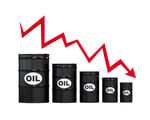
Three firms are telling clients that despite oil's rout, it remains a good long-term play.

Most-hated S&P 500 rally poised to become second-longest

Speaking Monday at the IMCA annual conference in Orlando, Mr. Kitces questioned regular rebalancing and said in one case doing nothing was the better bet.

Wagers on rally climb to highest since 2012, CFTC data show

Legg Mason investor survey shows tremendous pressure on stock performance, a need for safer income-generating investments.

Robo-advisers might have more reasons to be worried about the next bear market than investors do.
Even with its gains and long life, most investors have been lukewarm toward the stock market.
Investors advised to weed out quality master limited partnerships in commodities slump shakeout

Dislocation among sectors, industries and securities, creates the perfect environment for alternative strategies.
How are these funds performing? At first blush, not that badly

You may think you're a contrarian — a fearless thinker who goes against the herd on the Street. But it's much harder being one than you might think. At least, that's the message from the few stock funds that carry the word “contrarian” in their names.

Stocks rallied as investors piled into risk assets, sending emerging-market currencies and shares higher after a weakening yuan triggered losses in Asian markets. Crude rose to above $30 a barrel.

U.S. stocks fell as investors shunned risk worldwide amid concern that central-bank efforts to support growth are losing their potency.

U.S. stocks halted a five-day slide that dragged global equities into a bear market, as oil rebounded from a 12-year low and bank shares surged.
