
Those starting out in investments may encounter ESG investing, which stands for “Environmental, Social, and Governance”. While it sounds new, this type of investing has been around since the 1960s. At that time, it was simply known as “socially responsible investing” and involved investors choosing to exclude certain investments in businesses of a “questionable” nature. The succeeding decades were about seeking out and including ethical, ESG-compliant investments in portfolios.
As idealistic as ESG investing sounds, it poses many burning questions. Is investing in ethical businesses sustainable? Or perhaps more importantly to investors, is ESG investing profitable? How does ESG investing work? Are there ESG investing rules? InvestmentNews sheds light on ESG investing in this article, so read on.
ESG investing is a way of building an ethical investment portfolio. When an investor chooses to do Environment, Social, and Governance investing, they place money into companies that work for the betterment of people’s lives and endeavor to make the world more livable.
The ESG investing strategy can be seen as an opportunity for investors to align their personal values with their investment portfolios and positively impact these three areas. ESG investors can look forward to long-term, sustainable investing, with the expectation of decent financial returns.
ESG had its unofficial roots centuries ago when certain religious groups banned investments in enterprises that were involved in the slave trade. It was not until the 1960s that ESG first got its real start. At that time, some investors protested the apartheid system by divesting from companies that did business with the South African government.
Investors also divested from tobacco companies, especially after the link between smoking and lung cancer was confirmed by the UK’s Royal College of Physicians in 1964.
Here’s a partial timeline of relevant events that shaped ESG investing through the years:
Two ministers of the United Methodist Church expressed their opposition to the Vietnam War by establishing the Pax World Fund. This became the first mutual fund in the US that incorporated social and environmental criteria into its investment strategy.
Amy Domini, manager of KLD Research and Analytics, set up the Domini 400 Social Index. The Domini 400 was similar to the S&P 500, but with a focus on companies that had a high environmental and social conscience. This was at a time when investors and financial advisors deemed social or environmental stances as “bad gambles” for investments.
Domini set up the Domini Social Impact Equity Fund as an experiment. By 2001, the fund had secured $1.3 billion in investments and returns of 15.08%. This was an impressive feat, considering that the S&P500 earned 15.25%.
The fund is now known as the MSCI KLD 400 Social Index. With 400 U.S. securities, investors can expect exposure to companies with outstanding ESG ratings, excluding those with products that have negative social or environmental impacts.
The UN drafted the Framework for the Convention on Climate Change. 154 nations signed the treaty to “mitigate dangerous human interference with the climate” during the Earth Summit.
The treaty encouraged research and ongoing meetings, setting the stage for future policy agreements. It also launched an annual meeting of participants called the Conference of the Parties (COP) to iron out treaty details and revise goals. This convention helped galvanize international efforts to mitigate temperature increases from greenhouse gas emissions. It also firmed up plans to restrict and reduce greenhouse gases over time.
The first “Who Cares Wins” report was published with the first use of the term ESG. At the UN’s invitation, representatives of banks and other investment firms summarized the critical issues in a report titled "Who Cares Wins”. This report popularized the term ESG.
The report contained several recommendations for integrating ESG issues in investment analysis, asset management and securities brokerages. The group suggested that more investment decisions with a higher inclusion of ESG factors would make markets more stable and predictable. This first report was followed by four more, which were published from 2005 to 2008.
ESG now a political “hot button” in the US. In February 2023, US Congress passed a joint resolution to walk back a 2022 rule issued by the Department of Labor. The rule allows retirement fund managers to take ESG metrics into account when making investment decisions.
President Biden vetoed the resolution, so the rule remains in effect. Some may see this as a conflict between states that have embraced ESG investing and states that oppose it. At present, investors can have better returns on ESG investments, thanks to climate-related incentives provided by the Inflation Reduction Act.
ESG investing works when an investors or financial advisor uses these criteria when choosing investments and identifying risks and opportunities. For a clearer picture, here’s what each aspect of the acronym means:
| Environmental | Social | Governance |
| waste reduction | equal employment opportunities | regulatory compliance |
| efficient use of resources | fair pay | risk management |
| biodiversity protection | living wages | corporate governance |
| greenhouse gas reduction | following labor laws | ethical practices |
| carbon footprint reduction | workplace safety | avoiding conflicts of interest |
| climate change mitigation | sustainable supply chains | transparency |
Once a company has passed (or even surpassed) metrics like these, an investor can decide to put money into it. But this is also after they have considered their time horizon, risk appetite, budget, financial goals, and investment strategy.
There are ESG research firms like Bloomberg, S&P Dow Jones Indices, and Refinitiv that rate listed companies. With the scores these research firms provide, individual investors or advisors can easily see companies’ ESG performance and compare their investments.
Scores are typically on a 100-point scale. The higher the score of a company, the better it fulfills in the three ESG criteria. Note that scores can vary widely among firms and across industries, which may use different metrics and weighting schemes.
ESG rating firms commonly review data in annual reports, corporate sustainability measures and board structure. Ratings firms also look at how employees, compensation and finances are managed.
Rating firms score companies across different industries, including those that develop, produce, maintain or sell weapons. They may also provide ESG ratings for companies that make weapons that are illegal or controversial.
Some people may assume that ESG and profit are inversely related, or that investments with high ESG scores have more risk. Here are some benefits that can dispel those misconceptions:
Yes, you read right. ESG investments may sometimes be more profitable than other traditional investments. In a 2019 white paper by Morgan Stanley, they studied the performance of over 10,000 different mutual funds between 2004 and 2018.
They found that there is no financial trade-off or loss when choosing sustainable funds over traditional funds. This is likely due to many ESG firms being tech startups, whose shares may be considered high-growth stocks.
Here’s a look at the ESG US Stock Exchange Traded Fund of Vanguard (ticker code ESGV). It’s a well-known ESG fund, with $7 billion in assets. From 2019 to 2023, ESGV did better than the broad US stock market (represented by the S&P 500 Index) in three of those five years.
| Year | S&P 500 Index | Vanguard ESGV |
| 2019 | 31.5% | 33.4% |
| 2020 | 18.4% | 25.7% |
| 2021 | 28.7% | 26.4% |
| 2022 | -18.1% | -24.0% |
| 2023 | 21.4% | 24.8% |
During the turbulent times in 2008, 2009, 2015 and 2018, traditional funds showed a higher potential for loss compared to ESG funds.
In the same Morgan Stanley study, sustainable funds consistently had a lower downside risk than traditional funds, regardless of asset class. ESG funds even managed to post strong performance during 2020. With its lower risk, it’s no surprise then that the US government has included ESG funds as an option for their retirement plans.
Before you dive into ESG investing, start with the basics. Get an overview on how investing works, especially if you’re a beginner.
Building your own portfolio of ESG investments does not have to be as difficult as it first appears.
You may be pleased to discover that there are more ESG investments available nowadays. Here’s how you can create your portfolio of ESG investments:
Do you want to go DIY and have an actively managed portfolio, or do you want to go passive? Here’s what your options will be like:
Going DIY means doing a lot of research. When you’ve made a list of ESG investments that resonate with you, open a brokerage account. Some brokerages have filtering tools to help you find even more ESG investments – try not to fall into a rabbit hole!
Human advisors or robo-advisors can make this easier. Just be sure to research your ESG investments and read the fine print on their commissions or fees.
Since you’re a beginning investor, using a robo-advisor could make more sense due to the cost. Robo-advisors typically cost less than human ones. What’s more, there are more robo-advisors that offer sustainable portfolios with no extra fees. Here are some robos that offer sustainable portfolios:
Every individual investor has different values. Take some time evaluating the available ESG investments and choose what appeal to you most. Make sure that the ESG investments are from companies that truly reflect your own values; don’t choose them based on potential returns.
Knowing the boundaries or extent of your personal ESG criteria is crucial when putting your ESG portfolio together. You’ll see in this video that some fund managers have a looser ethical standard when it comes to ESG funds. You may be surprised to see a weapons manufacturer, oil company, or controversial social media company as part of your ESG fund – read the fine print and choose carefully.
After you open your brokerage account and you know which industries and companies you want to put your money in, choose the investments.
Don’t forget to stay updated and read reviews from independent sources. They can show you how a company rates in terms of ESG criteria and help you decide to invest in them.
When creating your ESG portfolio, remember to make it as diversified as possible – be sure to have a mix of ESG mutual funds, ESG stocks or ESG exchange-traded funds.
Thanks to the availability of ESG ratings and investments, you can avoid funding unethical companies that may do environmental or societal harm. ESG investments also have less risk and the possibility of high returns. Idealistic, beginning investors can have the best of both worlds with ESG investing; potentially increasing their wealth without compromising their values.
ESG investing isn't just a fad – it's a strategy for aligning your portfolio with your values and potentially reaping financial rewards. While the research and initial setup may seem daunting, remember that every journey starts with a single step. Take that step today towards ESG investing. Discover how your money can make a positive impact, both on your financial goals and the world around you.
Read and bookmark our page on ESG to help get you started on ESG investing.
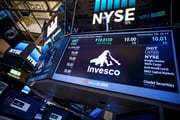
The Invesco ESG S&P 500 Equal Weight ETF will invest in companies considered leaders in ESG metrics; Apple, Facebook parent Meta and Tesla are among the companies that will be excluded from the fund initially.
The many new ESG funds being launched threaten to test the limits of investor demand.

We want to hear about your views on ESG strategies, how your attitude about ESG has changed, and how you expect fund managers to adapt.

ESG is only used in 5% of corporate DC plans, according to Callan. Use by institutional investors also varies a lot by geography.

Last week’s announced purchase of Newport Group by Ascensus comes on the heels of Empower’s purchases of MassMutual’s and Prudential’s record-keeping divisions.

Evolving technology, increasing longevity and cryptocurrencies will all play a role in the future of advice, according to seven experts from across the wealth management industry.

The IRS is also increasing the income ranges for eligibility to make deductible contributions to traditional and Roth IRAs, as well as to claim the Saver’s Credit.

“We are probably working on more deals than I can ever remember," the Focus Financial CEO said as the company reported its third-quarter earnings.

House Democrats are considering a five-year suspension of the cap on federal deductions for state and local taxes, but the Vermont senator disapproves.

Sustainable investing is expanding rapidly, and part of its evolution hinges on technological innovation.

A supply-demand imbalance has pushed energy sector stocks up 56% so far this year, while a natural gas ETF has spiked 110%.

This year's awards recognized 13 winners in categories such as Advocate of the Year, Outstanding Leader of the Year and ESG Investment Manager of the Year.

Geeta Aiyer has dedicated her career and personal passion to using finance to support social good via ESG and impact investing.

A relatively strong third-quarter performance by some types of environmental, social and governance funds reignites the debate over ESG alpha.

The RPA Broker-Dealer Roundtable and Think Tank covered getting data, providing plan access and helping participants with low balances.
