
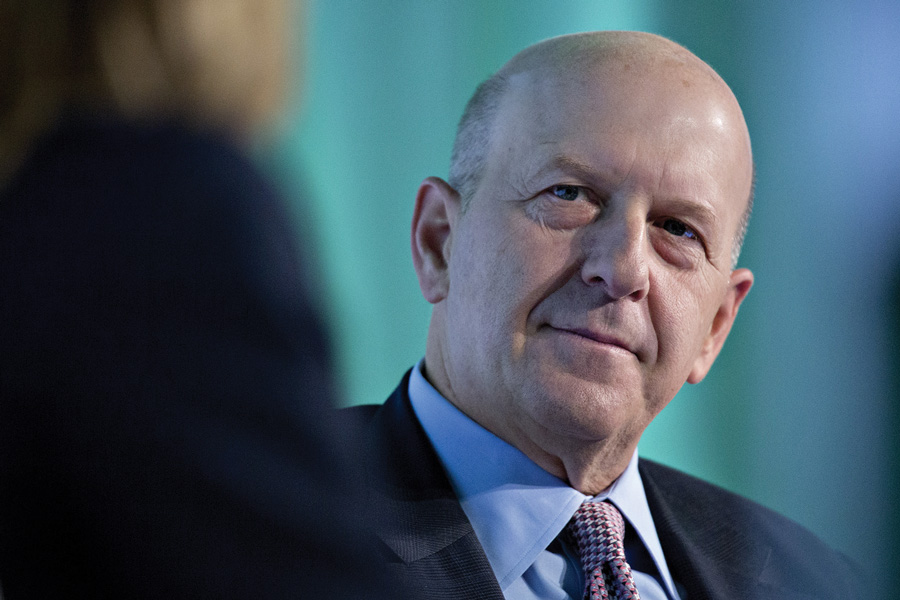
Goldman Sachs Group Inc. cut Chief Executive David Solomon’s compensation by about 30% to $25 million for 2022, a year in which the firm's share price and profit tumbled and it retreated from a highly public effort to create a consumer bank.
The package includes a $2 million base salary and $23 million in variable compensation, with $16.1 million of that in the form of restricted stock units, according to a filing Friday.
The firm’s compensation committee considered factors including Goldman’s performance and how it did relative to its main rivals in determining Solomon’s pay, according to the filing.
“The committee also took into account the firm’s continued progress in its strategic evolution as well as Mr. Solomon’s strong individual performance and effective leadership,” it said. “These factors were considered in the context of a challenging operating environment.”
The investment banking giant poured billions of dollars into its consumer effort, dubbed Marcus, only to suffer $3.8 billion in pretax losses over the past three years. Solomon has conceded that the company tried to push too quickly into the sector.
Goldman embarked on one of its biggest rounds of job cuts ever this year, with a plan to eliminate about 3,200 jobs as it sought to keep a lid on costs.
An industrywide slowdown has crimped earnings across Wall Street. At Goldman, net income fell 48% to $11.3 billion last year, and the bank’s return on equity was 10.2%, below the 14%-to-16% target it set for itself earlier in 2022.
The shares dropped 10% in 2022, outperforming the 12% decline in the S&P 500 Financials Index.
Banking executives have been bracing for their compensation to tumble as Wall Street tries to contain costs amid a dealmaking slowdown.
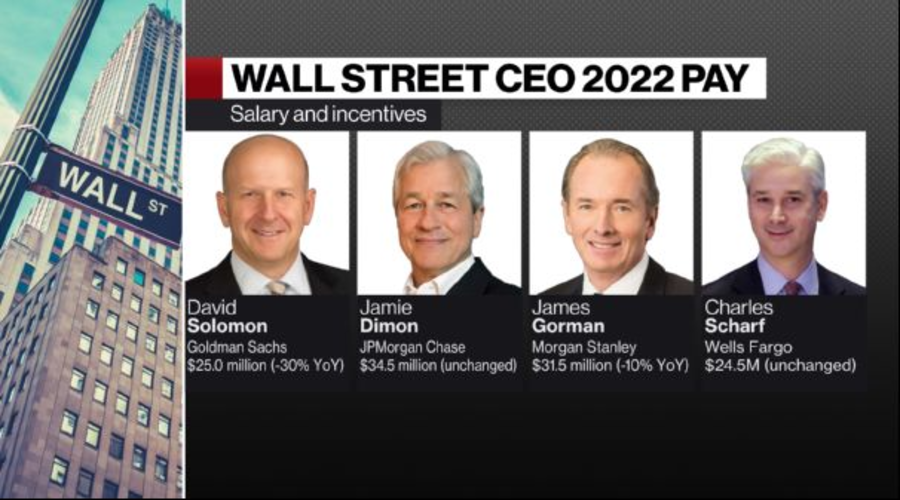
Solomon, 61, was one of the best-paid CEOs at a major U.S. bank for 2021, receiving $35 million in compensation — a figure matched by Morgan Stanley’s James Gorman for that year. For 2022, Gorman saw his pay cut by 10%, to $31.5 million. JPMorgan Chase & Co. left CEO Jamie Dimon’s pay unchanged at $34.5 million for that year.

Wealth Consulting Group, Coastline and Maridea report fresh capital, acquisitions and asset growth as advisor M&A keeps climbing

Carson Group's Dani Fava, Jason Pereira of Woodgate Financial, and Sally George of Convergency Partners led the raise as the growth-tech startup builds out its AI platform and leadership bench.

New teams from William Blair, Ameriprise and UBS bring more than $560 million in combined client assets to the firm's employee and independent channels.

Regulators this year approved UBS Bank USA’s conversion to a nationally chartered bank.

How a subprime lender’s car-loan bonds allegedly unraveled before bankruptcy.
Northern Trust’s Ken Lassner shows advisors how to convert volatility into after-tax portfolio gains
Dan Biagini of American Equity says the steady decline of pensions, longer lifespans and a reset in interest rates are rewriting how advisors build retirement income

