

Morgan Housel's book, The Psychology of Money, has become a modern classic in personal finance and investor psychology. First published in 2020 by Harriman House, it uses a collection of short stories to explain how real people think and act around money, not just how they "should" behave in theory. For RIAs and their clients, that focus on behavior, stories, and context makes the book different from most rule-based investing manuals.
In a market where financial planning and financial literacy are now standard parts of advice, many professionals still ask whether this story-driven book is still valuable. This article looks at whether The Psychology of Money can help readers understand financial decision making, money attitudes, and overall financial well-being today.
The Psychology of Money is a behavioral finance book that explains why people often handle money in inconsistent or irrational ways. Morgan Housel uses 19 short stories to show how a person's view of the world, personal history, and incentives shape financial behavior and investor behavior far more than textbook knowledge. The book argues that doing well with money is less about IQ and more about financial self-control, patience, and aligning choices with long-term financial goals.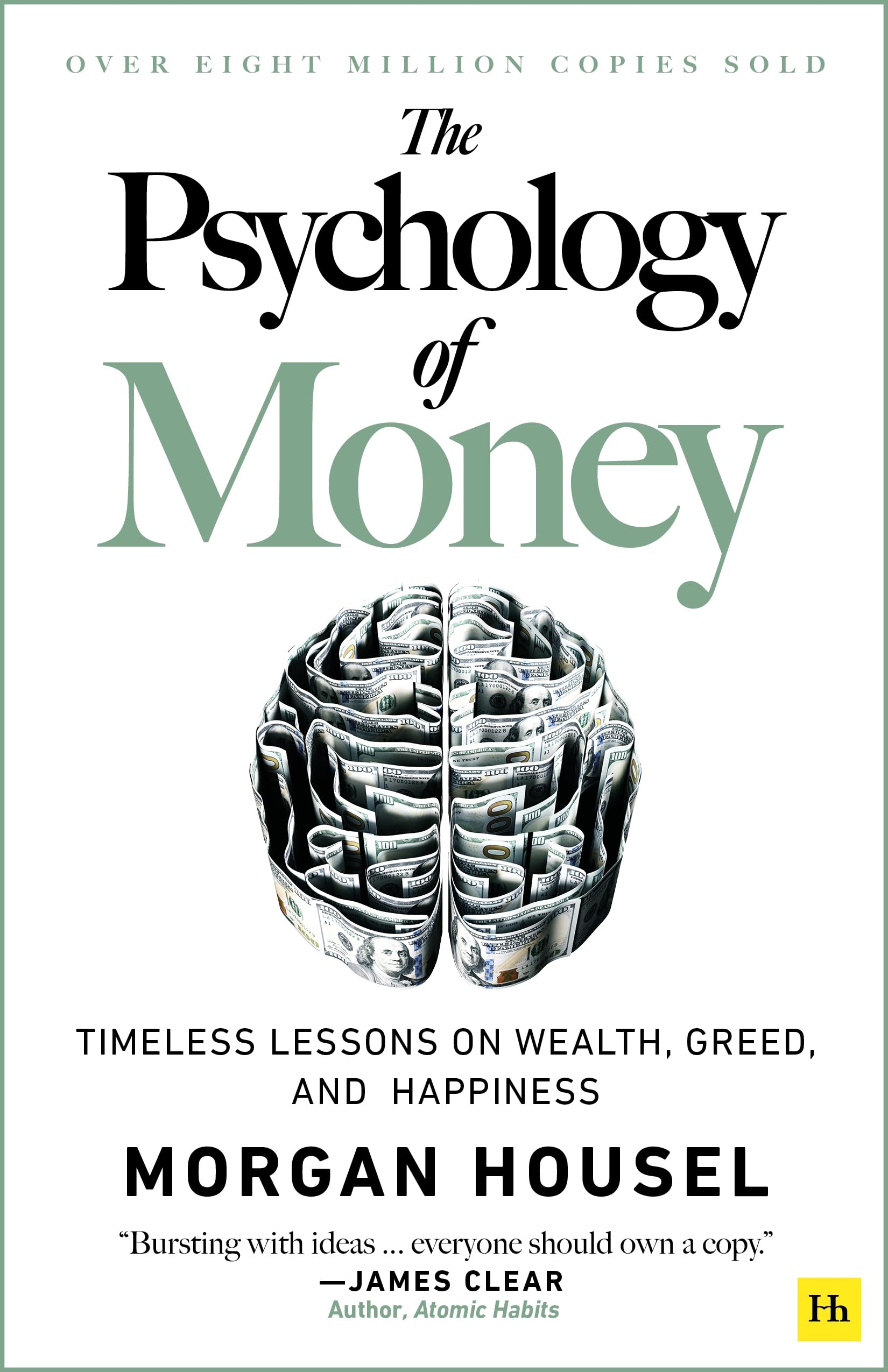
Across these stories, Housel explores how financial decisions are driven by money mindset, money emotions, and deep money beliefs rather than formulas. Key themes include:
This book mainly aims to help readers improve everyday money management by becoming more aware of their money scripts. These "money scripts" are the stories that people tell themselves about money and treating that awareness as a form of practical financial therapy.
The Psychology of Money is mainly a behavioral finance book about how people think and act around money, and how that mindset shapes real-world results. Author Morgan Housel uses 19 short stories to show that financial outcomes depend more on behavior than on raw knowledge or complex models.
The book argues that building wealth is mainly a mindset problem, not an investment-product problem.
Across these stories, the author:
Its core message is that personal financial management is less about IQ and forecasts, and more about saving consistently, respecting risk, staying invested, and defining what "enough" means.
By practicing these measures, people can remain financially secure over time.
These are some of the quotes from the book, which are frequently cited in online summaries, or shared in blog posts, and social content:
The complete quote that is often cited is "use money to gain control over your time, because not having control of your time is such a powerful and universal drag on happiness."
This line says the real value of money is freedom in daily life. Good financial planning then aims to create flexible work options, strong cash buffers, and sustainable withdrawal strategies. This empowers your clients to decide how and when they work, instead of being locked into schedules or obligations by financial pressure.
You may think that people want material things like a nice watch or fancy car, but the book argues that these often come from a deeper desire. Expensive items, the book argues, are a sign that the person buying them craves respect and admiration.
This passage challenges spending that is mainly about showing off. It supports advice that reins in lifestyle creep, questions fragile wealth beliefs, and redirects surplus income toward savings, investing, and risk management, rather than into ever-more expensive symbols of success.
Housel links the ability to save to humility, not just earnings. If spending always rises to match income, savings disappear. The "ego" in this line is the urge to live at or above one's apparent status, rather than below one's means.
Strong financial management depends on keeping lifestyle costs well under income so there is room for emergency funds, investing, and debt reduction. This quote supports budgets that prioritize high, steady savings rates, automatic contributions, and explicit guardrails against lifestyle creep, even as pay rises.
Housel points out that status-driven consumption erodes wealth. Purchases used to signal success, such as luxury cars, watches, or other visible upgrades, reduce the capital left to grow. The more someone chases an image of being rich, the less real financial strength they retain.
For planners and clients, this line underlines the risk of building plans around image instead of substance. Good management steers cash away from display purchases and into savings, diversified portfolios, and balance sheet resilience. It also challenges fragile wealth beliefs that confuse being seen as rich with actually being financially secure.
For an experienced RIA, the book gets a core point across well: that clients succeed or fail based far more on behavior than on technical knowledge or product selection. Housel's stories show that investors often act from personal history, incentives, and their own "view of the world," not from spreadsheets.
This aligns with real advisory work, where outcomes usually hinge on staying invested, avoiding panic trades, and following a plan, rather than trying to pick the "perfect securities".
Housel argues that building wealth is "a mindset problem, not an investment problem." That matches what seasoned RIAs see: most long-term success comes from habits such as saving regularly, controlling lifestyle creep, and keeping risk aligned with goals. The choice between, say, two reasonable diversified portfolios matters less than whether the client can stick with either one through a full market cycle.
The book is consistent in treating time control as money's greatest intrinsic benefit. That view lines up with modern goals-based planning in the US, where RIAs increasingly frame success in terms of flexibility (work optionality, career breaks, retiring when desired) rather than chasing absolute maximum net worth.
Housel stresses saving and practicing financial restraint over constant performance hunting. Experienced RIAs often see the same thing: clients with high savings rates, modest fixed expenses, and clear ideas of "enough" usually end up in better financial shape. This is better than focusing only on beating benchmarks while spending aggressively.
The book repeatedly shows that outcomes are shaped by luck, tail events, and how people handle risk, not just by skill. It emphasizes avoiding catastrophic loss and staying in the game for many decades. That is exactly how sound financial management works in practice: RIAs focus on diversification, sensible position sizing, and insurance, so a bad break or one bad decision does not derail a client's entire plan.
Housel's framing that market returns "demand you pay a price" captures the reality that volatility and drawdowns are the cost of equity investing. Advisers see this every cycle: clients who accept that cost up front and have portfolios sized to their true tolerance are far more likely to stay invested, re-balance, and benefit from compounding.
This book's use of 19 stories rather than formulas mirrors how real clients learn and decide.
Experienced RIAs know that narrative and concrete examples work better than dense Monte Carlo printouts for shaping behavior. On this front, the book is aligned with how good advisers already communicate practical, durable financial management principles to US investors.
Housel is open that the book is about "mindset," not product selection or technical planning. He positions wealth-building as "a mindset problem, not an investment problem."
For a seasoned RIA, that is only half the story. The book says little about:
The risk is that readers will likely walk away with healthy attitudes, but without a clear framework for asset location, tax planning, or risk management. These are areas that often make or break real plans in the US.
The book uses 19 stories to explain how people think about money, but it rarely deals with:
For an RIA who lives inside capital markets, that omission matters. Clients still need concrete answers about which investments belong in a portfolio, how to diversify them, and why. The focus on behavior is useful, but it can underplay how much structure, evidence, and process go into a durable investment policy statement.
Housel draws from examples of public figures and investors to illustrate lessons. From a professional standpoint, those stories are engaging but not always generalizable:
An RIA would see the book as good "client reading" to frame behavior, but this can't work as a stand‑alone guide to constructing decisions across different market regimes.
The book aims at the "layperson seeking financial advice" and "individual investors who seek a straightforward approach to getting and staying financially secure." It does not dwell on:
For an RIA, those constraints often drive the real trade-offs in a plan. Mindset cannot, on its own, solve a client's need to balance HSA funding, 401(k) contributions, Roth conversions, and long‑term care risk.
Housel's lessons are meant to be for investors in general. But in practice, US investors fall into very different categories like:
The book offers little segmentation by life stage, balance sheet type, or tax position. An RIA would see this as a limitation: sound financial management is highly context-specific, and rules of thumb that work for a 30‑year‑old accumulator are poor guidance for a 68‑year‑old with RMDs and sequence risk.
From an RIA's standpoint, The Psychology of Money gets the behavioral "why's" largely right and is useful for shaping client expectations. But it gets thin on the "how's" of tax planning, portfolio design, risk management, and structural US realities.
As a result, it works best as a mindset primer to sit next to a full financial plan, but not as a complete, standalone guide to good financial management. You can always refer to our guide on other books about investing to browse or recommend to your clients.
For your daily dose of investment tips and breaking news about RIAs, bookmark our RIA news page.

More than 1,000 employees have signed a union-backed letter opposing the bank's new three-day office mandate.

The release addresses account-level suitability gaps, consolidates trade management, and extends single sign-on to the Addepar client portal.

T. Rowe Price's sixth annual study reveals how retirement advisors are embracing AI, private credit, and personalized plan design.

House-passed measure would let fraud victims deduct losses and waive early-withdrawal penalties on stolen retirement funds.

Anthropic's Enterprise plan offers advisors stronger data controls — but smaller RIAs may struggle with the cost.
Northern Trust’s Ken Lassner shows advisors how to convert volatility into after-tax portfolio gains
Dan Biagini of American Equity says the steady decline of pensions, longer lifespans and a reset in interest rates are rewriting how advisors build retirement income

