
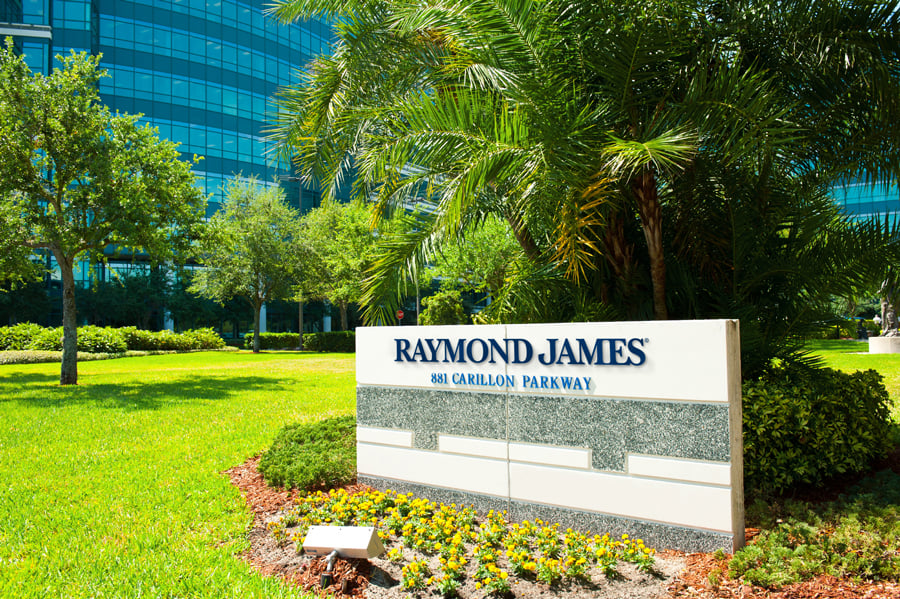
In moves that will reshape its executive leadership, Raymond James Financial President John Carson will retire as president at the end of the month and Paul Allison, chairman and CEO of the firm’s Canadian subsidiary, will cede his roles and transition to the new position of executive chairman, also at year-end.
Carson, who was formerly CEO at Morgan Keegan, which Raymond James acquired in 2012, will also step down as head of the firm’s fixed income and public finance divisions.
Horace Carter, currently executive vice president of fixed income capital markets, will succeed Carson as president of fixed income and join the firm’s executive committee. Gavin Murrey, executive vice president and head of public finance and debt investment banking, will continue to run public finance and report to Carter. The company’s release on the executive changes did not say whether the position of president at Raymond James Financial will be filled.
In Canada, Jamie Coulter, currently executive vice president of wealth management, will succeed Allison as Raymond James Ltd.’s chief executive. In addition, Coulter will join its executive committee, the board of Raymond James Ltd. and be responsible for day-to-day operations.

South Carolina estate planning firm joins Osaic’s IBD network, citing succession planning tools and multigenerational growth resources.

A new SIFMA and KPMG study of more than 2,100 US investors finds satisfaction high, AI-only trust falling, and demand for human guidance growing across every generation.

Retail banks and private wealth firms scored 40 in Fitch's AI stress test, signaling possible one-notch downgrade risk under an adverse scenario.

Elsewhere, Wells Fargo Advisors adds a $400 million Morgan Stanley veteran in Naples as an ex-Cetera advisor goes independent with LPL

According to a federal charges Bradley Heppner, 60, received more than $150 million in payments through funneling money from GWG Holdings to a shell company.
Knighthead Life entered the market with a competitive MYGA. A strong launch earned advisor confidence and paved the way for FIAs.
As AI makes financial information more accessible than ever, Lana Hock explains why human judgment, trust, and empathy remain the qualities clients value most in a financial advisor

