
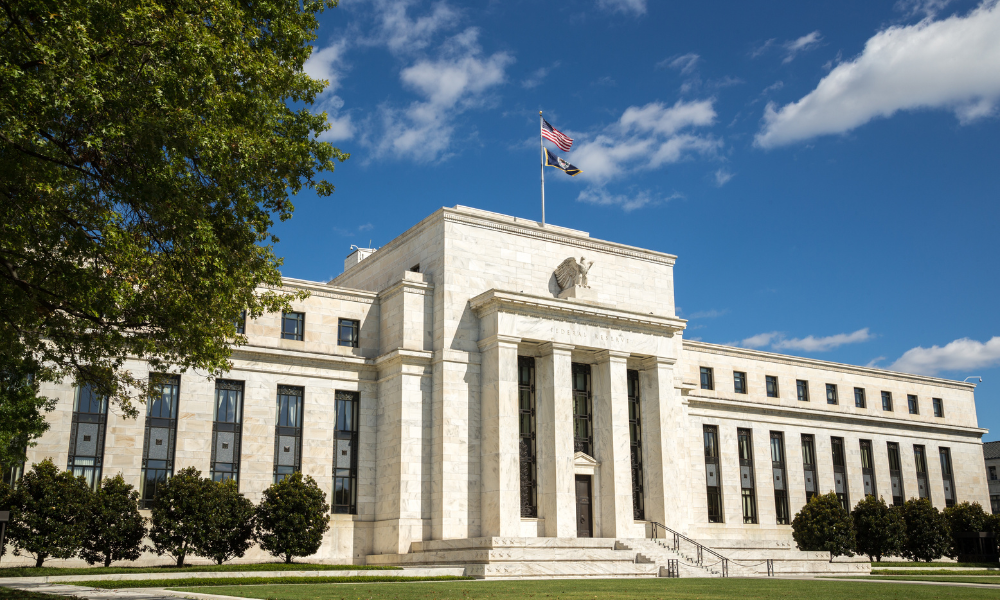
Federal Reserve officials in January expressed their readiness to hold interest rates steady amid stubborn inflation and economic policy uncertainty.
“Participants indicated that, provided the economy remained near maximum employment, they would want to see further progress on inflation before making additional adjustments to the target range for the federal funds rate,” minutes from the Federal Open Market Committee’s Jan. 28-29 meeting showed.
The minutes, released Wednesday in Washington, said “many participants noted that the committee could hold the policy rate at a restrictive level if the economy remained strong and inflation remained elevated.”
Officials held the Fed’s benchmark policy rate in a range of 4.25%-4.5% at that gathering.
The record of the meeting underscored the cautious approach Fed policymakers are taking after lowering interest rates by a percentage point in the closing months of 2024. Several officials have said they’d like to see inflation cool further toward the Fed’s 2% target before backing another cut.
Investors are currently pricing in one rate cut in 2025, with the possibility of a second, according to futures markets.
Some officials also expressed concern over risks posed by the potential for another debt ceiling showdown in Washington.
“Regarding the potential for significant swings in reserves over coming months related to debt ceiling dynamics, various participants noted that it may be appropriate to consider pausing or slowing balance sheet runoff until the resolution of this event,” the minutes said.
Policymakers are also watching the rollout of President Donald Trump’s economic policy plans and how they might shape the economy. Trump is pushing an agenda that includes an increased use of tariffs on US trading partners and an immigration crackdown, both of which could affect the outlook for inflation, the labor market and economic growth.
While characterizing risks in the economy as roughly balanced, policymakers “generally pointed to upside risks to the inflation outlook,” the minutes said.
“Participants cited the possible effects of potential changes in trade and immigration policy, the potential for geopolitical developments to disrupt supply chains, or stronger-than-expected household spending,” the minutes said.
Officials also discussed potential changes to the composition of the central bank's balance sheet.
“Many participants expressed the view that it would be appropriate to structure purchases in a way that moved the maturity composition of the SOMA portfolio closer to that of the outstanding stock of Treasury debt while also minimizing the risk of disruptions to the market,” the minutes said.

What will financial advice look like 20 years from now? Evan Vladem explores how AI may transform wealth management while reinforcing the enduring value of human guidance, trust, and empathy.

The Boston deal is set to push the PE-backed consolidator past $187 billion amid a broad RIA M&A slowdown and a potential shift in its ownership.

Advisors with clients who own second homes in New York City face fresh uncertainty as the city seeks a stay and plans an appeal.

Meanwhile, a deal in the Midwest gives NorthRock Partners a new office in Wisconsin, while two teams join OnePoint BFG in Georgia and Atlanta.

These challenges are “changing the economics we see retirement savers face,” said Christopher Ceder of Goldman Sachs Asset Management
As AI makes financial information more accessible than ever, Lana Hock explains why human judgment, trust, and empathy remain the qualities clients value most in a financial advisor
Northern Trust’s Ken Lassner shows advisors how to convert volatility into after-tax portfolio gains

