
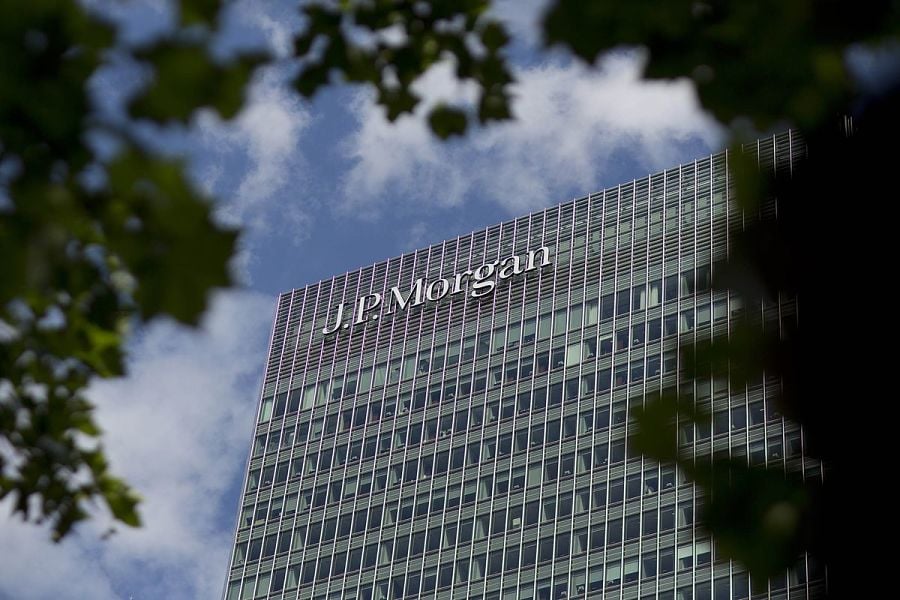
JPMorgan Chase & Co. plans to add to its head count this year as the firm sees opportunities in everything from dealmaking to US wealth management to international retail banking, bucking a trend by Wall Street rivals who have shed thousands of jobs in recent months.
After a subdued couple of years, the biggest US bank is seeing “plenty of growth” and “all the components are for a strong year” President Daniel Pinto said in an interview with Bloomberg Television’s Francine Lacqua Wednesday from the World Economic Forum in Davos, Switzerland. The lender is also seeing growth opportunities for its payments division.
JPMorgan “has the returns and the firepower to continue investing through the cycles and that is really what allows us to continue, regardless of the economic environment, to continue growing,” he said. “When I look at our plans, we will increase our staff this year for sure.”
The bank currently employs more than 300,000 people and “the number of people that we employ has been growing and not shrinking,” Pinto said.
Pinto’s comments come after JPMorgan closed out the most profitable year in US banking history and forecast that the windfall may continue this year. During recent earnings calls, many Wall Street executives said they expect a dealmaking pickup following a prolonged drought that brought investment banking revenue last year to the lowest level in more than a decade.
Still, JPMorgan’s hiring plans stand in contrast to many of its largest competitors. Citigroup Inc. said last week it will eliminate 20,000 roles to save as much as $2.5 billion as part of Chief Executive Officer Jane Fraser’s quest to boost its lagging returns.
Morgan Stanley had to set aside $353 million in severance cost last year, while Goldman Sachs Group Inc. said its number of staff decreased 7% during 2023, which reflected a “headcount reduction initiative” across the firm.
Separately, Pinto joined other Wall Street executives in predicting that investor expectations for a series of interest-rates cuts this year might prove overoptimistic.
“The market was pricing until yesterday six cuts which is a very unlikely scenario,” he said. “If you put yourself in the shoes of the Fed, if that is the scenario and the unemployment rate is so tight and the economy is doing fine, why are you going to rush it?”
Pinto said he expects the Fed to cut rates if “everything continues to go this way” but said any change would probably come later in the year.
Pinto also cautioned that many investors may not have priced in the geopolitical risk which he called “substantial.”
“The geopolitical situation is stable to deteriorating: terrible things happening in Russia, Ukraine, the Middle East, the tension between China and the US, electoral cycles,” he said. “There are issues that for sure have not been priced in the market and that’s a time to be be careful on this sort of optimism.”
Pinto has been sole president of JPMorgan for two years, with business-line heads reporting jointly to him and his boss, Chief Executive Jamie Dimon. He rose through the firm’s massive trading business to oversee the corporate and investment bank, which he still does today in addition to holding the president role.

The hundreds of millions of dollars from a sale of Inspired Healthcare properties does not mean an immediate windfall for investors.

"Most pre-retirees are uncomfortable making key retirement income decisions without an advisor's help," said Chris Bailey of Cerulli.

Also, Summit Wealth Group nabs a Commonwealth advisor in Tennessee, Oxford Financial adds two managing directors, and Verdence draws an ultra-high-net-worth advisor from Fidelity.

When advisors have tech to handle meeting prep and organization, it frees up time they can reinvest more thoughtfully into helping clients.

LPL Financial and Raymond James also add independent advisors from Osaic and Edward Jones in Michigan and Arizona.
Knighthead Life entered the market with a competitive MYGA. A strong launch earned advisor confidence and paved the way for FIAs.
As AI makes financial information more accessible than ever, Lana Hock explains why human judgment, trust, and empathy remain the qualities clients value most in a financial advisor

