
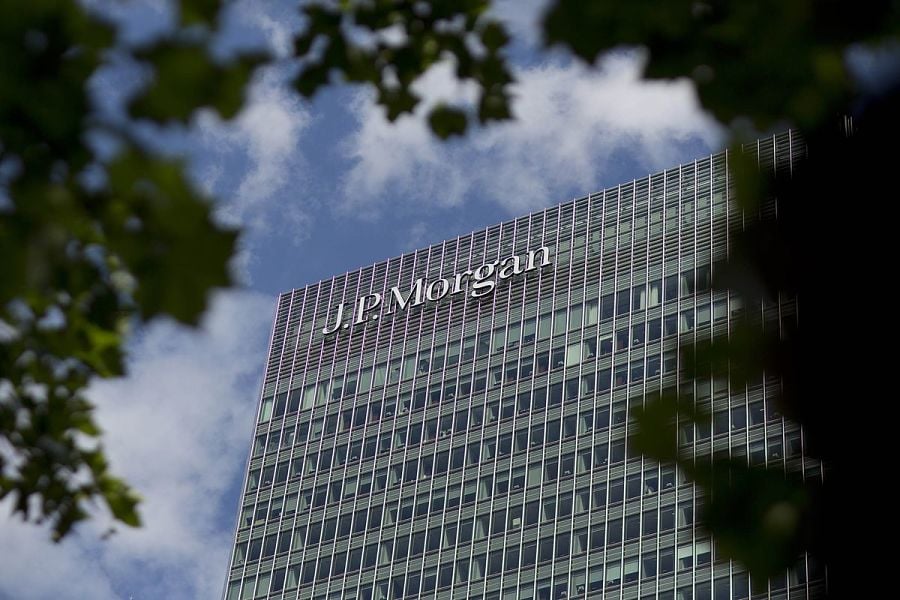
JPMorgan Chase & Co. raised Chief Executive Jamie Dimon’s pay to $36 million for 2023, a year in which the bank notched the highest profit in the history of American banking.
The board granted Dimon a $1.5 million salary and $34.5 million of performance-based incentive compensation, according to a regulatory filing Thursday. His total pay is up 4.3% from 2022, when he made $34.5 million.
“The firm is in a uniquely fortunate position to be led by such a highly talented and experienced executive who continues to grow the company, maintain market leadership positions, strengthen the firm’s reputation, invest in opportunities for the future, promote diversity and best practices, manage risk and develop great leaders, while also maintaining his focus on the firm’s clients,” the board said in the filing.
JPMorgan pulled in $49.6 billion last year, boosted by the Federal Reserve’s interest rate hikes and its purchase of First Republic Bank in a government-led auction. Shares rose 27% during the year, outperforming all major rivals.
That’s now turning into raises of more than 5% for the bank’s top brass. The firm awarded $30 million to President Daniel Pinto, $27 million to longtime asset and wealth management chief Mary Erdoes and $18.5 million apiece to consumer banking co-heads Jennifer Piepszak and Marianne Lake, according to the company.
Dimon, a billionaire, has been in his role for 18 years — a longer tenure than the CEO of any other major bank — and is often the highest-paid of his peers. In October, New York-based JPMorgan said in a filing that Dimon plans to sell 1 million of the bank’s shares, the first such transaction since he took the helm at the Wall Street giant, for financial diversification and tax-planning purposes.
He’s long quipped that he plans to stay in his seat five more years, no matter when asked. That joke turned serious in 2021 when the board gave him a special incentive package worth more than $50 million to stay until at least 2026. Still, Dimon hasn’t indicated he views that award as a career closer. “I can’t do this forever, I know that, but my intensity is the same,” Dimon, 67, said at the firm’s investor day last year. “I think when I don’t have that kind of intensity, I should leave.”
Copyright Bloomberg News

The financial advice industry has been facing inquiries into its cash sweep programs for years now.

Investor money allegedly went to strip clubs, exotic cars, and landscaping

Procyon adds $415 million in assets under management in New Jersey while Savant picks up a $213 million Southern California planning firm

With a growing number of real estate-rich Baby Boomers aging into retirement, some advisors may be failing to consider all the options available for those clients' assets.

Cornerstone Advisors study reveals compliance bottlenecks stall campaigns weeks after customer opportunities close.
As AI makes financial information more accessible than ever, Lana Hock explains why human judgment, trust, and empathy remain the qualities clients value most in a financial advisor
Northern Trust’s Ken Lassner shows advisors how to convert volatility into after-tax portfolio gains

