
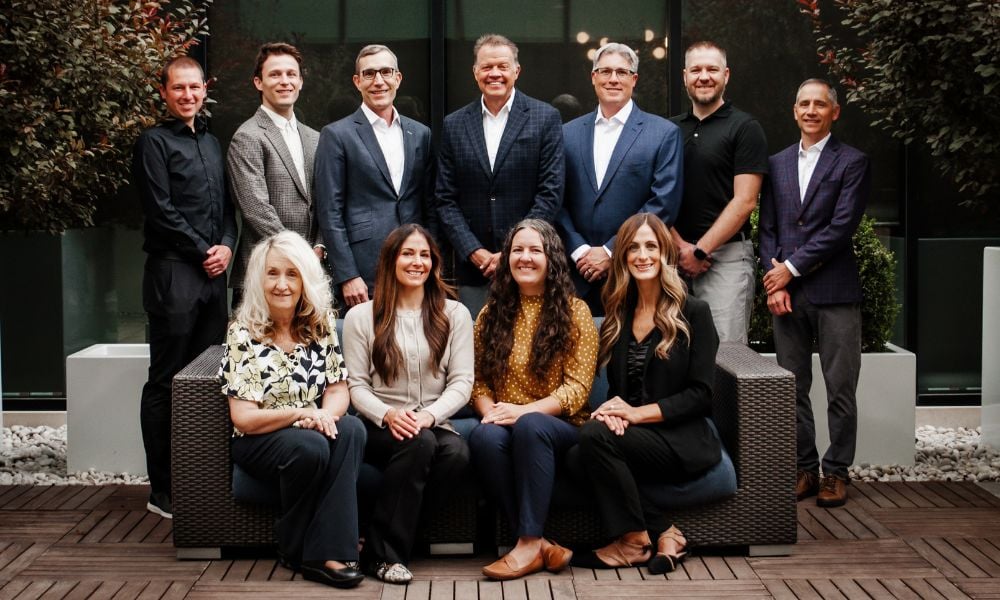
In its fourth advisor addition announcement in as many weeks, LPL has picked up two advisory practices from Northwestern Mutual, adding a pair of Salt Lake City-area teams reporting roughly $1 billion in combined client assets.
Cornerstone Advisors and Clear Pointe Wealth Management, which share a longstanding personal and professional relationship, are joining LPL's broker-dealer, registered investment advisor and custodial platforms, LPL announced Tuesday.
The two teams, which are both focused on retirement-stage clients, business owners and professionals, plan to operate from a shared office while keeping their separate brands.
Cornerstone Advisors is run by Gardner Brown and Brian Lifferth, who have worked together since 2004 and built their practice around planning ahead of retirement rather than around products.
“Financial planning has always been at the center of our practice,” Brown said in a statement Tuesday. “For more than 30 years, we've helped clients navigate the decisions that come with retirement and major life transitions."
Brown and Lifferth are joined by team members Lexie Sorensen, John Call III, Daniel Brown, Jennie Frey and Alexis Rowley.
Meanwhile, Clear Pointe Wealth Management, led by Ron Hunt and Jonathan Groberg since 2005, splits responsibilities along complementary lines, with Groberg handling investment research and manager due diligence while Hunt oversees planning and client strategy.
“Our process starts with listening and building a comprehensive plan,” Hunt said. “From there, we focus on implementation, helping ensure clients strategize and put strategies in place to support a successful retirement.
The double-team announcement in Utah extends LPL's run of recruitment from teams in the wirehouse world as well as rival broker-dealer firms. So far this month, the firm has lured a Kansas-based advisory trio from Wells Fargo Advisors Financial Network, a billion dollar-plus duo from UBS operating in Santa Fe, New Mexico, and a former RBC trio that joined LPL's Linsco channel in Minnesota.
Earlier this summer, LPL touted the success of its recruitng efforts during the second quarter, with $25 billion in recruited assets helping to drive net income of $379 million, which the firm said was up 39% from a year earlier.
"In our traditional markets, we added approximately $23 billion in assets during Q2, maintaining our industry leading capture of advisers in motion, while continuing to expand the depth and breadth of our recruiting pipeline," CEO Richard Steinmeier told analysts on LPL's second-quarter earnings call in July.
Later that month, the firm unveiled LPL Latitude, which it described as a unified technology experience that connects its capabilities across data infrastructure, cybersecurity, artificial intelligence, and client-facing applications. The firm said it invested nearly $2 billion in the core pillars undergirding Latitude, with plans to add more than 35 major tech enhancements this year alone.
"By creating a unified foundation across our business, we are accelerating innovation, unlocking the power of AI and data, and delivering more seamless, intelligent experiences for advisors and their clients," Steinmeier said at the time.

Texas securities regulators initially accused Lasater RE Fund of fraud in June but later dropped those claims.

Investors were promised guaranteed returns from mobile homes that never existed

The Osaic-acquired broker-dealer failed to catch reps steering 295 clients into costly early UIT sales, regulator finds.

Rick Hu of Midas Wealth breaks down the fee-based planning shift that transformed his advisory practice and reshaped client relationships

Formulating a vision, heading off infrastructure and resource bottlenecks, and deciding on a flexible "True North" are essential early steps in the increasingly competitive advisory business.
As AI makes financial information more accessible than ever, Lana Hock explains why human judgment, trust, and empathy remain the qualities clients value most in a financial advisor
Northern Trust’s Ken Lassner shows advisors how to convert volatility into after-tax portfolio gains

